

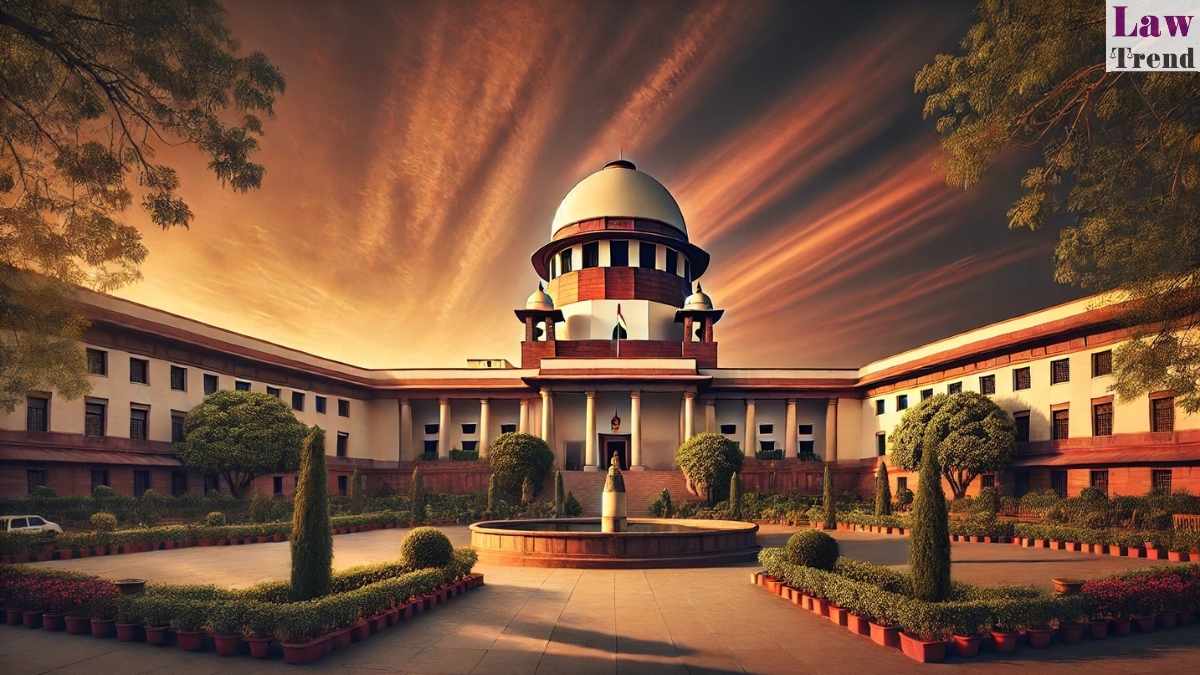
The Supreme Court of India has intervened in a massive real estate controversy, demanding immediate responses from the Central Government, financial regulators, and multiple prominent real estate developers. The apex court is acting on a plea alleging that thousands of crores of rupees collected from homebuyers in Noida and Yamuna Expressway housing projects were systematically siphoned off, leaving thousands of families stranded and bankrupt.
A three-judge bench, headed by Chief Justice of India Surya Kant and including Justices Joymalya Bagchi and Vipul M Pancholi, issued formal notices on Wednesday to a wide array of respondents, ordering them to file their replies by July 15.
The notices have been sent to key regulatory and administrative bodies, including the Union Ministries of Housing and Urban Affairs and Corporate Affairs, the Enforcement Directorate (ED), the Reserve Bank of India (RBI), the Uttar Pradesh Real Estate Regulation and Development Authority (UP RERA), the Noida Authority, and the Yamuna Expressway Industrial Development Authority (YEIDA). Several developers and financial institutions, including Jaiprakash Associates Ltd (JAL), Jaiprakash Infratech Ltd (JIL), Standard Chartered Bank, and builders such as CRC Homes, CRC Greens, Gaursons, Gulshan Homz, Mahagun, and Investors Clinic, have also been summoned to respond.
A Systemic Pattern of Exploitation
The legal action stems from a petition filed by Vandana Sabharwal, who argues that the crisis is not an isolated incident but rather indicative of a broader, predatory pattern in the Indian real estate sector. According to the plea, developers routinely collect substantial funds from homebuyers, divert those assets to sister concerns or related entities, and subsequently push the projects into insolvency—effectively shielding themselves while leaving buyers with neither their homes nor their money.
Representing the petitioner, prominent advocate Prashant Bhushan presented alarming findings from the ED’s ongoing investigation under the Prevention of Money Laundering Act (PMLA).
Bhushan revealed that out of approximately Rs 14,559 crore collected by JAL and JIL from more than 25,000 hopeful homebuyers, massive sums were diverted away from construction. Instead, these funds were allegedly funneled into unrelated group entities, including various Jaypee group companies.
“This issue keeps recurring project after project,” Bhushan argued before the bench. “Funds are collected from homebuyers, diverted elsewhere, and the companies eventually go into bankruptcy. Homeowners are left in a serious situation because the diverted funds are either never identified, or not identified and brought back in time.”
The Massive Gap in Asset Recovery
A major focal point of the petition is the stark disparity between the scale of the alleged fraud and the recovery efforts made so far. While the alleged diversion of assets exceeds Rs 14,000 crore, the ED has provisionally attached assets worth only about Rs 400 crore.
Bhushan urged the Supreme Court to direct the ED to accelerate its investigation and aggressively issue provisional attachment orders on any land or development rights where the siphoned funds or proceeds of crime have been traced. He warned that without swift recovery, investigations are meaningless for the victims. “If recovery does not happen, the benefit never reaches the homebuyers,” he noted.
Additionally, the petitioner is seeking Supreme Court intervention to direct the RBI to conduct forensic audits of the banks that financed these stalled projects. Bhushan pointed out that financial institutions are also suffering heavy losses due to these stalled projects, suggesting that the central bank must issue nationwide guidelines to curb the systemic risk.
Homebuyers Offered Pennies on the Dollar
The petition also shines a spotlight on the grueling ordeal faced by buyers seeking refunds through the National Company Law Tribunal (NCLT).
Under current insolvency proceedings, homebuyers who choose to walk away are being offered only their original principal amounts paid over a decade ago—with zero interest.
“If we want a refund today, we are being offered what was paid 12 years ago without any interest,” Bhushan argued, emphasizing the financial injustice of the situation. “Today, the same flat would cost three times more.”
Court Demands ED Status Report
Acknowledging the gravity and scale of the allegations, Chief Justice Surya Kant described the issues raised in the plea as “complex.”
While noting that the Supreme Court had previously handed over a similar real estate probe to the Central Bureau of Investigation (CBI), the bench observed that the ED has already active proceedings in this particular matter. The ED’s current money laundering case (registered as an Enforcement Case Information Report, or ECIR) is based on multiple initial FIRs previously filed by the Economic Offences Wing of both the Delhi Police and the Uttar Pradesh Police.
“Let us see what they have to say,” the Chief Justice remarked, directing the ED to submit a comprehensive status report detailing the progress of its investigation.
With the July 15 deadline looming, the upcoming responses from the RBI, ED, developers, and government authorities are expected to shed critical light on how the state plans to protect thousands of middle-class homebuyers trapped in stalled projects.




