

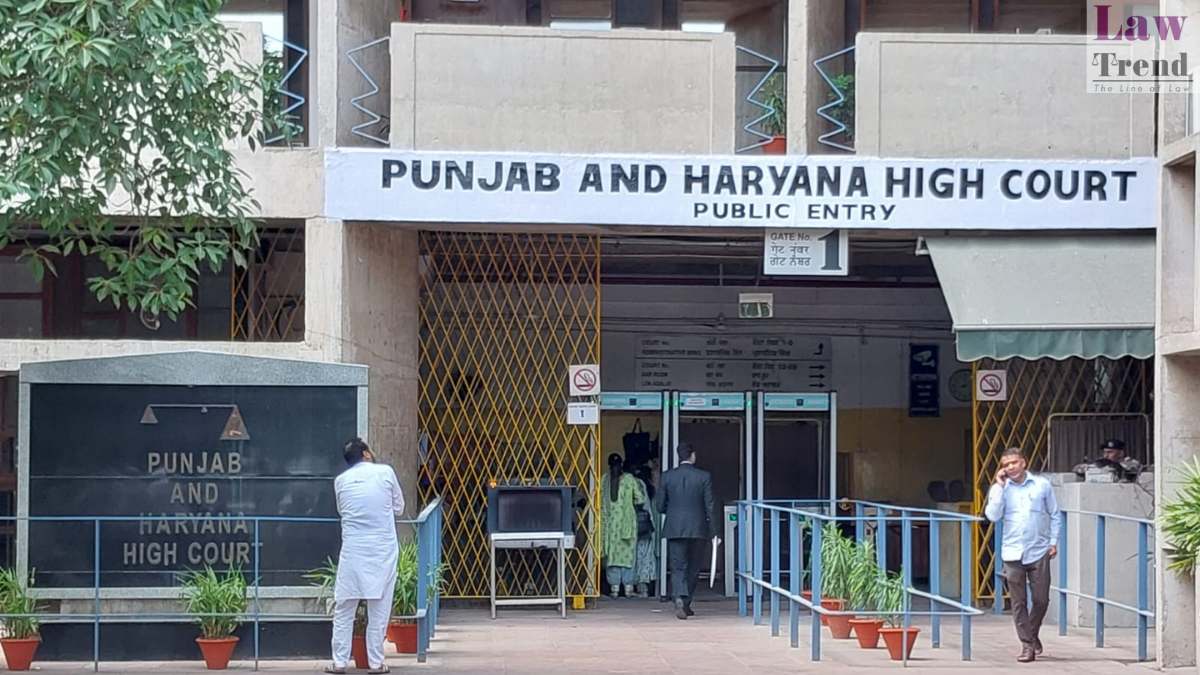
The Punjab and Haryana High Court has ruled that an employee’s resignation due to pressing family circumstances cannot be used to deprive them of their hard-earned pensionary benefits. In a recent judgment, the court ordered authorities to grant proportionate pension and retirement benefits to a steno typist who resigned in 2012 after rendering 13 years of unblemished service.
Justice Kuldeep Tiwari, presiding over the case, emphasized that the judiciary must adopt a “pragmatic approach” rather than a “hyper-technical” one when evaluating the claims of employees who are forced to leave their jobs under difficult personal circumstances.
A “Pragmatic” Judicial View on Resignation
The high court’s order, dated May 25, quashed a July 2021 administrative decision that had rejected the pension claims of the petitioner, Pankaj Mehta.
In his ruling, Justice Tiwari highlighted Mehta’s clean record of service:
“At this juncture, this court is necessitated to reiterate, even at the cost of repetition, that the petitioner had rendered service for 13 years before putting papers, owing to the pressing family conditions, and no disciplinary proceedings were ever initiated or even contemplated against him. Considering the length of service the petitioner had rendered, this court is persuaded to adopt a pragmatic approach, rather than a hyper-technical approach, to deal with the claim of the petitioner.”
The court has directed the respondent authorities to calculate and release the proportionate pension, death-cum-retirement gratuity (DCRG), and other consequential retiral benefits to Mehta within four months. However, because Mehta waited nearly six years after his resignation to formally approach the authorities for these benefits, the court declined to award any interest on his arrears.
Behind the Legal Battle
Pankaj Mehta was originally appointed as a steno typist in September 1999 by a district and sessions judge, serving in a regular post with a matching pay scale.
After 13 years of service, citing compelling family circumstances, Mehta tendered his resignation on October 1, 2012, availing one month’s salary. The resignation was accepted by the district judge on October 3, 2012.
Years later, on August 1, 2018, Mehta formally requested his proportionate retirement benefits. The administration rejected his request in July 2021, citing strict provisions within the Punjab Civil Services Rules (now read as the Haryana Civil Services (Pension) Rules, 2016). This rejection prompted Mehta to appeal to the High Court.
The Clash of Rules vs. Circumstance
During the proceedings, a sharp debate arose over how civil service rules define the end of an employee’s tenure.
- The Petitioner’s Argument: Advocate Rakesh Nagpal, representing Mehta, argued that his client was entitled to a proportionate pension under the Punjab Civil Services Rules, 2007 (as applicable to Haryana). Nagpal argued that the rule used to deny Mehta’s pension was intended to penalize employees who resign to evade disciplinary action or dismissal. He asserted it should not apply to an employee with an unblemished record leaving voluntarily for family reasons. Furthermore, Nagpal maintained that Mehta’s gratuity could not be forfeited since his departure caused no financial or operational loss to the department.
- The Respondent’s Argument: Representing the district and sessions judge, advocate Dhiraj Chawla countered that statutory pension rules apply strictly to “retirement” and do not cover voluntary “resignation.” He argued that because Mehta did not submit a technical resignation to transition into another state or central government role, the legal consequence of his resignation was the forfeiture of his past service, leaving him ineligible for a pro-rata pension.
By rejecting the respondent’s hyper-technical interpretation, the High Court’s ruling establishes a compassionate precedent for civil servants who must balance their careers with critical family obligations.




