

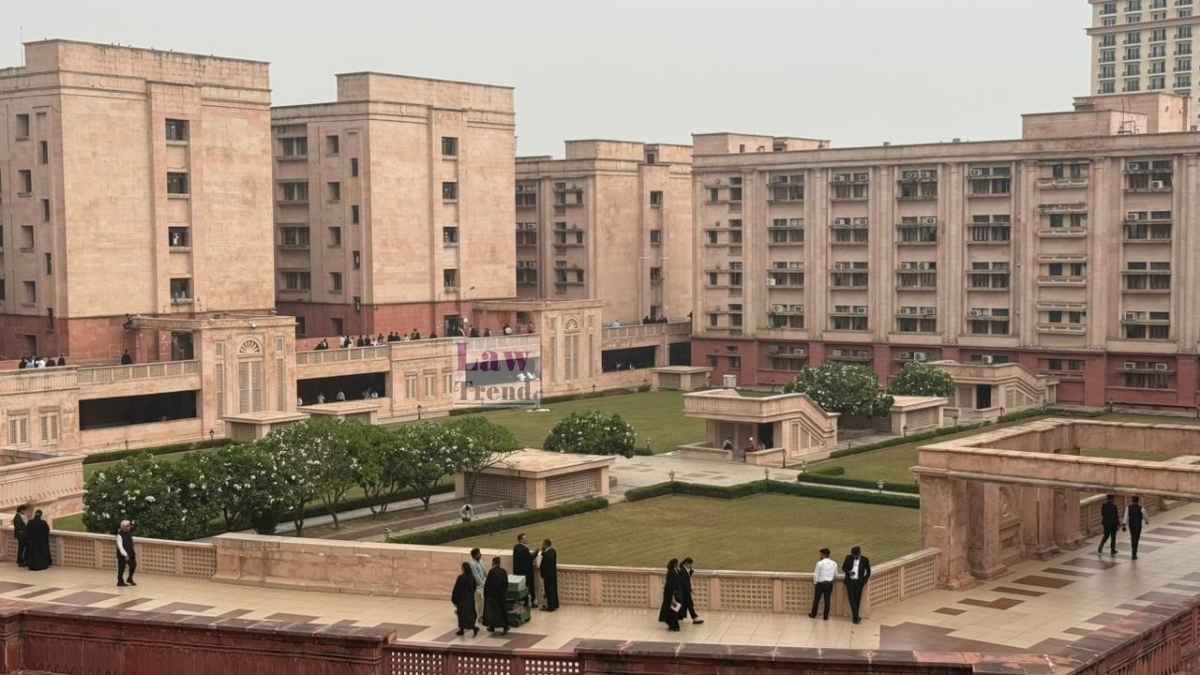
A Public Interest Litigation has been filed before the Lucknow Bench of the Allahabad High Court challenging the Central Board of Secondary Education’s newly introduced On-Screen Marking (OSM) system for Class XII Board Examinations 2025–26. The matter is listed for hearing on May 29, 2026.
The PIL has been filed by Lucknow-based advocate Mohit Ashok against the Union of India to be represented by Advocate Ashwani Singh, CBSE, the Controller of Examinations, and the State of Uttar Pradesh. The petitioner has alleged that the hurried implementation of the digital evaluation mechanism caused “systemic institutional failure” in the assessment of lakhs of students across the country.
According to the petition, CBSE introduced the OSM system for Class XII answer-sheet evaluation through a circular dated February 9, 2026, while board examinations were already underway. The plea states that evaluators were given only an online orientation webinar on February 13 and a mock training session on February 26, with no prior pilot programme conducted before nationwide implementation.
The petitioner has claimed that answer sheets were scanned, digitised and uploaded on an online portal for evaluation, fundamentally departing from the traditional system of physical answer-sheet assessment.
The PIL alleges that the consequences of the rollout became visible after declaration of Class XII results in May 2026. Referring to statistical trends, the petition claims that only 5.3% students scored above 90%, while merely 0.97% crossed 95%, which the petitioner describes as the lowest such figures in seven years.
The petition further states that students who qualified highly competitive examinations like JEE reportedly received “barely passing marks” in corresponding Board subjects, which according to the petitioner indicated serious anomalies in evaluation.
It has also been alleged that gross marking discrepancies surfaced across the country, including instances where academically high-performing students received disproportionately low marks in specific subjects. The petitioner has annexed media reports and interviews with educators to support the allegations regarding evaluation irregularities and dissatisfaction among students and teachers.
The plea contends that the evaluation failure was attributable to inadequate preparation, lack of evaluator training, and absence of technical support during implementation of the OSM system. It states that teachers who had evaluated physical answer scripts for years were suddenly required to assess digitised images of answer books on screens “without adequate preparation, technical support, or fallback mechanism.”
The petitioner has further challenged CBSE’s decision to charge ₹100 per question for revaluation. According to the PIL, students seeking correction of errors caused by institutional shortcomings should not be burdened with revaluation fees.
Invoking Articles 14 and 21A of the Constitution, the petition argues that the right to fair and competent evaluation forms part of the right to education and that arbitrary implementation of the OSM system violates constitutional guarantees of fairness and equality.
Among the reliefs sought, the petitioner has requested constitution of an independent expert committee to investigate implementation of the OSM system and identify failures in evaluation. The plea also seeks a direction for comprehensive free re-evaluation of answer scripts of all affected students by adequately trained evaluators.
The PIL additionally seeks suspension of the ₹100 per-question revaluation fee, protection of admission interests of students pending finalisation of corrected results, and directions that future digital evaluation systems be preceded by proper pilot programmes and documented training of evaluators.
An interim relief application filed along with the petition seeks immediate directions to CBSE to place before the Court details regarding evaluator training, infrastructure deployed for the OSM system, and steps taken to address reported anomalies.
The petition states that despite a representation dated May 18, 2026 sent to CBSE, the Ministry of Education, National Commission for Protection of Child Rights, National Human Rights Commission, and other authorities, no corrective action had been initiated till the filing of the PIL.




