

Public Servant Has No Right to Explain Disproportionate Assets Before FIR Registration: Allahabad High Court
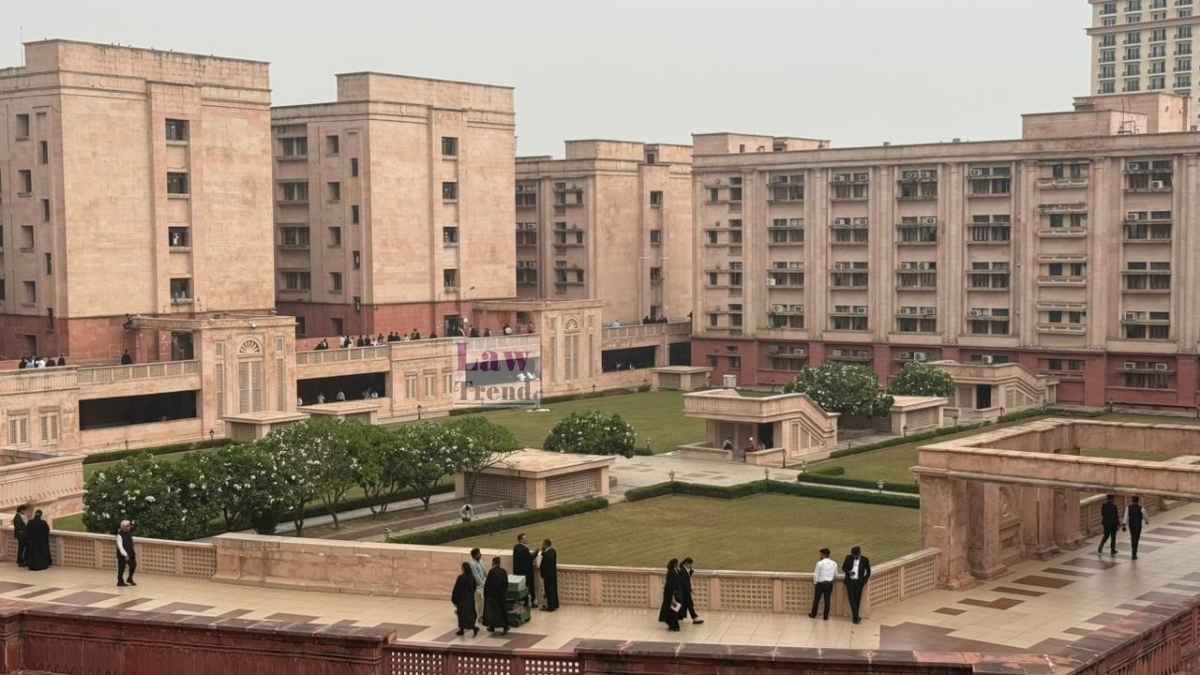

The High Court of Judicature at Allahabad, Lucknow Bench, has dismissed a writ petition challenging a First Information Report (FIR) registered under the Prevention of Corruption Act, 1988. The Division Bench, comprising Justice Abdul Moin and Justice Pramod Kumar Srivastava, ruled that an accused public servant does not have a legal right to explain alleged disproportionate assets prior to the registration of an FIR, nor is a preliminary inquiry mandatory before registering such a case when cognizable offense details are available.

Background of the Case

The petitioner, Deena Nath Yadav, challenged an FIR dated December 17, 2025, registered as Case Crime No. 0028 of 2025 at Police Station Lucknow Sector (Vigilance Commission), Lucknow. The FIR was registered under Sections 13(1)(b) and 13(2) of the Prevention of Corruption Act, 1988 (the “Act, 1988”).

According to the FIR, an open inquiry (Report No. ANU-2-KHULI-86/2020) conducted by the Vigilance Department found that Yadav, while working as a public servant, had spent an amount of Rs. 2.51 Crores & odd against his total legal earnings of Rs. 1.95 Crores & odd. This indicated an excess expenditure of Rs. 55,00,000/- & odd, which was disproportionate to his known sources of income. On December 4, 2025, his case was forwarded to the Uttar Pradesh Vigilance Department for investigation.

The open inquiry had been initiated on the basis of a confidential Demi Official letter dated June 12, 2020. Yadav, along with others, had previously challenged the initiation of this inquiry in Writ Petition No. 20001 (SS) of 2020 (Jaikar Singh and Ors. v. State of U.P. and Ors.). In that petition, the writ court on December 20, 2021, passed an interim order restraining the state from requiring the petitioners to furnish information regarding their assets, noting that the ongoing process was only a fact-finding inquiry and a regular vigilance inquiry would commence only after an FIR was lodged.

An inquiry report dated September 19, 2024, and a confidential memo dated October 9, 2024, both noted that the open inquiry against the petitioner had been concluded without calling for his explanation or documents regarding his income and expenditure.

Arguments of the Parties

For the Petitioner: The learned counsel for the petitioner, Indu Prakash Singh, argued that the allegations in the FIR were patently false.

The counsel placed reliance on Explanation 1 to Section 13(1)(b) of the Act, 1988, which states that a person is presumed to have intentionally enriched himself illicitly if he is in possession of pecuniary resources or property disproportionate to his known sources of income “which the public servant cannot satisfactorily account for.” The petitioner argued that since the statute defines the offense based on the public servant’s inability to satisfactorily account for the assets, an FIR under Section 13 of the Act, 1988, cannot be registered without first calling for the public servant’s explanation. The petitioner contended that by registering the FIR without seeking his version, the authorities had bypassed the statutory explanation requirement and pre-judged the issue.

READ ALSO  इलाहाबाद हाईकोर्ट ने निठारी मामले में फैसला सुरक्षित रखा: आरोपी ने मौत की सजा की अपील की थी

Furthermore, the petitioner argued that because of the interim order dated December 20, 2021, which restrained the respondents from demanding asset information, there was no occasion for the petitioner to have provided any explanation. The counsel also cited several interim orders passed by the High Court in similar writ petitions (such as Sushil Kumar v. State of U.P. and Raghvendra Kumar Gupta v. State of U.P.) where FIRs were stayed because they were registered without giving the employees an opportunity to explain their assets.

For the Respondents: Sri Anurag Verma, learned AGA-I, appearing on behalf of the state respondents, opposed the petition.

The state relied heavily on the Supreme Court judgment in State of Karnataka v. Sri Channakeshava H.D. and Anr. (2025) 4 S.C.R. 608, which cited the three-judge bench decision in Central Bureau of Investigation v. Thommandru Hannah Vijaylakshmi (2021) 13 SCR 364. The AGA argued that according to settled law, an accused public servant has no inherent or statutory right to explain alleged disproportionate assets before an FIR is registered, and requested the court to dismiss the petition.

Court’s Analysis

The High Court identified the central issue as whether a public servant must be given an opportunity to explain disproportionate assets, or whether a preliminary inquiry must be conducted, prior to the registration of an FIR under the Act, 1988.

To address this, the Court reviewed the Supreme Court’s ruling in Sri Channakeshava H.D. (supra), which explicitly stated:

“14. … an accused public servant does not have any right to explain the alleged disproportionate assets before filing of an FIR. We are also of the opinion that this is the correct legal position as there is no inherent right of a public servant to be heard at this stage.”

The Court also analyzed the landmark Constitution Bench ruling in Lalita Kumari v. State of U.P. (2014) 2 SCC 1, which established that registration of an FIR is mandatory under Section 154 of the CrPC if the information discloses a cognizable offense. Although Lalita Kumari recognized that “corruption cases” fall under a category where a preliminary inquiry “may be made,” the High Court emphasized that the use of the term “may be made” indicates that holding such an inquiry is not mandatory.

Referring to State of Telangana v. Managipet (2019) 19 SCC 87, the Bench noted that the purpose of a preliminary inquiry is to screen frivolous complaints and does not vest any right in the accused to demand one.

READ ALSO  Doctrine of Legitimate Expectation Itself Can’t Claimed as a Right Except When It Leads to Violation of Article 14: J&K&L HC

On the petitioner’s argument regarding Explanation 1 to Section 13(1)(b) of the Act, 1988, the Court observed:

“The reason is that apart from the fact that Explanation 1 does not indicate anywhere about a prior explanation and thus no words can be read in the statue when the same do not form part of statue.”

The Court highlighted the Supreme Court’s decision in K. Veeraswami v. Union of India (1991) 3 SCC 655, which analyzed the phrase “for which he cannot satisfactorily account.” The Supreme Court in that case rejected the claim that an accused is entitled to explain disproportionate assets before the investigating officer prior to the filing of a charge-sheet, stating:

“75. … But to state that after collection of all material the investigating officer must give an opportunity to the accused and call upon him to account for the excess of the assets over the known sources of income and then decide whether the accounting is satisfactory or not, would be elevating the investigating officer to the position of an enquiry officer or a Judge.”

Applying these principles, the High Court held that since a public servant has no right to explain disproportionate assets before a charge-sheet is filed, a similar right cannot be granted before the filing of an FIR.

Addressing the open inquiry report against Yadav, the Bench observed that the report itself constituted a “source report” containing detailed information. Citing Sri Channakeshava H.D., the Court observed that when an FIR is lodged based on such a source report, there is no requirement to obtain the petitioner’s statement beforehand.

READ ALSO  Allahabad High Court Queries ASI on Potential Prejudice from Whitewashing Sambhal Mosque

In the judgment, the Supreme Court’s decisions were discussed where different judges spoke for the benches:

  • In P. Sirajuddin, Justice G.K. Mitter expressed the need for a preliminary inquiry to avoid incalculable harm.
  • In Nirmal Singh Kahlon, Justice S.B. Sinha observed that a prima facie case may be held to have been established on completion of a preliminary inquiry.
  • In Lalita Kumari, Chief Justice P. Sathasivam held that registration of an FIR is mandatory when a cognizable offense is disclosed.
  • In Yashwant Sinha, Justice K.M. Joseph observed that pointing fingers at a public figure on allegations of corruption is an exception where immediate registration of an FIR may not be resorted to.
  • In Managipet, Justice Hemant Gupta ruled that a preliminary inquiry is not a must in all cases.
  • In Charansingh, Justice M.R. Shah, writing for a two-judge Bench that also included Justice D.Y. Chandrachud, noted that a preliminary inquiry is desirable to check if a cognizable offense is disclosed.
  • In K. Veeraswami, Justice K. Jagannatha Shetty, speaking for himself and Justice Venkatachaliah, rejected the contention that a public servant has a right to be heard before a charge-sheet is filed.
  • In Union of India v. State of Maharashtra, Justice Arun Mishra held that a preliminary inquiry is not required under the Atrocities Act.
  • In Vinod Dua v. Union of India, Justice U.U. Lalit rejected a prayer for creating an extra-statutory committee before registering FIRs against journalists.

Finally, regarding the various interim orders cited by Yadav’s counsel, the Bench remarked that they were merely interim orders and had not considered the settled propositions of law established by the Supreme Court in Thommandru Hannah Vijaylakshmi, Sri Channakeshava H.D., and K. Veeraswami, and thus had no applicability to the present case.

Decision

The High Court concluded that no case for interference was made out. Accordingly, the writ petition was dismissed.

Case Details:

  • Case Title: Deena Nath Yadav v. State Of U.P. Thru. Prin. Secy. Deptt. Home, Confidential And Vigilance, Lko. And Others
  • Case No.: Criminal Misc. Writ Petition No. 4156 of 2026
  • Bench: Justice Abdul Moin and Justice Pramod Kumar Srivastava
  • Date: May 21, 2026

Law Trend
Law Trendhttps://lawtrend.in/
Legal News Website Providing Latest Judgments of Supreme Court and High Court

Related Articles

Latest Articles

