

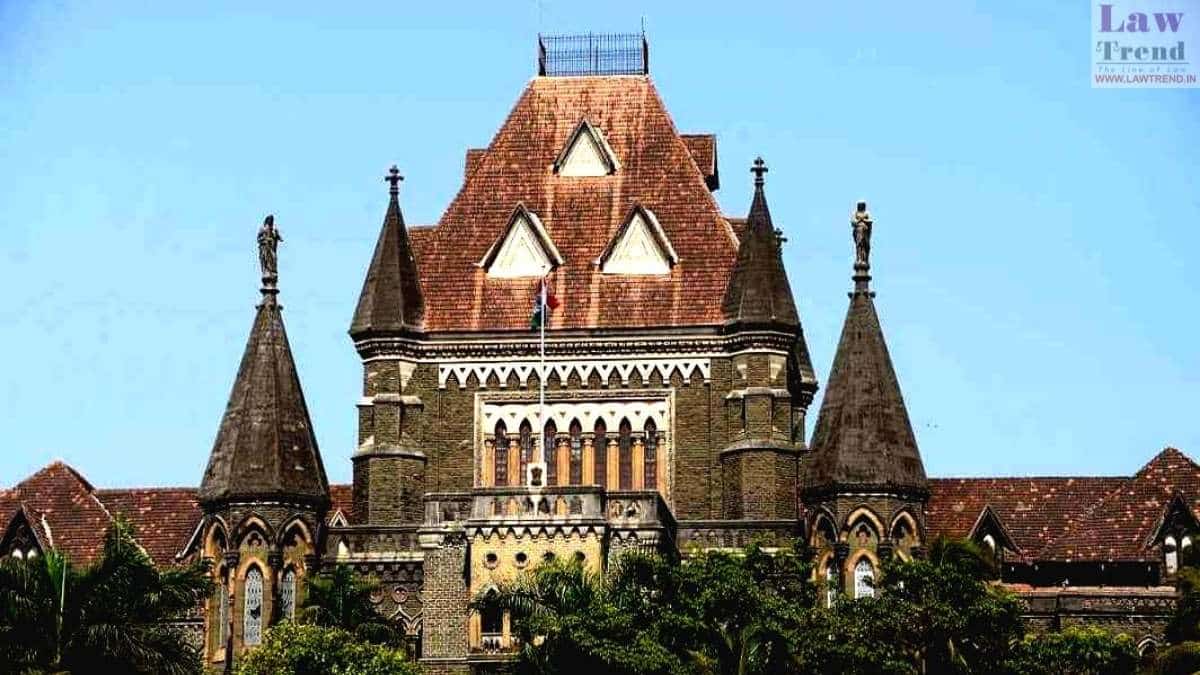
The Bombay High Court has ruled that contractual employees cannot claim permanent positions in public institutions if they do not meet eligibility requirements, stating that granting such requests would amount to an illegal “backdoor entry” into public employment.
The division bench of Justices R. I. Chagla and Advait M. Sethna dismissed a petition filed by Yuvraj Balasaheb Vharamble, a contractual legal officer at the Indian Institute of Technology (IIT) Bombay. Vharamble had approached the court to challenge his termination notice and seek regularisation in his role after nearly ten years of continuous service.
In its May 8 order, the High Court emphasized that the post Vharamble held—Executive Officer (Legal)—was never a sanctioned position and was created solely to handle temporary administrative exigencies.
The Evolution of a Decade-Long Contract
The dispute traces back to July 2015, when IIT Bombay advertised a temporary, unreserved vacancy for the position of Executive Officer. Yuvraj Balasaheb Vharamble, who holds an LLB (2000) and a Master’s degree in Commercial and Criminal Laws from Shivaji University (2002), applied for the role.
Vharamble received an official offer letter on February 8, 2016, which clearly outlined a contractual term of three years. He officially joined the premier institute on April 11, 2016.
Over the next several years, Vharamble’s contract was periodically renewed:
- April 2017: Received a salary increment with a written clarification that all original terms and conditions of his initial contract remained unchanged.
- May 2019: Granted another consolidated salary hike, which once again reiterated that his employment remained strictly contractual.
- March 13: Received an official notice stating his contractual tenure would conclude on April 23 and would not be extended further.
Following the termination notice, Vharamble filed a plea seeking regularisation as either Executive Officer (Legal) or Deputy Registrar (Legal), alongside claims for salary arrears and service benefits.
Argument: A Decade of Exemplary, Uninterrupted Service
Representing the petitioner, Advocate Aseem Naphade argued that the sudden termination of Vharamble’s contract was arbitrary, unreasonable, and contrary to the law.
Naphade contended that an employer cannot bypass an individual’s constitutional right to lawful employment simply by labeling a long-term position as “temporary,” “contractual,” or “ad hoc.”
The petitioner’s counsel highlighted that Vharamble had worked for nearly ten years with continuous salary increments, received on-record praise for his work, and had a spotless record with zero complaints. Naphade further urged the court that minor issues, such as exceeding the age limit for regular posts, should not defeat Vharamble’s substantive rights after a decade of dedicated service.
IIT Bombay’s Defense: Distinguishing Contract vs. Regular Roles
Senior Advocate Naushad Engineer, appearing for IIT Bombay, countered the petition by drawing a strict distinction between regular and contractual employment under the IIT statutes.
Engineer argued that Vharamble did not fall under the category of a regular employee or a workman. By presenting the original 2016 appointment letter, the senior counsel demonstrated that the employment was clearly and undisputedly contractual. He reiterated that the Executive Officer (Legal) post was temporary, lacked official sanction, and was established strictly to meet temporary administrative demands.
The High Court’s Ruling on Public Employment and Fairness
The Bombay High Court agreed with IIT Bombay’s stance, noting that the 2015 job advertisement and subsequent office orders consistently defined the job as contractual and temporary.
Rejecting the petitioner’s plea for permanency, the Bench observed:
“Accepting such contention of the petitioner would tantamount to giving a back door entry in the employment of the first Respondent (IIT Bombay), which is not what the law would require.”
While the court maintained that fairness and transparency in public administration are absolute constitutional obligations under Articles 14, 16, and 21, it clarified that these principles do not permit the regularisation of temporary, unsanctioned positions.
As a matter of temporary relief, the High Court has permitted Vharamble to continue residing in his official IIT Bombay accommodation for an extended period, valid until June 8.




