

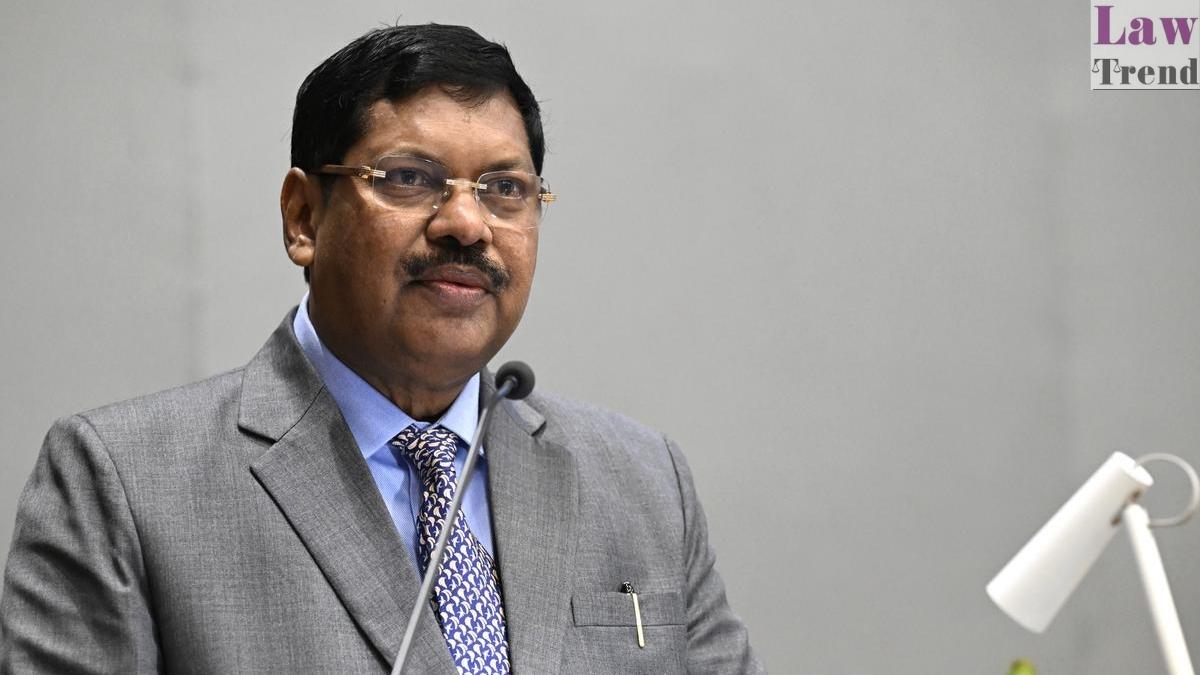
Former Chief Justice of India B R Gavai has delivered a powerful reminder of the delicate balance required to maintain a free state, describing the Bar and the Bench as the “two wheels of the golden chariot” upon which the accountability of the State rests.
Speaking on Sunday at the 52nd Annual Convocation of the Bar Association of Sri Lanka, Justice Gavai emphasized that an independent judiciary cannot function in a vacuum. Instead, he argued that the judiciary and the legal profession must act as complementary forces to sustain the promises of a constitutional democracy.
During his address, Justice Gavai warned that the stability of the legal system depends on the mutual strength of both judges and lawyers. He noted that the Bar and the Bench are not competing entities but are intrinsically linked.
“They are, as I often said in my speeches in India, the two wheels of the golden chariot on which the accountability of the State rests,” Gavai stated. “If one falters, the entire structure begins to lose balance.”
He further clarified that while the judiciary serves as the guardian of the Constitution, the Bar acts as its “vigilant ally.” According to Gavai, the legal profession is not merely a “professional privilege” but a “constitutional necessity” essential for challenging excesses and speaking for the voiceless.
Reflecting on the historical impact of the legal profession, Justice Gavai highlighted how lawyers have historically shaped the moral and political imagination of society. He pointed to the Indian freedom movement as a primary example, noting it was led by legal minds including Mahatma Gandhi, Jawaharlal Nehru, Sardar Vallabhbhai Patel, and B R Ambedkar.
By maintaining a culture of constitutional argument and resisting external pressures, Justice Gavai argued that an independent Bar ensures that democracy remains robust.
Drawing parallels between the democratic journeys of India and Sri Lanka, the former Chief Justice remarked that the survival of a constitutional democracy does not rely solely on written texts or institutional designs.
“Experience of both India and Sri Lanka demonstrates that the strength of constitutional democracy… depends equally upon the presence of an independent, vigilant, and engaged Bar,” he concluded.
His remarks serve as a timely call to action for legal professionals in the region to recognize their role not just as practitioners, but as vital defenders of the democratic framework.




