

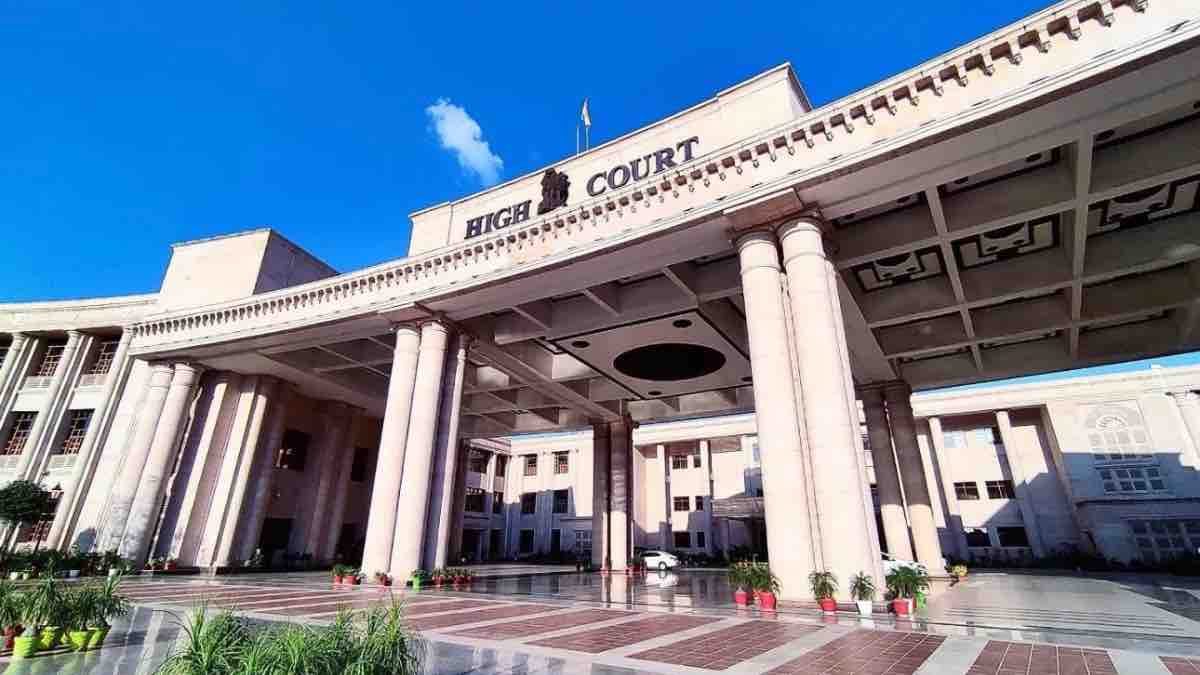
The Lucknow bench of the Allahabad High Court has delivered a stern warning to banking institutions against the “arbitrary” freezing of customer accounts, clarifying that a bank’s role is that of a trustee rather than a law enforcement or investigative body. The court observed that such actions, taken without formal directives from authorized agencies, severely disrupt business operations and damage the financial stability of account holders.
While allowing a petition filed by M/s SA Enterprises, a firm specializing in fishery machinery, a division bench comprising Justice Shekhar B. Saraf and Justice Avadhesh Kumar Chaudhary imposed a cost of ₹50,000 on the Indian Overseas Bank for its unjustified actions.
The legal battle began after M/s SA Enterprises found its account frozen by Indian Overseas Bank following a transaction on January 16, 2026. The company had received ₹23 lakh via RTGS, a sum the bank flagged as suspicious.
The bank’s justification for the freeze was based on the discrepancy between the single transaction and the firm’s declared annual income of ₹5.76 lakh at the time the account was opened. The bank contended that it acted under the provisions of the Prevention of Money Laundering Act (PMLA) to prevent potential financial irregularities.
The court rejected the bank’s defense, noting that the freeze was not initiated by any cybercrime alert or a directive from a statutory body. Instead, the bank had unilaterally decided to investigate the source of the funds.
“A bank acts as a trustee and not an investigative agency,” the bench remarked, emphasizing that banks lack the legal authority to determine the legitimacy of fund sources on their own. The court held that such powers reside exclusively with agencies like the Police, the Enforcement Directorate (ED), or the Central Bureau of Investigation (CBI).
The bench expressed deep concern over the “growing tendency” of banks to freeze accounts without valid legal grounds. The judges noted that these arbitrary actions have far-reaching consequences, stating:
“The increasing trend of freezing bank accounts without adequate grounds is a matter of concern… such arbitrary actions disrupt business operations and adversely affect the commercial reputation and financial stability of account holders.”
Finding the bank’s actions to be a misuse of power, the High Court directed Indian Overseas Bank to pay ₹50,000 in costs to the petitioner within four weeks. The ruling serves as a significant precedent for account holders facing similar hurdles with financial institutions.




