

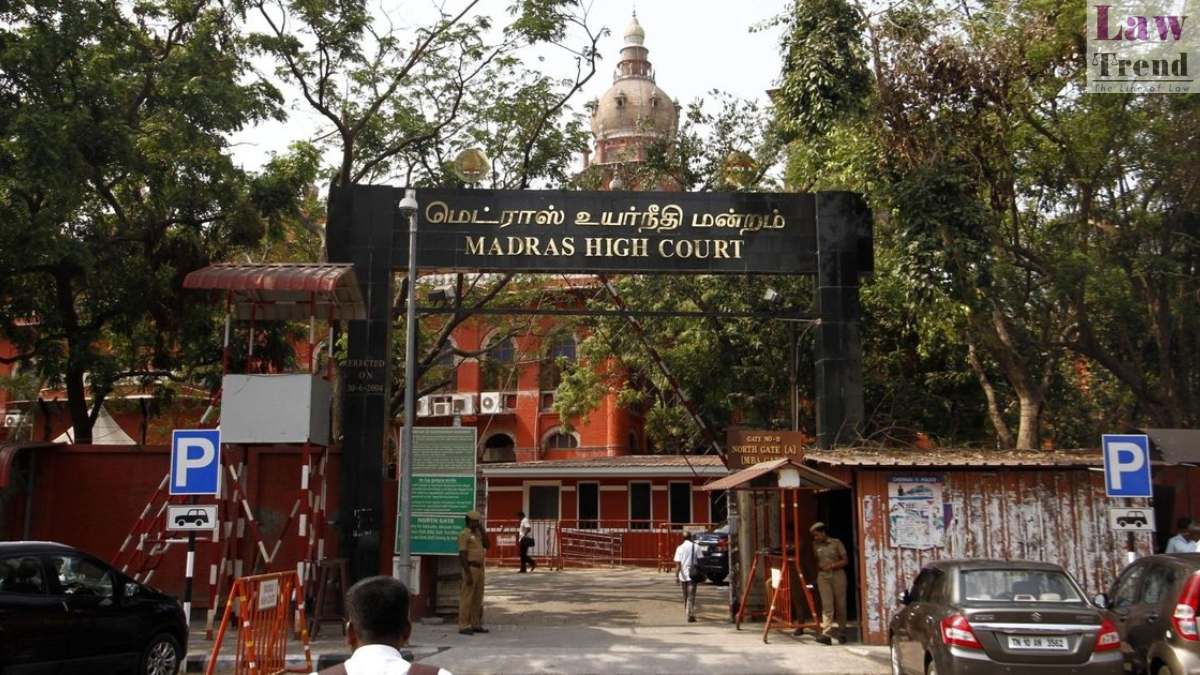
The Madras High Court has delivered a landmark ruling affirming that the government cannot discriminate against employees regarding maternity benefits based on the number of pregnancies. A division bench held that women undergoing a third pregnancy are entitled to the same leave period as those in their first or second pregnancy, declaring a recent government restriction to 12 weeks as “unjustifiable.”
The ruling came in response to a petition filed by Shayee Nisha, an employee who was denied full maternity benefits for her third pregnancy. On March 27, 2026, the Principal District Judge of Villupuram rejected her representation for maternity leave spanning from February 2, 2026, to February 1, 2027. Additionally, the Motor Accidents Claims Tribunal in Villupuram had directed her to rejoin service on April 27, 2026.
These rejections were based on a Government Order (GO) dated March 13, 2026 (G.O. (Ms) No. 18, Human Resources Management Department), which restricted maternity leave for a third pregnancy to just 12 weeks (three months), citing provisions of the Maternity Benefit Act, 1961.
The division bench, comprising Justices R. Suresh Kumar and N. Senthil Kumar, scrutinized the government’s stance, noting that such restrictions contradict established legal precedents from both the Supreme Court and the Madras High Court.
The bench observed that the physical and emotional requirements of pregnancy do not change with the number of children. The judges remarked:
“If it was a pregnancy, may be the first, second or the third, suffering would be the same and pre-delivery as well as post-delivery care must be taken by the women. This was equal to all such pregnancies. Therefore, no discrimination could be shown by the government in approving the maternity benefits.”
The Court further noted that while the government cited Sub-Section (3) of Section 5 of the Central Act 53 of 1961 to justify the 12-week cap, these legal “rigours” have become “otiose” (pointless) in light of settled law. The bench emphasized that Tamil Nadu, as a welfare state, has consistently introduced novel schemes for the upliftment of women, and this specific restriction was not in consonance with that policy.
The Court referred to the law settled in the Umadevi case, as followed by division bench judgments in the cases of B. Ranjitha and P. Mangaiyarkkarasi.
Setting aside the orders of the Principal District Judge and the Tribunal, the High Court directed the district judiciary to sanction Nisha’s maternity leave as equal to that provided for first and second pregnancies.
The bench ruled:
“The import of GO dated March 13, 2026, in our considered view, shall not control the District Judiciary in dealing with these kinds of applications from pregnant women for sanction of maternity leave, even for third pregnancy.”
The Principal District Judge has been directed to consider the application and sanction the leave within one week, disregarding the restrictive Government Order.




