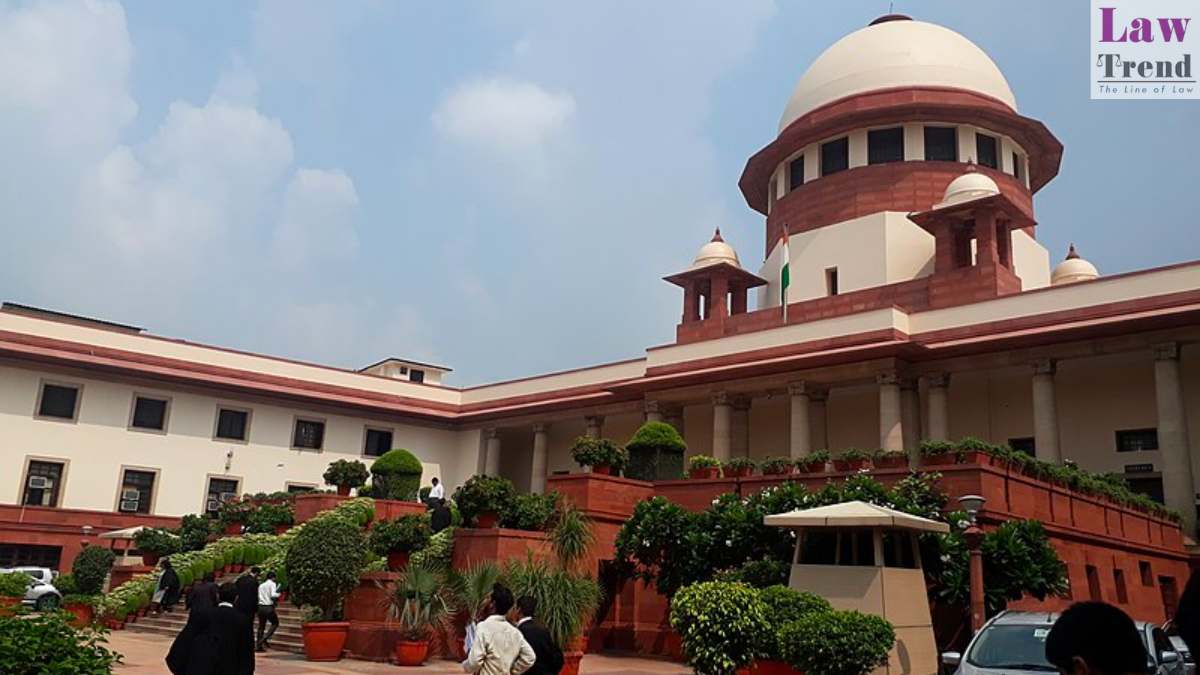
The Supreme Court of India has held that a Sub-Divisional Officer (SDO) does not possess the statutory authority to change the classification of “public utility land” to “cultivable land” to facilitate the grant of agricultural leases. The Court ruled that such re-categorization is a jurisdictional error, rendering any subsequent pattas (leases) void from their inception.
A Bench comprising Justice Prashant Kumar Mishra and Justice N.V. Anjaria dismissed an appeal filed by one Babu Singh, who challenged a High Court order that had upheld the expunging of his name from revenue records during consolidation proceedings in District Hardoi, Uttar Pradesh.
Background of the Dispute
Prior to October 1992, the subject land was recorded as “Category-6” in the khatauni under the U.P. Land Records Manual. Category-6 denotes barren or non-agricultural lands, including public utility sites like roads, buildings, and lands covered with water. Specifically, the land was recorded as khalihan (threshing floor) and pasture land.
In 1992, following reports from the Lekhpal and Tehsildar, the SDO approved a recommendation to change the land’s status from Category-6 to Category-5 (cultivable land). Following this re-categorization, pattas were granted to the appellant and several others.
Years later, during consolidation operations under the U.P. Consolidation of Holdings Act, a 2016 report by the Consolidator revealed that the land was originally public utility land referable to Section 132 of the U.P. Zamindari Abolition and Land Reforms Act, 1950 (Abolition Act). Consequently, the Consolidation Officer ordered the expunging of the appellant’s name and restored the land to its original status. This order was subsequently upheld by the High Court.
Arguments of the Parties
The Appellant argued that the SDO had the jurisdiction to effect the change under Paragraph Ka-155-Ka of the Manual and Section 227(4) of the U.P. Land Revenue Act. They further contended that the proceedings were barred by res judicata, as an earlier application for cancellation of the leases had been rejected by the Additional Collector in 1994.
The Respondents (State and Revenue Authorities) contended that Category-6 land, particularly pasture and khalihan, falls under Section 132 of the Abolition Act, which expressly prohibits the accrual of bhumidhari (ownership) rights. They argued the SDO had no power to circumvent this prohibition through re-categorization.
Court’s Analysis
The Supreme Court identified the central issue as whether the SDO had the jurisdiction to change the land’s category.
1. On Jurisdiction and Statutory Prohibition: The Court observed that Paragraph Ka-155-Ka of the Manual only relates to administrative entries affecting existing khatedars (tenure holders) and does not empower an officer to change the inherent category of the land itself.
The Bench noted that Section 132 of the Abolition Act “expressly stipulates that bhumidhari rights shall not accrue in respect of certain lands,” including pasture lands. The Court stated:
“If the submissions advanced on behalf of the appellant were to be accepted, it would permit subordinate officers to circumvent this express prohibition through the simple expedient of re-categorising land in revenue entries, thereby defeating the legislative intent entirely.”
Applying the legal maxim Quando aliquid prohibetur ex directo, prohibetur et per obliquum (what cannot be done directly cannot be done indirectly), the Court held that the re-categorization was an attempt to bypass statutory bars.
2. On Public Utility Land: Citing Hinch Lal Tiwari v. Kamala Devi and Jagpal Singh v. State of Punjab, the Court emphasized that communal resources must be “zealously protected.” It remarked:
“This Court recognised that public utility land cannot be legitimately converted for private benefits through administrative manipulation, and that consolidation proceedings themselves cannot be employed as a vehicle to circumvent statutory protections afforded to communal resources.”
3. On the Plea of Res Judicata: Regarding the 1994 order, the Court found that the Additional Collector had dismissed the earlier application at the threshold because there was no proof of the lease’s execution at that time. Since the validity of the pattas was never decided on merits, the principle of res judicata did not apply.
Final Decision
The Court concluded that the SDO’s action was undertaken without jurisdiction, making the subsequent grant of pattas “inextricably founded upon this invalid re-categorisation.”
“Since it is established that no bhumidhari rights accrue in respect of such lands, the pattas granted in favour of the appellant cannot be sustained and are treated to be void ab initio.”
Finding no patent illegality in the High Court’s judgment, the Supreme Court dismissed the appeal.
Case Details:
- Case Title: Babu Singh v. Consolidation Officer and Others
- Case No.: Civil Appeal No. 4633 of 2026
- Bench: Justice Prashant Kumar Mishra, Justice N.V. Anjaria
- Date: April 21, 2026