

Municipal Property Register Entry Not Valid Proof of Title: Supreme Court Restores Order for Plot Incorporation in Layout Plan
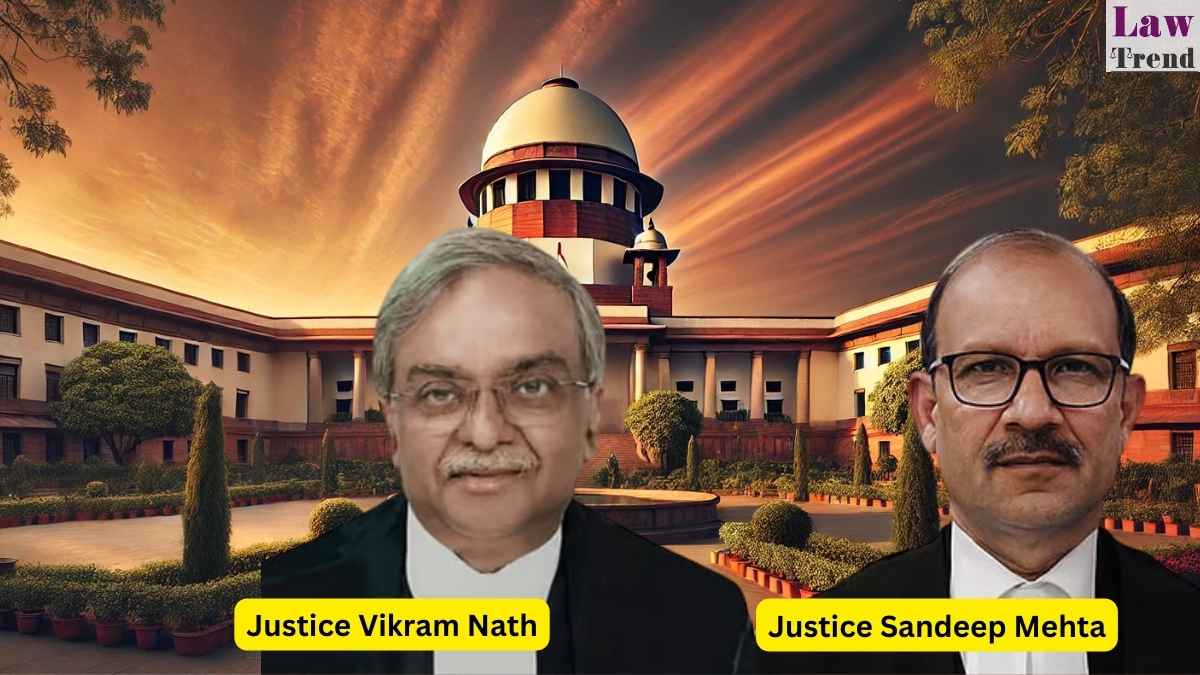
The Supreme Court of India has set aside a judgment of the Division Bench of the High Court of Delhi, restoring a Single Judge’s order that directed the South Delhi Municipal Corporation (SDMC) to consider an application for incorporating private plots into a colony’s layout plan. The Court held that the Division Bench was not justified in reopening the issue of title, which had attained finality through civil court decrees dating back to 1988.

Background

The dispute involves 1,600 square yards of land in Green Park Extension Colony, New Delhi. Originally owned by Urban Improvement Company Private Limited (the coloniser), the land was earmarked for a “High School” in a 1958 layout plan. However, in 1969, the Municipal Corporation of Delhi (MCD) sanctioned a revised layout plan deleting the “High School” reservation because the available area (1,600 sq. yards) was insufficient for the mandatory requirement of approximately 4,000 square meters.

The land was subsequently sold to five individuals in 1975. When the MCD attempted to interfere with their possession, the owners filed civil suits. In 1988, a competent civil court decreed these suits in favor of the owners, restraining the MCD from taking forcible possession except by due process of law. Appeals by the MCD against these decrees were dismissed by the District Court and the High Court in 1992, attaining finality.

The appellants, who are subsequent purchasers, applied for the incorporation of their plots into the layout plan. In 2014, the Layout Scrutiny Committee (LOSC) and the Standing Committee of the SDMC rejected these applications, claiming the land was recorded in the MCD’s immovable properties register.

The Legal Challenge

The appellants challenged the SDMC’s rejection in the High Court. A Learned Single Judge allowed the writ petition on March 3, 2016, observing that “mere entry in the I.P. Register does not entitle the Corporation to become the owner of the land.” The judge directed the SDMC to objectively consider the incorporation application.

READ ALSO  Supreme Court Stays Proceedings Against Shashi Tharoor in Defamation Case Over Remarks Against PM Modi

However, the SDMC appealed this before a Division Bench, which reversed the Single Judge’s order on April 24, 2019. The Division Bench questioned the finality of the 1988 title findings and suggested the SDMC acted as a “custodian of public interest” for land originally earmarked for a school.

Arguments of the Parties

Senior Counsel Siddharth Bhatnagar, appearing for the appellants, argued that the findings of the civil court on the issue of title had attained finality decades ago. He contended that the Division Bench “unjustly delved into the findings recorded by the civil Court” and made “unwarranted observations with respect to the title” when that was not the subject matter of the writ proceedings.

READ ALSO  Delhi High Court Imposes ₹35k Fine on Man Who Posed As PMO Official to Get VIP Temple Darshan, Government Vehicle

Conversely, Counsel Ashwani Kumar for the SDMC argued that the original suits were for perpetual injunction only, not for a declaration of title. He further contended that even if the school reservation was deleted, the land continued to be for “public purposes” and could not be subject to private ownership.

Analysis by the Court

The Bench comprising Justice Vikram Nath and Justice Sandeep Mehta observed that the Division Bench had recorded self-contradictory findings. While the Division Bench noted that title did not vest in the SDMC, it simultaneously clouded the appellants’ title.

The Supreme Court noted:

“A mere entry in the list of properties maintained by the MCD cannot, by itself, constitute a valid proof of title over the subject land.”

The Court emphasized that the 1988 civil court findings were never further challenged and that the MCD had previously admitted in other proceedings that the land was owned by private parties. The Court remarked:

“In such circumstances, the Division Bench was not justified in rendering observations so as to virtually unsettle the decree of the civil Court passed way back in 1988 and thereby, cause the title to be brought under dispute.”

Regarding the “public purpose” argument, the Court found that the land was de-reserved in 1969 due to size constraints. The judgment stated:

“The issue of title neither arose for consideration before the learned Single Judge, nor did the facts and circumstances of the case warrant any such adjudication.”

The Decision

The Supreme Court allowed the appeal and set aside the Division Bench’s judgment. The Court restored the Single Judge’s order, directing the SDMC to consider the appellants’ application for incorporation of the plots into the layout plan within 60 days by passing a speaking order.

The Court clarified:

READ ALSO  Accused Cannot Withdraw Application Become Approver Against Co-accused Once the Application is Accepted and Pardon is Already Granted: Bombay HC

“The disposition, as directed above, shall not be influenced or prejudiced by any of the observations made in the order passed by the Division Bench or in this order.”

Case Details

  • Case Title: Pawan Garg & Ors. v. South Delhi Municipal Corporation
  • Case No.: Civil Appeal No(s). ___ of 2026 (Arising out of SLP(Civil) No. 26487 of 2019)
  • Bench: Justice Vikram Nath and Justice Sandeep Mehta
  • Date: April 20, 2026

Law Trend
Law Trendhttps://lawtrend.in/
Legal News Website Providing Latest Judgments of Supreme Court and High Court

Related Articles

Latest Articles
