

MSME Relaxation in Tender Cannot Be Diluted at Evaluation Stage: Chhattisgarh High Court Quashes Dietary Services Tender
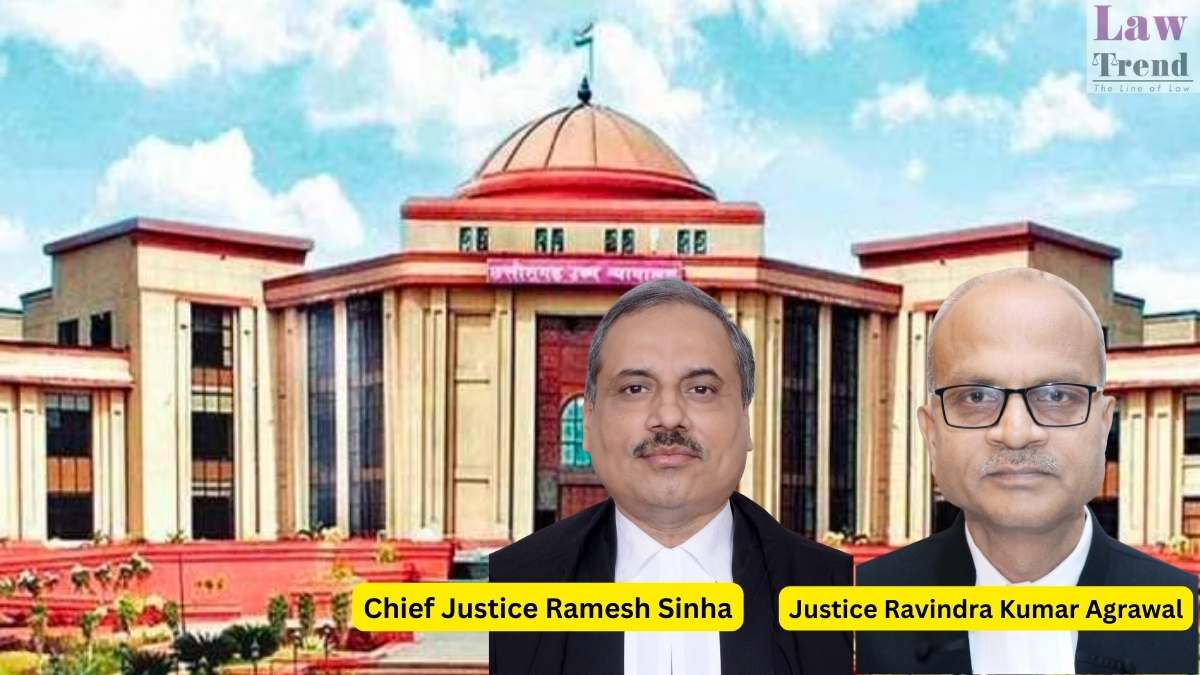

The High Court of Chhattisgarh has quashed a tender process for dietary services at the District Hospital, Jashpur, holding that state instrumentalities cannot dilute or selectively apply relaxations promised to Micro and Small Enterprises (MSEs) during the evaluation stage. A Division Bench comprising Chief Justice Ramesh Sinha and Justice Ravindra Kumar Agrawal ruled that awarding partial marks under a criterion from which a bidder is explicitly exempted constitutes “patent arbitrariness” and violates the principle of a level playing field in public procurement.

Background

The case arose from a tender floated on February 19, 2026 (Bid No. GEM/2025/B/7032239) by the Civil Surgeon-cum-Chief Hospital Superintendent, District Hospital, Jashpur, for providing dietary services. The contract, valued at approximately ₹60,00,000 for one year, required bidders to have a minimum average annual turnover of ₹50,00,000.

Crucially, the bid document stipulated that Micro and Small Enterprises (MSEs) would be granted complete relaxation from “Experience Criteria” and “Bidder Turnover,” subject to meeting quality and technical specifications. The petitioner, Adhishri Swa Sahayata Samuh—a women-led self-help group and registered MSE—participated in the bid. However, during the technical evaluation under the Quality and Cost Based Selection (QCBS) method, the respondents awarded the petitioner only 10 marks under the turnover criteria instead of granting full marks or an exemption. This led to the petitioner being relegated to ‘H2’ status after a tie in the financial bid with respondent No. 6, M/s Sushil Mishra.

Arguments of the Parties

Learned counsel for the petitioner, Mr. Anshul Tiwari, argued that once the bid document granted complete relaxation from turnover requirements, the petitioner ought to have been either exempted or granted full marks. He contended that awarding only 10 marks rendered the relaxation “illusory” and directly contravened the tender conditions. It was further submitted that the respondents ignored the petitioner’s representation and acted in a discriminatory manner, noting that a similar tender in District Balod required a turnover of only ₹15,00,000.

In response, the learned State counsel, Mr. Shashank Thakur, submitted that the evaluation was conducted objectively and in accordance with procurement rules. He argued that the turnover threshold was necessary to ensure financial and operational capability. He further contended that the petitioner was not entitled to MSME relaxation under the specific rules governing state procurement and that proportionate marks were awarded based on the documents submitted.

READ ALSO  नाबालिग गवाह की गवाही विश्वसनीय और पुष्ट होने पर दोषसिद्धि का आधार बन सकती है: छत्तीसगढ़ हाईकोर्ट ने POCSO मामले में दोषसिद्धि को बरकरार रखा

Court’s Analysis

The Court scrutinized the record and found that the bid document “unequivocally provides for complete relaxation” to MSEs. The Bench observed that the petitioner was a registered MSE and was prima facie entitled to the benefit. The Court expressed strong disapproval of the respondents’ methodology, stating that a relaxation consciously incorporated in a tender cannot be ignored at the evaluation stage.

The Bench observed:

“This Court is of the considered opinion that once a relaxation is consciously incorporated in the tender document, the same cannot be diluted, ignored, or selectively applied at the stage of evaluation. The action of awarding only 10 marks under the turnover criteria, despite the petitioner’s entitlement to relaxation, amounts to a patent arbitrariness and defeats the principle of a level playing field in public procurement.”

Regarding the rejection of the petitioner’s representation, the Court noted that the respondents’ decision-making process was “legally infirm” as it failed to address the core grievance and relied on grounds inconsistent with the tender’s own terms.

READ ALSO  Mere Involvement in a Sexual Offence Including Gang Rape Is Not Itself Sufficient to Invoke Preventive Detention Laws: SC

Decision

The High Court held that the impugned action was arbitrary and violative of Article 14 of the Constitution of India. Consequently, the Court quashed the Notice Inviting Tender (NIT) dated February 19, 2026, along with all consequential actions, including the declaration of respondent No. 6 as ‘H1’.

The Court granted the authorities liberty to initiate a fresh tender process, with the following mandate:

“While doing so, the respondents shall ensure due and meaningful compliance with the relaxation provisions applicable to Micro and Small Enterprises (MSEs), so as to uphold the principles of fairness, transparency, and equality in the evaluation process, and to ensure a level playing field to all eligible bidders.”

Case Details:

READ ALSO  Delhi HC Slaps Rs 1 Lakh Cost on Litigant Who Made Lord Hanuman Party in Private Temple Property Dispute

Case Title: Adhishri Swa Sahayata Samuh v. State of Chhattisgarh & Others

Case Number: WPC No. 1597 of 2026

Bench: Chief Justice Ramesh Sinha and Justice Ravindra Kumar Agrawal

Date: April 09, 2026

Law Trend
Law Trendhttps://lawtrend.in/
Legal News Website Providing Latest Judgments of Supreme Court and High Court

Related Articles

Latest Articles

