The Supreme Court of India has quashed criminal proceedings against a paediatric surgeon, Dr. S. Balagopal, observing that the surgical procedure performed was medically appropriate and that allegations of forging a consent form were not substantiated by expert medical opinion or forensic evidence.
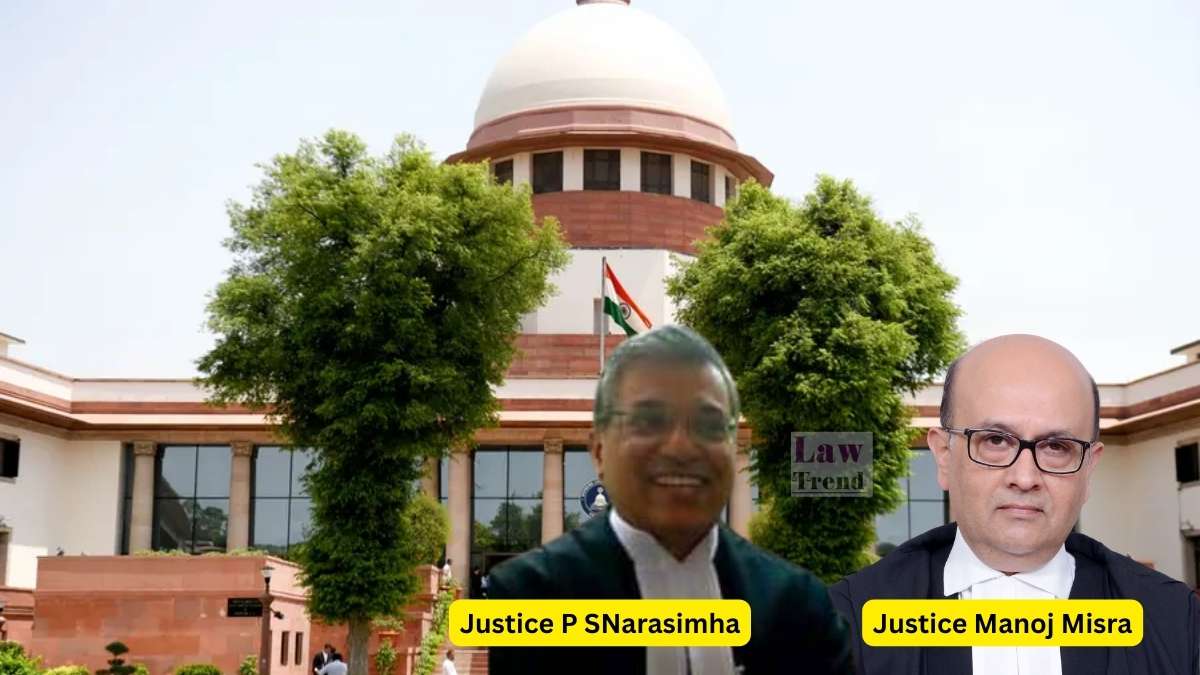
The Bench, comprising Justice Pamidigantam Sri Narasimha and Justice Manoj Misra, set aside the Madras High Court’s order which had refused to quash the case. The Court held that continuing the prosecution would be an “abuse of the process of the court.”
Case Background
The case originated from a complaint filed by the second respondent (R-2), whose one-and-a-half-year-old son was admitted to Sri Ramachandra Medical Centre in 2005 for a surgical procedure to address an undescended testicle.
According to the complainant, consent was given for Orchidopexy (moving the testicle into the scrotum). However, the surgeon performed an Orchidectomy (removal of the testicle). The complainant alleged that the term “Orchidectomy” was later interpolated into the consent form, amounting to forgery. Consequently, an FIR was registered in 2006 under various sections of the IPC, including Sections 465 (forgery) and 471 (using a forged document).
Medical Board Findings
Pursuant to earlier High Court directions, a Medical Board comprising specialists in Paediatric Surgery, Pathology, and Oncology from Government Stanley Medical College Hospital was constituted. The Board’s report dated July 29, 2010, stated:
“Left orchidectomy surgery done to the child… is an appropriate surgical procedure as per medical ethics and it should have been done with the consent of parents.”
The Board noted that the left testis was “very small, cystic and dysplastic,” presenting as a “nubbin of tissue.” In such cases, Orchidectomy is preferred over Orchidopexy because of the “more chance of malignant transformation” (risk of cancer) and because the tissue does not serve its physiological purpose.
Arguments by the Parties
The Appellant (Dr. S. Balagopal) argued that the Medical Board and the Investigating Officer’s reports did not castigate him for negligence. It was contended that Orchidopexy and Orchidectomy were both mentioned in the consent form using a slash (/), and no forensic report suggested interpolation or different handwriting.
The State of Tamil Nadu argued that while there might be no negligence, the lack of specific prior consent was a matter for trial. They maintained that whether the consent form was manipulated could only be determined during a full trial.
The De-facto Complainant (R-2), appearing in person, claimed he had specifically declined Orchidectomy during a phone call while the surgery was ongoing, yet the doctor proceeded with the removal and later manipulated the documents.
Court’s Analysis and Observations
The Supreme Court emphasized that medical professionals are placed on a different pedestal by criminal law, citing the standard for criminal negligence established in Jacob Mathew v. State of Punjab (2005).
While acknowledging that the issue of interpolation is generally a question of fact for trial, the Court noted:
“There can be no absolute bar on High Court’s power to consider questions of fact in exercise of jurisdiction under Section 482 Cr.P.C., particularly when such consideration is necessary to prevent the abuse of the process of the court or to secure the ends of justice.”
Regarding the consent form, the Court observed:
“A perusal thereof would indicate that in the column where the nature of proposed surgery is to be mentioned, both types of surgery i.e., Orchidopexy and Orchiectomy are mentioned by putting a slash (/), which means that the other surgery, namely, Orchidectomy, was one of the options available.”
The Bench further noted that the Director of Medical and Rural Health Services had not found the consent form suspicious and there was no material suggesting it was entered with different ink or handwriting.
Conclusion and Decision
The Court concluded that since the procedure was medically recognized as an appropriate alternative to meet a medical exigency and no malice was attributed to the doctor, the trial should not proceed.
“Taking a conspectus of all the facts and circumstances… we are of the view that continuance of criminal proceeding against the appellant would be nothing but abuse of the process of the court.”
The appeal was allowed, and the proceedings in C.C. No. 13 of 2008 on the file of the Judicial Magistrate No.1, Poonamallee, were quashed.
Case Details
- Case Title: Dr. S. Balagopal v. State of Tamil Nadu & Anr.
- Case Number: Criminal Appeal arising out of SLP (Crl) No. 14803/2023
- Bench: Justice Pamidigantam Sri Narasimha and Justice Manoj Misra
- Date: April 06, 2026