

Writ Against SARFAESI Action Not Maintainable Due to Alternative Remedy; Andhra Pradesh HC Dismisses Borrower’s Plea
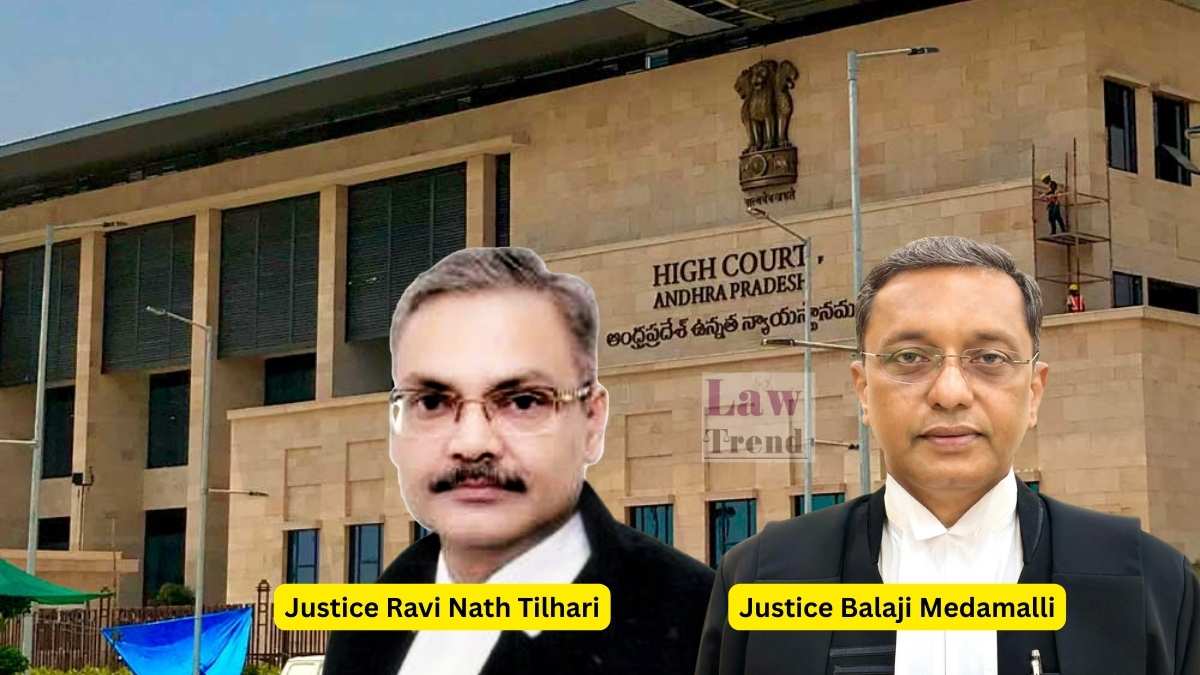

The High Court of Andhra Pradesh has dismissed a writ petition challenging recovery measures initiated by Canara Bank under the SARFAESI Act, 2002. The court ruled that when a “statutory efficacious alternative remedy” is available, judicial prudence dictates that the court should refrain from exercising its discretionary jurisdiction under Article 226 of the Constitution of India.

The Division Bench, comprising Justice Ravi Nath Tilhari and Justice Balaji Medamalli, reiterated that the SARFAESI Act provides a specific hierarchy for appeals, and this “fast track procedure cannot be allowed to be derailed” by bypassing statutory forums.

Background of the Case

The petitioner, Immadi Eswara Chandra Vidya Sagar, a 75-year-old director and mortgagor of M/s. Vasavi Electro Systems Private Limited, filed the writ petition challenging a Sale Notice dated February 17, 2026. The bank had initiated proceedings under Section 14 of the SARFAESI Act to take physical possession of his residential property situated in Ibrahimpatnam, NTR District.

The petitioner sought a Writ of Mandamus to declare the bank’s action as illegal and arbitrary. He argued that the bank should have exhausted recovery through the realization of other commercial, industrial, and non-residential assets before targeting his residential building. Additionally, he requested a fresh valuation of the secured assets by an independent valuer.

READ ALSO  Future Prospects Must be Considered in Awarding Compensation for Salaried Accident Victims: AP High Court

Arguments of the Parties

Representing the petitioner, Smt. Thota Suneetha argued that the bank’s measures violated the Principles of Natural Justice and fundamental rights under Articles 14, 19(1)(g), 21, and 300-A of the Constitution. She relied on Devaresetty Anasuyamma v. State Bank of India (W.P. No. 5675 of 2016) to suggest that the court could issue directions to the bank even if the underlying actions were legally compliant.

Sri T.B.L. Murthy, appearing for Canara Bank, maintained that the proceedings were in accordance with the law and that the petitioner had an alternative remedy under the Act.

Court’s Analysis and Observations

The Court observed that the petitioner qualifies as a “borrower” under Section 2(1)(f) of the SARFAESI Act as a guarantor. Since the challenge was directed at measures taken under Section 13(4), the court held that the petitioner had a statutory remedy available.

READ ALSO  Declaration of Holidays Falls in Realm of Policy Matters of State: Allahabad HC Rejects PIL Seeking Holiday on ‘Karwa Chauth’

Referring to the Co-ordinate Bench decision in Boddu Prasad Rao v. Punjab National Bank (2024 SCC OnLine AP 5742), the Court emphasized that while writ petitions are maintainable, they are “ordinarily not to be entertained” in the presence of an alternative remedy.

The Bench quoted the Hon’ble Apex Court’s warning from PHR Invent Educational Society v. UCO Bank (2024) 6 SCC 579:

“It is a matter of serious concern that despite repeated pronouncement of this Court, the High Courts continue to ignore the availability of statutory remedies under the DRT Act and the SARFAESI Act and exercise jurisdiction under Article 226 for passing orders which have serious adverse impact on the right of banks and other financial institutions to recover their dues.”

Furthermore, addressing the request for interim stay, the Bench cited Mangal Rajendra Kamthe v. Tahsildar, Purandhar (2026 SCC OnLine SC 297), which established that if a court declines to entertain a petition due to an alternative remedy, it is “impermissible to pass an order in the nature of an interim relief.”

READ ALSO  Matriculation Certificate is Conclusive Proof for Determining a Victim's Age: Chhattisgarh High Court

The Court concluded:

“As we are not inclined to entertain the writ petition itself on the ground of alternative remedy, any question of issuing any further direction does neither arise nor would be legally justified.”

Decision

Finding no exceptional circumstances to bypass the statutory remedy, the High Court dismissed the writ petition. No order was made as to costs, and all pending miscellaneous petitions were closed.

Case Details

  • Case Title: Immadi Eswara Chandra Vidya Sagar v. The Authorized Officer, Canara Bank and others
  • Case No.: Writ Petition No. 6000 of 2026
  • Bench: Justice Ravi Nath Tilhari and Justice Balaji Medamalli
  • Date of Judgment: March 6, 2026

Law Trend
Law Trendhttps://lawtrend.in/
Legal News Website Providing Latest Judgments of Supreme Court and High Court

Related Articles

Latest Articles

