

‘Intended Use’ Test Governs Excise Exemption On Naphtha Used In Mixed Steam Generation: Supreme Court Quashes ₹28.56 Crore Demand
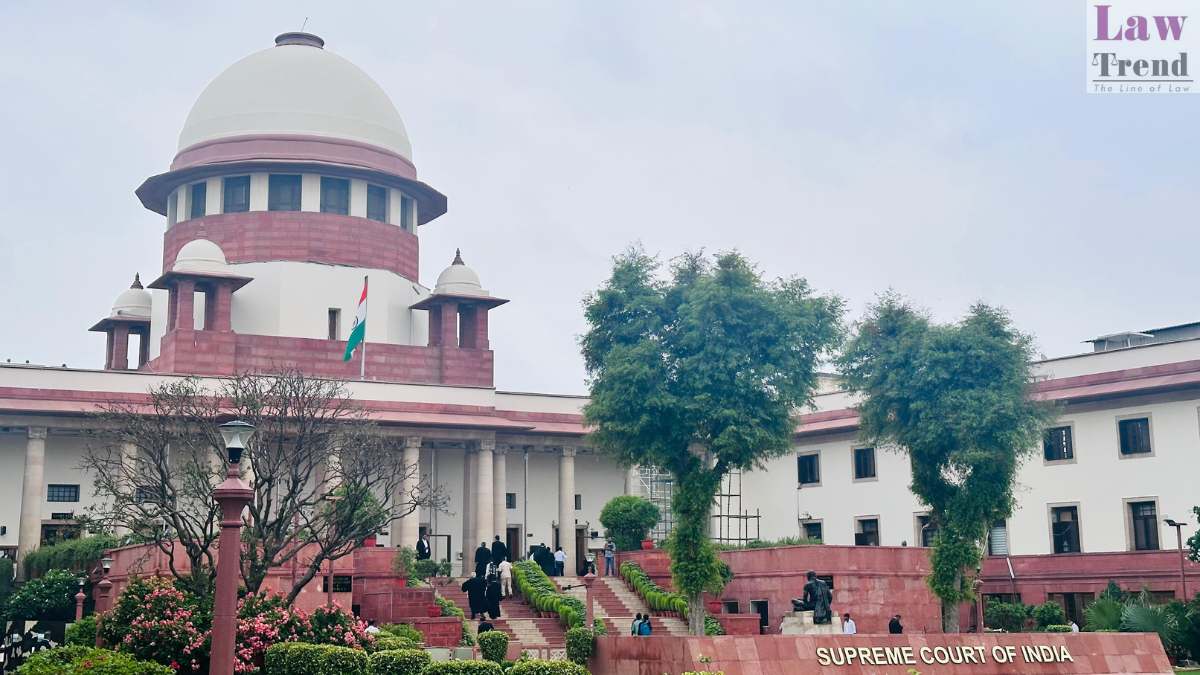

The Supreme Court of India has set aside an excise duty demand of approximately ₹28.56 crore against M/s. Rashtriya Chemicals and Fertilizers Limited (RCF), holding that the “intended use” of a raw material is the primary criterion for granting tax exemptions. The Court ruled that once the intention to use Naphtha for manufacturing fertilizers is established, the benefit cannot be denied even if a fraction is diverted due to technical compulsions or mixed steam generation.

A Bench comprising Justice Manoj Misra and Justice Ujjal Bhuyan delivered the judgment on March 24, 2026, allowing the appeals filed by the Public Sector Undertaking (PSU) against the orders of the CESTAT and the Revenue authorities.

Background of the Case

RCF operates a fertilizer plant at Thal, Maharashtra, where it manufactures urea and ammonia. During the period between 1996 and 2005, the appellant procured Naphtha from Hindustan Petroleum Corporation Limited (HPCL) at a nil rate of duty by availing exemptions under Notification Nos. 75/84-CE and 4/97-CE. These notifications exempted Naphtha “intended for use” in the manufacture of fertilizers or ammonia.

In February 2001, Central Excise officers observed that RCF used both Naphtha and natural gas as fuel in a common boiler to generate steam. While the majority of this steam was used in the fertilizer plant, a portion was sent to turbo generators to produce electricity. Some of this electricity was used in chemical plants or supplied to the Maharashtra State Electricity Board. The Revenue alleged that since Naphtha was not “exclusively” used for fertilizers, the exemption was mis-declared.

READ ALSO  Merit, Not Political Considerations Or Nepotism, Should Be the Basis of Appointment of Government Pleaders & Prosecutors: SC

Arguments of the Parties

For the Appellant (RCF): Senior Counsel Mr. Balbir Singh argued that Naphtha was procured with a bona fide intention for fertilizer manufacture. He contended that because Naphtha and natural gas were fed into a common boiler, it was technically impossible to segregate the steam by its fuel source. He emphasized that Naphtha was in short supply and supplemented by natural gas; thus, there was no question of diversion.

Furthermore, he raised the plea of “revenue neutrality,” stating that RCF, as a PSU, receives subsidies to maintain regulated prices. Any duty paid would eventually be reimbursed by the Central Government, meaning there was no gain in evading duty.

For the Respondent (Revenue): Additional Solicitor General Mr. Vikramjit Banerjee argued that the appellant had suppressed the actual use of Naphtha by mis-declaring in CT-2 certificate applications that it would be used “only” for fertilizers. The Revenue maintained that the “intended use” clause did not protect usage for non-specified products like organic chemicals or heavy water.

Court’s Analysis and Observations

The Supreme Court focused on the legal interpretation of the phrase “intended for use” appearing in the exemption notifications. Referring to the precedent in Steel Authority of India Vs. Collector of Central Excise (1996), the Bench observed:

READ ALSO  जीवन की कीमत पर समृद्ध नही हो सकते अस्पताल: सुप्रीम कोर्ट

“It is important to note that the exemption notification required proof that the raw naphtha was ‘intended for use’ in the manufacture of fertiliser and not that the raw naphtha was used in the manufacture of fertiliser. Due emphasis has to be given to the clear language… and its effect cannot be nullified.”

The Court rejected the CESTAT’s view that the recipient must prove actual exclusive use. It held that the requirement is satisfied if the goods are cleared for the purpose and with the intention of manufacturing fertilizer. Regarding the technical nature of the plant, the Court noted:

“Merely because the final destination of Naphtha could not be conclusively determined, the benefit of exemption cannot be denied, more so when the appellant has continuously complied with the procedure prescribed under Chapter X of the Central Excise Rules, 1944.”

On Revenue Neutrality and Limitation

The Court held that the Revenue was not justified in invoking the extended period of limitation of five years. It noted that RCF is a government-controlled PSU and the entire exercise was revenue neutral. The Court observed:

“Whatever excise duty it would have had to pay had it not been for the exemption notifications, would have been reimbursed by the Central Government by way of subsidy. Therefore, it is a clear case of revenue neutrality. In such a case… question of invoking the extended period of limitation does not arise.”

READ ALSO  सुप्रीम कोर्ट ने कानून के दुरुपयोग के मामले में सेवानिवृत्त कैप्टन के खिलाफ आरोपपत्र खारिज किया

The Bench also cited Pushpam Pharmaceuticals Company Vs. Collector of Central Excise to clarify that “suppression” must be deliberate, which was not the case here.

The Decision

The Supreme Court allowed Civil Appeal Nos. 2219-2220 of 2013 and set aside the orders-in-original dated 27.01.2010 and 04.02.2010. The Court also quashed the CESTAT order dated 27.03.2012.

The Court concluded that RCF succeeded on both merits—regarding the applicability of the “intended use” test—and on the point of limitation, as the Revenue failed to prove any mala fide intent to evade duty. A related appeal arising out of SLP (Civil) No. 21441 of 2013 was disposed of as having become academic.

Case Details

Case Title: M/s. Rashtriya Chemicals and Fertilizers Limited v. Commissioner of Central Excise and Service Tax (LTU)

Case Numbers: Civil Appeal Nos. 2219-20 of 2013

Bench: Justice Manoj Misra and Justice Ujjal Bhuyan

Date of Judgment: March 24, 2026

Law Trend
Law Trendhttps://lawtrend.in/
Legal News Website Providing Latest Judgments of Supreme Court and High Court

Related Articles

Latest Articles

