

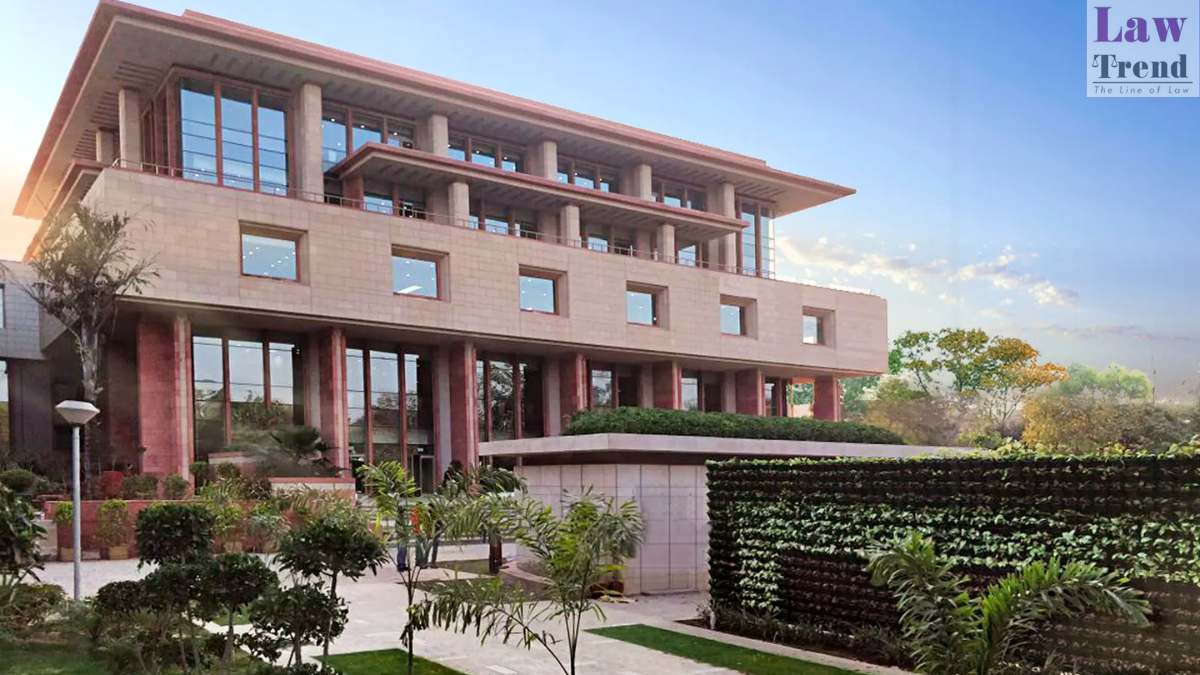
In a significant judgment reinforcing the right to peaceful expression within educational institutions, the Delhi High Court has revoked the suspension of a student from Dr. B.R. Ambedkar University. Justice Jasmeet Singh held that a university cannot restrict speech or the peaceful expression of ideas simply because they do not align with the management’s ideology. The court emphasized that a university’s role is to foster independent thought and critical thinking rather than demanding absolute obedience.
The legal dispute originated from events in March 2025, when a student (the petitioner) was suspended following protests on campus. These protests were sparked by allegations of ragging, bullying, and the use of derogatory and gender-insensitive remarks by a student in the Global Studies department, which reportedly led a student to self-harm.
In April 2025, while dealing with a separate petition, the High Court permitted the petitioner to attend classes on the condition that she would not participate in any further protests. However, the university management later alleged that the student participated in a campus-wide boycott in June 2025, leading to her expulsion for violating the court’s interim directions. The petitioner maintained that she was merely present at the site to meet a friend and had not participated in the protest.
The respondent university contended that the student was part of a sit-down protest, which directly violated the High Court’s order dated April 15, 2025. They argued that such conduct warranted strict disciplinary action to maintain campus order.
The petitioner, conversely, denied active participation in the boycott. She argued that being photographed by security at a protest site while meeting a friend did not constitute a violation of the court’s order. She further challenged the proportionality of the expulsion, noting the severe impact on her academic career.
Justice Jasmeet Singh observed that a university is an “instrumentality of the State” performing an “indispensable public function” in shaping future citizens. The court noted that even if the petitioner had participated in a peaceful sit-down protest against “arbitrary show cause notices” and for the “restoration of timing,” expulsion was an excessive response.
The court made several key observations regarding the nature of academic environments:
- On University Culture: “Justice Jasmeet Singh emphasised that a university must create an atmosphere where students feel free to participate in discussions on academic or public issues and peaceful protests and non-violent dissent are a natural part of such an environment.”
- On Critical Thinking: “A university that accepts only obedience fails in its broader educational role as it is not just a place where students attend classes and complete courses but also where they are expected to learn and inculcate independent thought processes, the ability to ask questions, and engage in critical thinking.”
- On Dissent: “When students express disagreement in a peaceful and orderly manner, without violence or serious disruption, such conduct cannot be treated as something outside the scope of holistic development.”
- On Disciplinary Authority: The court clarified that punishment for violating a court order lies with the court itself, not the university. It noted there were no allegations that the protest interfered with the functioning of the university or the academic pursuits of other students.
Finding the punishment to be “highly disproportionate” and unsustainable, the High Court allowed the petition and set aside the expulsion. While acknowledging that the petitioner had already lost one year of her academic career, the court directed that this period be treated as her punishment. The student has been permitted to resume her studies starting in July.




