

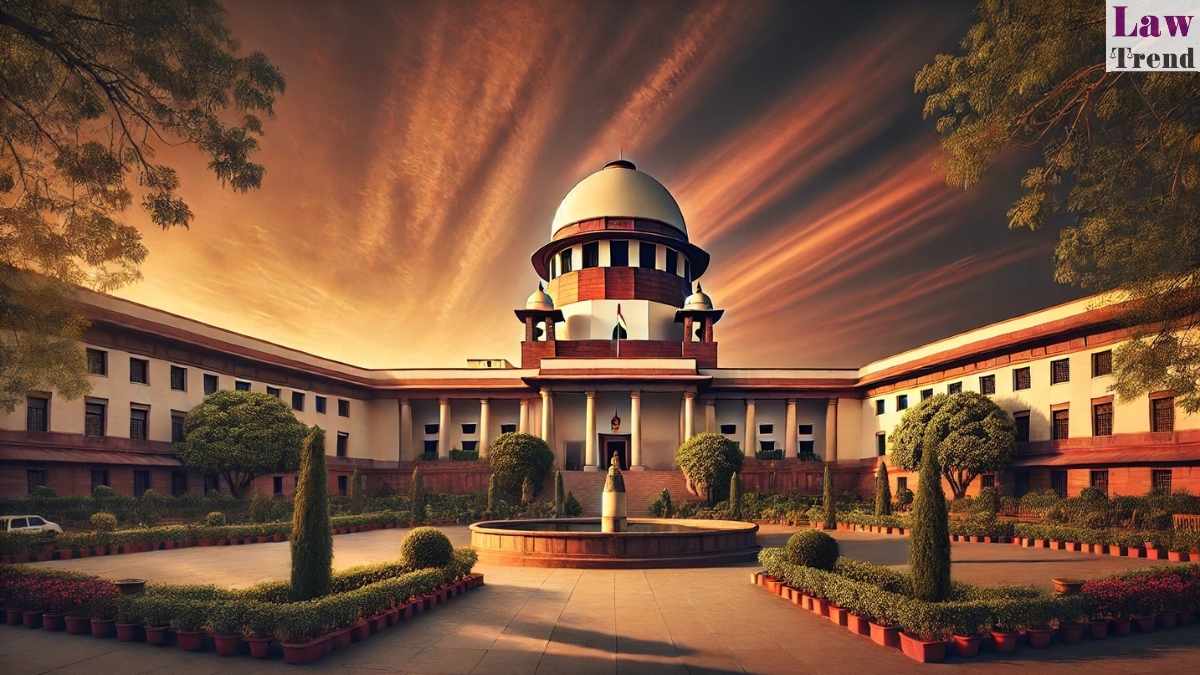
The Supreme Court of India on Friday expressed deep concern over the growing trend of individuals instantly uploading mobile phone footage to social media, describing such actions as a “serious threat” to the constitutional right to a fair trial.
A bench comprising Chief Justice of India Surya Kant, Justice Joymalya Bagchi, and Justice Vipul M. Pancholi observed that the digital landscape, where “every person with a mobile phone has become media,” is creating a vitiated atmosphere that risks subverting the rule of law.
The observations came during the hearing of a Public Interest Litigation (PIL) filed by Hemendra Patel. The petition alleged that police authorities frequently upload photographs and videos of the accused on social media platforms, intentionally creating public bias before a trial even begins.
Senior advocate Gopal Sankaranarayanan, appearing for the petitioner, flagged a disturbing trend of police posting images showing accused persons handcuffed, tied with ropes, paraded, or forced to kneel. He argued that these actions constitute an “affront to personal dignity” and prejudice public opinion.
Justice Bagchi noted that while the police are currently under a three-month deadline to formulate a Standard Operating Procedure (SOP) for media briefings, the issue of “social media” requires a much broader mechanism.
“Police can be restrained through the SOP. But what about the media, especially social media, and the public? Can they be restrained?” Justice Bagchi remarked, adding that traditional TV channels often appear “much more restrained” by comparison.
The Court emphasized that the investigating agency must remain neutral—neither pro-victim nor pro-accused—to ensure the truth is unraveled through a dispassionate forensic process.
“The manual [SOP] will restrain the police from making over-enthusiastic statements which may be inferable with regard to matters that are subject to adjudication,” Justice Bagchi stated. However, he questioned how the law could address “third-party indulgence” where sections of the media “go on spinning narratives,” resulting in a media trial.
The bench referred to the landmark Sahara versus SEBI (2012) decision, which first addressed the complexities of media trials in the Indian judicial context.
The discussion also turned toward the misuse of media identities. Solicitor General Tushar Mehta informed the court that certain virtual platforms operate as “blackmailers,” suggesting that “blackmailing is an understatement” for their activities.
Chief Justice Surya Kant highlighted a trend in smaller towns and cities where individuals flaunt fake media credentials for “ulterior designs,” comparing the phenomenon to a facet of “digital arrest.”
“There is a tendency… where people flaunt their credentials as media persons and boldly display it on their vehicles,” the CJI observed. In a related vein, Sankaranarayanan noted instances of advocates using “Supreme Court Advocate” stickers on vehicles specifically to evade highway tolls.
Acknowledging that the issue of ensuring a fair trial in the digital age requires a “comprehensive approach,” the bench suggested that the petitioner withdraw the current plea. The Court advised refiling a petition with an “enlarged scope” after April, once the government’s guidelines for police media briefings have been implemented and their impact can be assessed.
Accepting the court’s suggestion, the petitioner withdrew the matter with liberty to refile later this year.




