

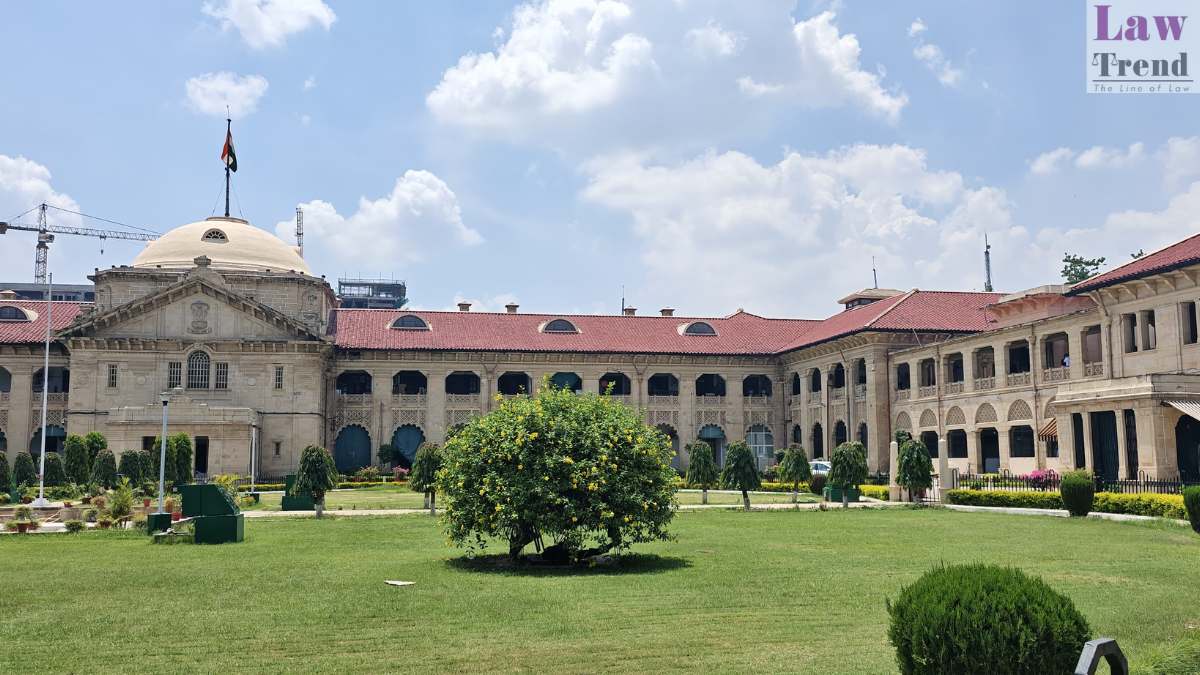
The Allahabad High Court has directed authorities in Uttar Pradesh to ensure that residential complexes provide accessible parking and unhindered access to common facilities for persons with disabilities (PwDs), holding that accessibility is a fundamental right. The court also refused to interfere with findings against a builder in a Ghaziabad project accused of altering a disabled allottee’s parking space.
In a significant ruling on accessibility rights, a division bench of Justice Atul Sreedharan and Justice Siddharth Nandan underscored that persons with disabilities are entitled to equal and barrier-free access to shared facilities in residential buildings.
“It is a fundamental right of a person with disability to have right to accessibility, for facilities which are common in a building or structure,” the court observed.
The bench, in its February 26 order, directed development authorities across Uttar Pradesh to strictly enforce Accessibility Rules at the stage of granting building permissions as well as before issuing completion certificates. The court stressed that compliance must not be treated as optional but mandatory.
It further instructed authorities to incorporate necessary guidelines in building plans to ensure that persons with disabilities are not placed at a disadvantage. These measures include creating designated parking spaces with clear access to lifts and ensuring connectivity to common amenities such as pavements, playgrounds, community centres and gymnasiums.
The case arose from a writ petition filed by M/S SCC Builders Private Ltd, which challenged an order passed under the Rights of Persons with Disabilities Act, 2016. The dispute related to a residential project, SCC Sapphire, in Ghaziabad.
The complaint was filed by an allottee who was 90 percent disabled. She alleged that nearly eight years after purchasing her flat, the builder had divided her parking space, making it difficult for her to access the lift.
The State Commissioner for Persons with Disabilities found merit in the complaint, holding that the builder’s action had created a hindrance in accessing essential facilities. The builder subsequently approached the High Court challenging these findings.
However, the court noted that a representative of the builder had participated in the proceedings before the commissioner. It also found that the parking space had been altered without the consent of the original allottee.
In light of these findings, the High Court declined to interfere with the commissioner’s order.
Reiterating its stance, the court said that accessibility to common facilities in residential structures is not merely a matter of convenience but a fundamental right for persons with disabilities, as it disposed of the petition.




