

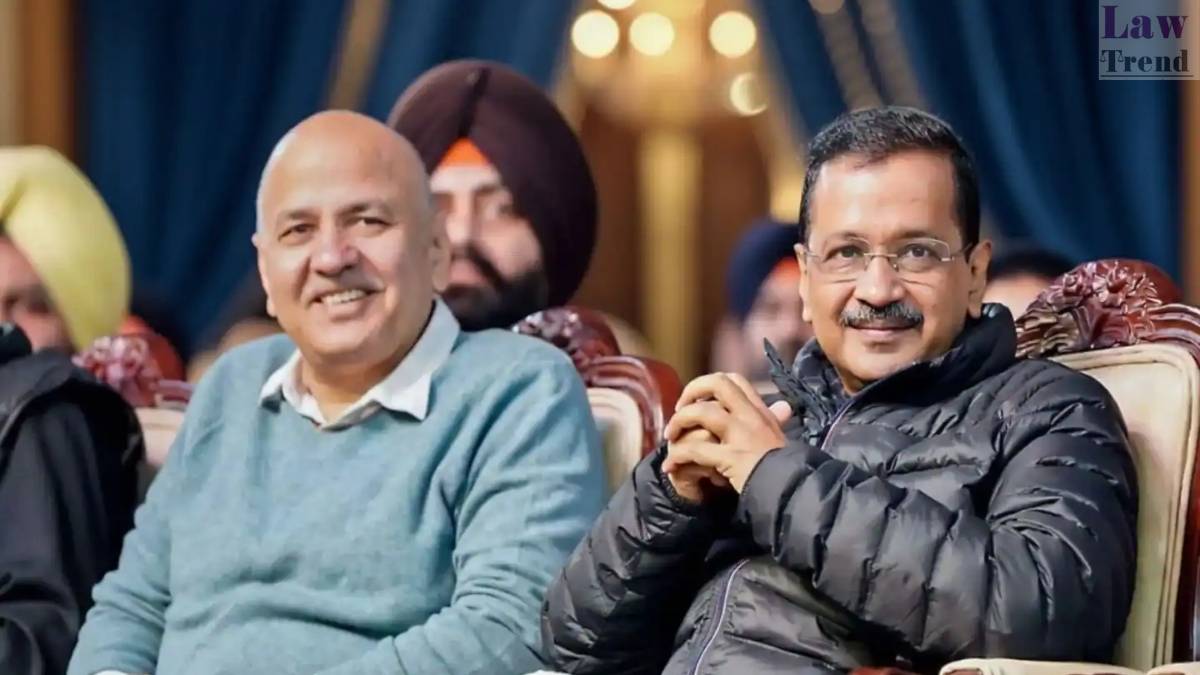
The Delhi High Court on Monday granted additional time to former Chief Minister Arvind Kejriwal, Manish Sisodia, and other respondents to file their replies to a petition filed by the Central Bureau of Investigation (CBI). The CBI’s plea challenges a trial court order that had previously discharged the Aam Aadmi Party (AAP) leaders in the high-profile excise policy case.
The proceedings took place before Justice Swarana Kanta Sharma, who scheduled the next hearing for April 6. The court’s decision to allow a reply came despite strong opposition from the CBI, which argued that the discharge order was an “exception” and should be reviewed urgently.
Legal Friction in the High Court
During the hearing, Solicitor General Tushar Mehta, representing the CBI, contended that the respondents had been served notice multiple times and that a formal reply or rejoinder was unnecessary. Mehta argued that the High Court only needed to examine the existing trial court records and the impugned discharge order itself. He further stated that the current delay was “causing prejudice to the system and prejudice to the litigant.”
In contrast, Senior Advocate N. Hariharan, appearing for Kejriwal, requested more time to study the trial court’s order, noting that it spans nearly 500 pages. He emphasized that the defense required adequate time to address the specific allegations raised in the CBI’s challenge.
Move to the Supreme Court
The legal battle has now expanded to the Supreme Court of India. Kejriwal and Sisodia have filed petitions under Article 32 of the Constitution, seeking to transfer the proceedings away from Justice Swarana Kanta Sharma’s bench.
According to AAP’s legal team, the move is based on concerns regarding “fairness.” The petitioners have pointed to “prima facie ex parte observations” allegedly made by Justice Sharma during earlier bail hearings, which they claim raise apprehensions about the impartiality of the current proceedings.
This escalation to the apex court follows a failed administrative request to the Chief Justice of the Delhi High Court, Devendra Kumar Upadhyaya. Chief Justice Upadhyaya had declined to transfer the case, stating that the petition was assigned according to the standard roster and that any decision regarding recusal must be made by the presiding judge themselves.
Context of the Case
The Delhi excise policy case involves allegations of irregularities and corruption in the formulation and implementation of the now-scrapped Delhi Excise Policy 2021-22. Both the CBI and the Enforcement Directorate (ED) are investigating claims that the policy was designed to provide undue benefits to private liquor players in exchange for kickbacks.
While the trial court had recently discharged several key figures, the CBI’s appeal seeks to reinstate the charges, maintaining that the evidence warrants a full trial.




