

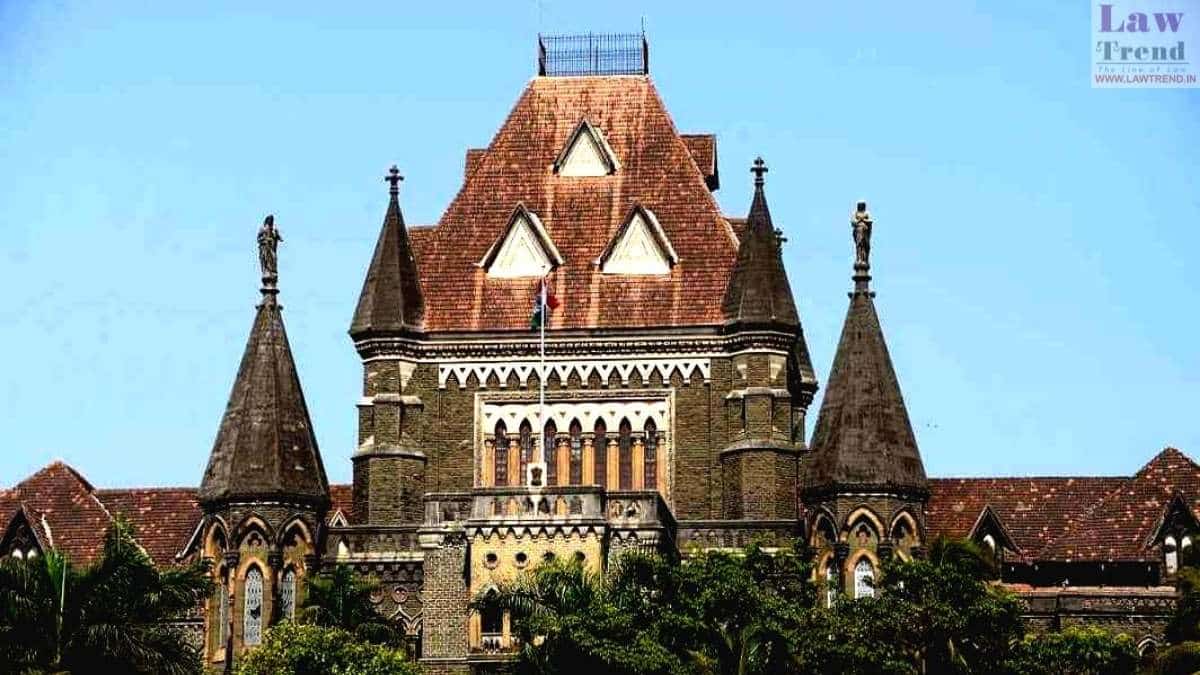
The Bombay High Court has refused to grant bail to a man accused of trafficking educated Indian youth abroad on the pretext of providing them with legitimate jobs, only to force them into carrying out cyber fraud schemes targeting foreign nationals. The court cited the seriousness of the allegations and the possibility that the accused could abscond or tamper with evidence if released.
A bench of Justices A. S. Gadkari and S. C. Chandak rejected the bail plea of Jerry Philips Jacob, observing that the material placed on record revealed a prima facie case of trafficking unemployed but educated youth from India under the guise of lawful overseas employment.
In its order dated March 10, which was made available on Friday, the High Court said the allegations indicated that victims were taken abroad with promises of legitimate jobs but were later compelled to engage in cyber fraud activities.
“The offence is serious in nature. It appears that if released on bail, the appellant is likely to abscond and tamper with evidence. Therefore, we are not inclined to grant him bail,” the court observed.
According to the bench, the victims had been led to believe that they would be employed in legitimate foreign companies. However, after reaching their destination, they were allegedly instructed to create fake social media profiles and build online identities to initiate conversations with individuals abroad about cryptocurrency investment opportunities, eventually inducing them to transfer money.
Jacob, who was arrested in March 2024, argued in his bail application that the individuals who travelled abroad were informed about the nature of their work and were given formal employment contracts. His counsel contended that there was no inducement, trafficking, or slavery involved, and claimed that invoking charges related to slavery was legally untenable.
The High Court, however, found that the victims were assured that the work they would perform abroad was lawful. It noted that the evidence suggested they were misled about the nature of the employment.
The case is being investigated by the National Investigation Agency (NIA), which has alleged that between December 2022 and March 2023, Jacob and four other accused, including two foreign nationals, targeted Indian youth who were proficient in computers and English.
According to the agency, the victims were promised lucrative jobs in Thailand but were instead transported to the Golden Triangle Special Economic Zone in Laos via Thailand, where they were forced to work in fraudulent call centres while travelling on tourist visas.
Once there, they were allegedly compelled to create fake online identities and engage in scams targeting people abroad.
The prosecution has further alleged that the victims were tortured and subjected to slavery-like conditions. When some of them attempted to seek help from the Indian Embassy, the accused persons allegedly abused and assaulted them and confiscated their passports.
The victims were eventually rescued by local police and repatriated to India, after which they filed complaints that led to the registration of the present case.
The accused have been booked under various provisions of the Indian Penal Code relating to human trafficking and slavery, along with provisions of the Immigration Act and the Foreigners Act.
After considering the material submitted by the NIA, the High Court observed that the evidence indicated Jacob’s awareness of the fraudulent activities, and concluded that the allegations were serious enough to deny bail at this stage.


