

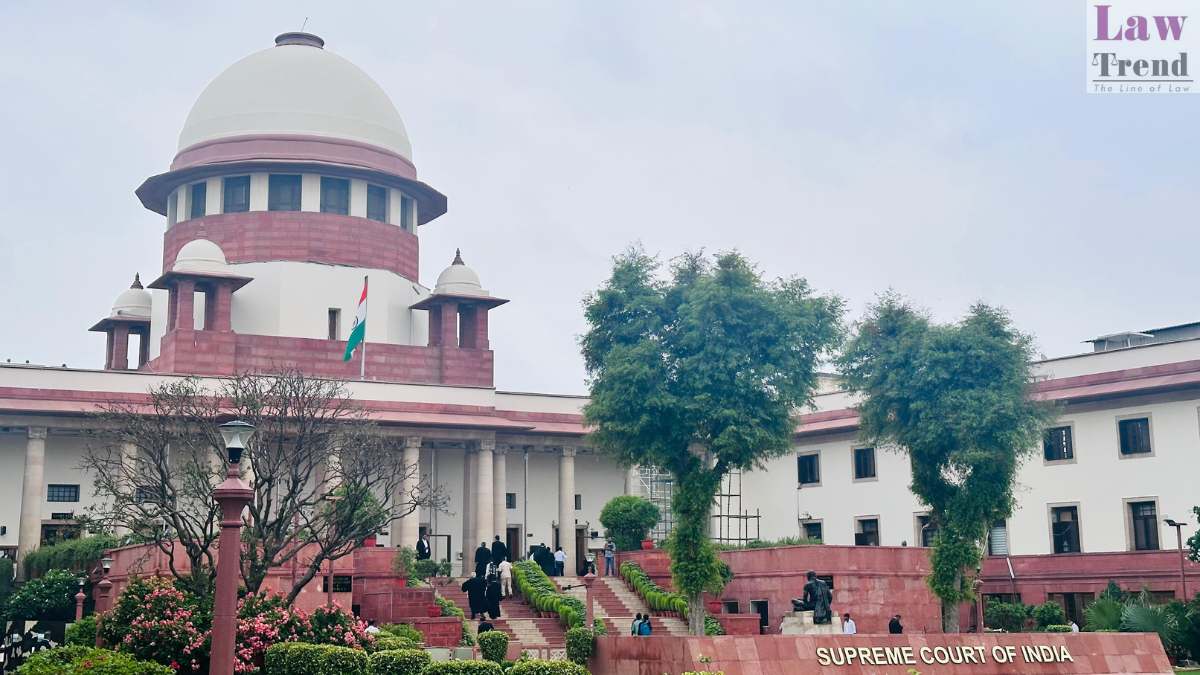
Suppression of Material Facts Disentitles Plaintiff to Equitable Relief: Supreme Court Denies Specific Performance

The Supreme Court of India has dismissed an appeal filed by a plaintiff seeking specific performance of a property sale agreement, upholding the High Court’s conclusion that the agreement was a “sham and nominal document” executed merely as security for a loan. The Court reiterated that equitable relief must be denied if a party approaches the court with “uncleaned hands” by withholding material facts and documents.

Background of the Case

The dispute arose over an agreement of sale dated June 4, 2002, concerning a house property located in Medchal Village, Ranga Reddy District. The agreement stipulated a total sale consideration of Rs. 13,00,000, out of which the plaintiff (appellant) claimed to have paid Rs. 6,00,000 as an advance to the defendants (respondents).

According to the registered agreement, the plaintiff was required to pay the balance of Rs. 7,00,000 within 11 months at the time of executing the sale deed.

The plaintiff filed a suit for specific performance after issuing a legal notice on April 25, 2003, alleging that he was always ready and willing to pay the balance amount, but the defendants avoided executing the sale deed. Initially, the Trial Court decreed the suit in favor of the plaintiff, noting his financial readiness based on bank statements. However, the High Court overturned this decision and dismissed the suit, prompting the plaintiff to approach the Supreme Court.

Arguments of the Parties

Plaintiff’s Stance: The plaintiff contended that he fulfilled his obligations under the agreement and possessed the necessary funds to complete the transaction. He argued that despite a formal legal notice, the defendants failed to reply or execute the sale deed, thus entitling him to a decree of specific performance.

READ ALSO  कोई भी आदेश दिए गए तथ्यात्मक परिदृश्य में पारित किया जाता है और निर्णय कानून के सिद्धांतों को निर्धारित करता है: सुप्रीम कोर्ट

Defendants’ Stance: The defendants presented a contrasting narrative, alleging that the plaintiff was an unlicensed money lender. They claimed the Rs. 6,00,000 was a hand loan and that the original title deeds were handed over with a clear understanding: the loan would be repaid within 12 months, after which the agreement would be canceled and the deeds returned.

The defendants stated this understanding was explicitly reduced to writing via a Memorandum of Understanding (MoU) on the exact same date—June 4, 2002. It was agreed that the property would only be transferred if the defendants failed to discharge the loan. Furthermore, the defendants claimed they made partial repayments of Rs. 1,00,000 and Rs. 1,50,000, but the plaintiff evaded issuing receipts for the latter and subsequently issued a legal notice suppressing the loan transaction entirely.

READ ALSO  Any attempt on the part of the accused to delay the trial of serious offences is to be dealt with iron hands: Supreme Court 

The Court’s Analysis

A two-judge bench comprising Justice Prashant Kumar Mishra and Justice Prasanna B. Varale examined whether the High Court was correct in determining the sale agreement to be a sham document.

The Supreme Court heavily relied on the concurrent execution of the sale agreement and the MoU (Exhibit B-2). The Court observed that both the MoU and a “no objection letter” by the defendants’ sons were executed on the same day, purchased from the identical stamp vendor, and attested by the exact same witnesses.

The Court noted:

“All these would probablise the defence of the defendant(s) that the agreement of sale was not a genuine transaction but was executed as a security for a loan transaction.”

Addressing the equitable nature of specific performance, the Court stressed the critical importance of a litigant’s conduct and bona fides. The Court observed:

“Even a slight doubt in the mind of the Court that the plaintiff was not acting bonafidely and that the material facts, having bearing on the agreement, have been withheld in the agreement itself and from the Court also, the equitable and discretionary relief has to be denied.”

READ ALSO  Accused Entitled to Access Case Documents, Excluding Those Impacting Victim's Privacy: Kerala High Court

The Court found the plaintiff guilty of suppressing the MoU from his original pleadings.

“A plaintiff approaching the Court with uncleaned hands, like in the present case-the plaintiff having withheld the document i.e., MoU (Exhibit B-2), as the same was nowhere mentioned in the plaint, the present was a fit case for denial of relief of specific performance…”

Decision

Finding no substance in the plaintiff’s appeal, the Supreme Court upheld the High Court’s judgment setting aside the Trial Court’s decree. The appeal was officially dismissed.

Case Details

  • Case Name: Muddam Raju Yadav vs. B. Raja Shanker (D) Through LRs. & Ors.
  • Case Number: Civil Appeal No. 3255 of 2026 (Arising out of S.L.P. (Civil) No. 6453 of 2024)
  • Bench: Justice Prashant Kumar Mishra and Justice Prasanna B. Varale
  • Date: March 10, 2026

Law Trend
Law Trendhttps://lawtrend.in/
Legal News Website Providing Latest Judgments of Supreme Court and High Court

Related Articles

Latest Articles

