

Section 66 Companies Act | Minority Shareholders Cannot Block Capital Reduction if Valuation Follows Accounting Standards: Supreme Court
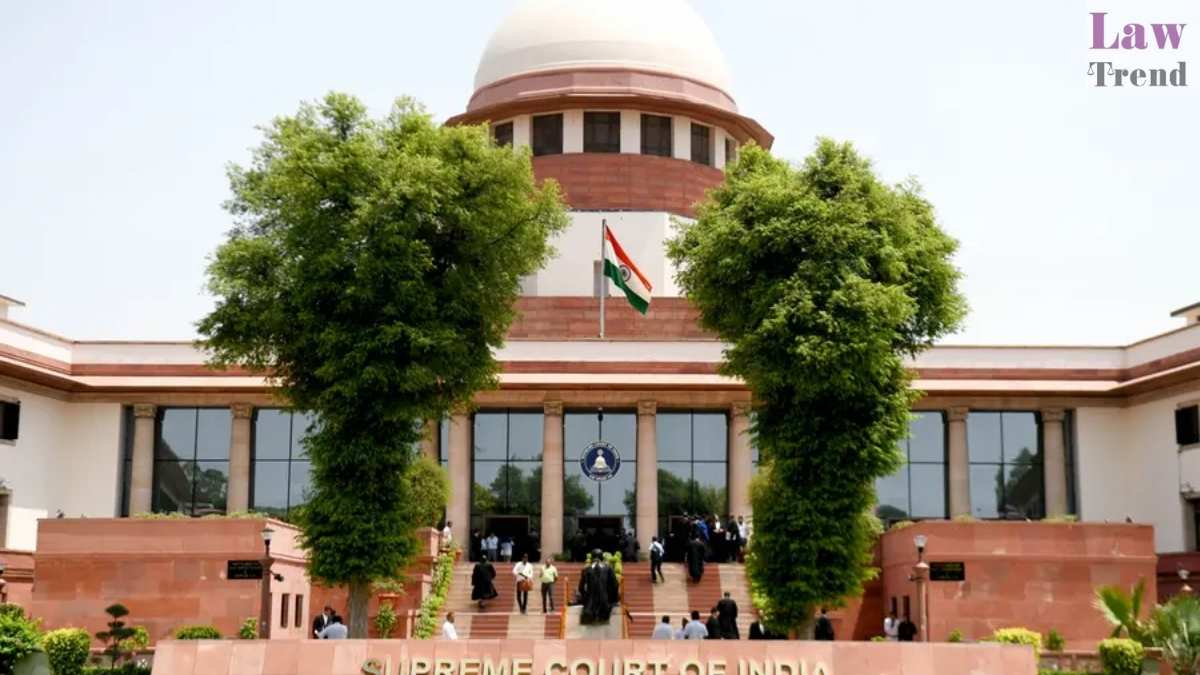

The Supreme Court of India has dismissed a batch of appeals filed by minority shareholders of Bharti Telecom Limited (BTL), upholding the company’s decision to reduce its share capital by cancelling the equity shares held by individual investors. The Court ruled that the application of a “Discount for Lack of Marketability” (DLOM) in valuing unlisted shares is a recognized accounting standard and does not, by itself, constitute prejudice or unfairness to minority shareholders.

The judgment was delivered by a Bench comprising Justice Sanjay Kumar and Justice K. Vinod Chandran in Civil Appeal No. 7655 of 2025 and connected matters.

The core legal dispute centered on whether Bharti Telecom Limited could arbitrarily “disgorge” minority shareholders of their holdings through the reduction of share capital under Section 66 of the Companies Act, 2013. The appellants challenged the valuation of ₹196.80 per share, alleging that the process was a “sham,” the notice was “tricky,” and the use of DLOM was an illegal method to depress the share price.

Background: The Minority Exit Scheme

Bharti Telecom Limited (BTL) is a closely held company. In 2018, the company decided to reduce its share capital by cancelling 28,457,840 equity shares held by individual minority shareholders (constituting 1.09% of its shareholding). The company initially fixed the price at ₹163.25 per share (after deducting Dividend Distribution Tax).

A special resolution was passed with a majority of more than 99.90%. The National Company Law Tribunal (NCLT) later directed the company to pay ₹196.80 per share, ruling that the tax deduction was arbitrary. While BTL acceded, thirty-five shareholders unsuccessfully appealed to the National Company Law Appellate Tribunal (NCLAT), eventually leading to the present appeals before the Supreme Court.

READ ALSO  UPI Intermediaries Responsible For Fund Transfer Issue- Court Orders PhonePe to Pay Compensation and Refund Amount

Rival Contentions: Procedure vs. Commercial Wisdom

For the Appellants: Senior Counsel Sri K. Parmeshwar, representing the investors, challenged the proceedings on three counts: the Manner (procedural infractions), the Method (valuation measure), and the Matter (the low price).

  • Manner: He argued the Board’s notice was “tricky” as it suggested shareholders requested an exit route when no such formal request existed. He also alleged bias because the valuer was an associate of BTL’s internal auditor.
  • Method: The appellants contended that DLOM was applied against international norms. They argued that since BTL’s only business was investment in Bharti Airtel Limited (BAL), the valuation should have been pegged directly to BAL’s listed price without discounts.
  • Matter: They claimed the price was arbitrarily low, citing a 2007 private offer of ₹2000 per share and a 2018 purchase by SingTel at ₹310 per share.

For the Respondents (BTL): Senior Counsel Sri Ramji Srinivasan and Sri Shyam Divan argued that all statutory requirements under Section 66 were met.

  • They emphasized that Section 66 does not mandate a valuation report, yet the company obtained one and a fairness report to ensure transparency.
  • They argued that valuation is not a matter of “mathematical certainty” and that the “claims of justice” were met since the majority (99.90%) approved the scheme.
  • They pointed out that a 2016 rights issue had exponentially increased the share base (115 shares for every 1 held), meaning the current payout of ₹196.80 per share resulted in massive gains for investors compared to their original holdings.
READ ALSO  Criminal Appeal Cannot be Dismissed as Infructuous, Rules Supreme Court

Judicial Analysis: Section 66 and Valuation Standards

1. On Composition of NCLAT Bench: The Court rejected the challenge to the NCLAT bench’s composition (two technical members and one judicial member). Citing Union of India v. Madras Bar Association (2010), the Court noted that as long as a Judicial Member is present and the adjudicators are “reasonable persons having resolute minds and unbiased views,” the presence of technical members is permissible to aid holistic adjudication.

2. No ‘Tricky Notice’ Found in Capital Reduction: The Court clarified the concept of a “tricky notice,” referencing Kaye v. Croydon Tramways and Baillie v. Oriental Telephone. It found no “artful framing” or “sedulous concealment” in BTL’s notice. The Court observed:

“The notice contains the full disclosure as required in a measure employed for reduction of share capital under Section 66, which is the price offered by the company which translates as an exit option for the identified shareholder.”

3. Validity of DLOM in Unlisted Share Valuation: The Court noted that Section 66 does not explicitly require a valuation report, unlike Sections 62 or 230. Regarding the method, the Court upheld the use of DLOM:

“Liquidity, after all is a valuable attribute of an investment and the lack of it is a depreciatory factor… DLOM is based on the premise that an asset which is readily marketable commands a higher value than an asset which requires longer period/ more efforts to be sold.”

The Bench found that BTL’s shares were unlisted and had zero marketability and dividend history. Therefore, applying a 25% discount for illiquidity was in line with Indian Accounting Standards (Ind AS 113) and ICAI Valuation Standards.

READ ALSO  Bench Strength is Determinative of the Binding Nature of the Judgment, Not Numerical Strength of Majority: Supreme Court

4. Final Assessment of Price Fairness: The Court found the price of ₹196.80 to be reasonable, especially considering the 2016 rights issue. It remarked that the appellants were “seasoned retail investors” who held onto shares with the “stoic resolve of a feline waiting patiently for its prey.”

The Court further held:

“Valuation is an exercise which is best left to the experts as has been held in Mihir H. Mafatlal v. Mafatlal Industries Ltd.

The Decision: Appeals Dismissed

The Supreme Court concluded that there was no “egregious wrong” or “palpable bias” in the valuation process. The Court held that the scheme was fair, just, and not prejudicial to any class of shareholders. Consequently, all appeals were dismissed.

Case Details:

  • Case Title: Pannalal Bhansali v. Bharti Telecom Limited & Ors.
  • Case Number: Civil Appeal No. 7655 of 2025 (and connected matters)
  • Bench: Justice Sanjay Kumar and Justice K. Vinod Chandran
  • Date: March 10, 2026

Law Trend
Law Trendhttps://lawtrend.in/
Legal News Website Providing Latest Judgments of Supreme Court and High Court

Related Articles

Latest Articles

