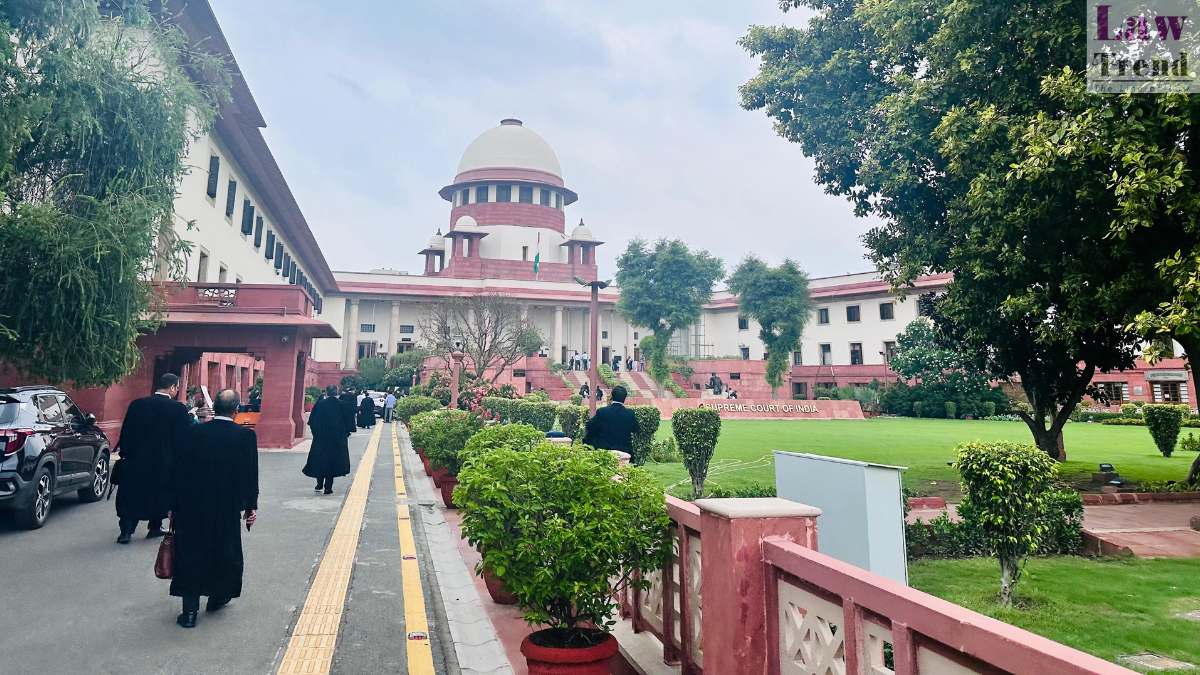
The Supreme Court of India has ruled that a Magistrate is not strictly required to conduct a mandatory inquiry under Section 202(1) of the Code of Criminal Procedure (CrPC) before issuing process against an accused residing outside their territorial jurisdiction, provided the complaint is filed by a public servant acting in the discharge of official duties.
A Division Bench comprising Justice Ahsanuddin Amanullah and Justice S.V.N. Bhatti allowed the appeals filed by the State of Kerala and Drugs Inspectors, setting aside the Kerala High Court orders that had quashed criminal proceedings against pharmaceutical companies M/s. Panacea Biotec Ltd. and Veekay Surgicals Pvt. Ltd.
Background of the Case
The judgment addressed two primary cases involving alleged violations under the Drugs and Cosmetics Act, 1940:
- The Panacea Biotec Ltd. Matter: A complaint was received on January 5, 2006, from a private individual regarding the misbranding of a vaccine. The outer carton of the drug claimed it to be an “Easy Five pentavalent vaccine,” while the inner vial was labeled as a “Tetravalent Vaccine Easy Four,” lacking the Hepatitis B component. Following an investigation and seizure of records by the Drugs Inspector, a formal complaint was filed before the Chief Judicial Magistrate (CJM), Thrissur, on January 20, 2009. The CJM issued summons to the accused. However, the Kerala High Court quashed the complaint, ruling that the CJM failed to conduct the mandatory statutory enquiry under Section 202 CrPC since the accused resided beyond the court’s territorial jurisdiction.
- The Veekay Surgicals Pvt. Ltd. Matter: A Drugs Inspector drew samples of “10ml Sterile Hypodermic Single-use Syringe Safe-plus” manufactured by Veekay Surgicals Pvt. Ltd. on November 13, 2014. The Government Analyst declared the drug “not of standard quality” after it failed sterility tests. Following a formal complaint, the High Court quashed the proceedings on two grounds: non-compliance with Section 202(1) of the CrPC and insufficient compliance with Section 34 of the Drugs and Cosmetics Act regarding the vicarious liability of the company’s directors.
Arguments of the Parties
For the Appellants (State of Kerala): Counsel for the State argued that the procedure under Section 202 of the CrPC cannot be treated as a mandatory requirement for complaints filed by public servants, as they stand on a different pedestal. Relying on the Supreme Court’s precedent in Cheminova India Limited v. State of Punjab, the State contended that the complainant cannot be faulted for a Magistrate’s omission, and the accused should not derive undue advantage from it.
For the Respondents: Conversely, Senior Advocate Mr. Siddharth Luthra vehemently argued that compliance with Section 202(1) of the CrPC is a sine qua non. He emphasized that the 2005 Amendment to the CrPC made the inquiry mandatory for accused residing beyond the Magistrate’s jurisdiction, and the legislature did not carve out any exception for public servants in the proviso to Section 202. He also attempted to distinguish the Cheminova judgment on its facts, arguing that the present complaint lacked corroboration by a Government Analyst’s report at the initial stage.
The Court’s Analysis
On the Period of Limitation
The Court first addressed the bar to taking cognizance under Sections 468, 469, and 473 of the CrPC. The Court observed that under Section 469(1)(c), the limitation period commences on the “first day on which the identity of the offender is known to the person aggrieved by the offence or to the police officer making investigation”.
The Court noted that the identity of all accused persons was fully established by the Competent Authority only on April 18, 2006. Therefore, the formal complaint filed on January 20, 2009, was well within the three-year limitation period prescribed under Section 468(2)(c) of the Code.
On Section 202 CrPC and Public Servants
The Supreme Court held that Section 202 of the CrPC must be construed harmoniously with Section 200 of the CrPC. Section 200 provides an exemption to the Magistrate from examining the complainant and witnesses on oath if the complaint is made in writing by a public servant acting in the discharge of official duties.
Rejecting the Respondents’ arguments, the Bench relied entirely on the precedent set in Cheminova India Limited, quoting:
“The legislature in its wisdom has itself placed the public servant on a different pedestal, as would be evident from a perusal of proviso to Section 200 of the Code of Criminal Procedure. Object of holding an inquiry/investigation before taking cognizance, in cases where the accused resides outside the territorial jurisdiction of such Magistrate, is to ensure that innocents are not harassed unnecessarily. By virtue of proviso to Section 200 of the Code of Criminal Procedure, the Magistrate, while taking cognizance, need not record statement of such public servant, who has filed the complaint in discharge of his official duty.”
The Court also noted that the earlier judgment in Birla Corporation Limited v. Adventz Investments and Holdings Limited, which was referred to by the High Court, involved a private complainant and was therefore inapplicable to the present facts.
On Section 34 of the Drugs and Cosmetics Act
Addressing the High Court’s finding that the complaint lacked sufficient averments to prosecute the directors of Veekay Surgicals under Section 34 (Offences by Companies), the Supreme Court ruled that the High Court’s view was “premature.” The Court observed:
“Whether or not, they were ‘in charge of’ and ‘responsible to the company for the conduct of the business of the company’ are questions of fact. To our mind, bearing in mind a holistic conspectus of the case, these questions are best left to be determined by the Trial Court, at the appropriate stage.”
Decision
The Supreme Court allowed the appeals filed by the State and the Drugs Inspector, setting aside the impugned judgments of the Kerala High Court. The orders taking cognizance and issuing summons were held to be good in law.
The Court directed that since the original Managing Director of Panacea Biotec had passed away, the prosecution could array the person(s) in charge of running the affairs of the company at the relevant time as accused. The Trial Courts were directed to issue fresh summons and proceed strictly in accordance with the law.
Title: The State of Kerala & Anr. v. M/s. Panacea Biotec Ltd. & Anr. (and connected matters)