

Registered Sale Documents Cannot Be Contradicted By Oral Plea Of ‘Security For Loan’: Delhi HC Dismisses Suit Citing Section 92 Evidence Act
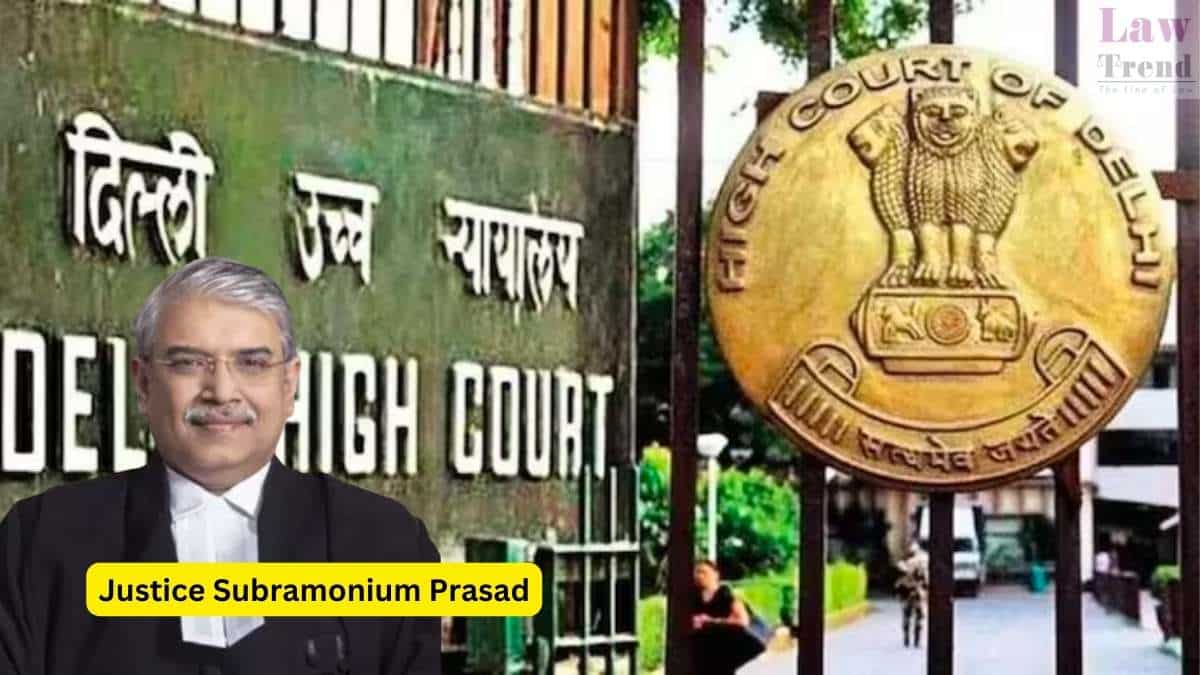

The Delhi High Court has dismissed a civil suit seeking to declare registered sale documents—including an Agreement to Sell, General Power of Attorney (GPA), and Will—as “sham” and “void,” ruling that the Plaintiff was precluded by Section 92 of the Indian Evidence Act from leading oral evidence to contradict the terms of a written contract.

The judgment, delivered by Justice Subramonium Prasad on February 23, 2026, allowed an application filed by the Defendants under Order XII Rule 6 of the Code of Civil Procedure (CPC) seeking the dismissal of the suit. The Court held that when terms of a contract are reduced to a formal document and registered, oral evidence cannot be admitted to show that the transaction was merely a “financing arrangement.”

Background of the Dispute

The case, Gopal Krishan Srivastava v. M/s Lakras Infracon Pvt. Ltd. & Ors., concerned a residential plot (Plot No. 121, Sector 23, Dwarka) allotted to the Plaintiff by the Delhi Development Authority (DDA) in 2010. To pay the DDA, the Plaintiff claimed he arranged a loan of approximately ₹40,00,000 from Defendant No. 2.

The Plaintiff alleged that as security for this loan, he executed several registered documents on July 12, 2010, including an Agreement to Sell, GPA, Special Power of Attorney (SPA), and a Will in favor of Defendant No. 1 company. He contended that the parties were ad idem (of one mind) that there was no intention to transfer rights in the property, and the documents were merely for security.

In 2022, after the Defendants issued a ‘No-Objection Certificate’ (NOC) to the DDA for the execution of a perpetual lease deed in the Plaintiff’s favor, a dispute arose. The Plaintiff claimed the Defendants refused to return the original documents and demanded a fresh agreement for sale at ₹1,50,00,000. He subsequently filed the suit for cancellation of the 2010 documents and for physical possession of the property.

READ ALSO  Insurance Company Cannot Escape Liability Due to Meager Dishonoured Cheque Amount: Chhattisgarh High Court

Arguments of the Parties

Plaintiff’s Contentions: The Plaintiff argued that the 2010 documents were “sham” and executed for the limited purpose of creating security. He highlighted the 2022 NOC issued by the Defendants as evidence that they did not claim title. He further argued that the cause of action was ongoing, particularly as the DDA had issued show-cause notices regarding the transfer.

Defendants’ Contentions: The Defendants moved an application under Order XII Rule 6 CPC for dismissal of the suit. They argued that the suit was barred by Section 92 of the Indian Evidence Act, as the Plaintiff was trying to vary the terms of registered documents through an alleged oral financing agreement. They also raised objections regarding limitation, asserting the suit should have been filed within three years of the first DDA show-cause notice in 2011. They claimed they had paid ₹52,25,000 as consideration and were in possession of the property.

Court’s Analysis and Observations

The Court first addressed the issue of limitation, disagreeing with the Defendants. Justice Prasad observed that the 2011 cause of action was against the DDA, whereas the present suit was an exercise of “right in personam” against the Defendants.

However, on the merits of the “sham document” plea, the Court found the Plaintiff’s case legally unsustainable. The Court noted:

READ ALSO  Dependent of Freedom Fighters Not Entitled to Reservation in Panchayat Elections: Allahabad HC

“In the opinion of this Court, the entire case of the Plaintiff hinges on an oral financing arrangement, for which, not a single document has been filed by the Plaintiff, to indicate that all these documents were executed only as a security for the purported loan advanced by the Defendants.”

The Bar under Section 92 of the Evidence Act: The Court emphasized that Section 92 excludes evidence of oral agreements when terms have been reduced to writing. The Court stated:

“When the documents need not be proved, in view of Section 92 read with Section 95 of the Evidence Act, 1872, the Plaintiff is precluded to lead evidence for the purpose of contradicting, varying, adding to, or subtracting the terms of the contract which has been reduced in the form of an document.”

The Court clarified that the NOC issued by the Defendants in 2022 did not assist the Plaintiff in varying the 2010 Agreement to Sell. It noted that the Defendants could not seek specific performance until the DDA conveyed title to the Plaintiff, which explains the issuance of the NOC.

Citing Supreme Court Precedents: The Court relied on the Apex Court’s ruling in Mangala Waman Karandikar v. Prakash Damodar Ranade (2021), which held:

“Section 92 specifically prohibits evidence of any oral agreement or statement which would contradict, vary, add to or subtract from its terms… It could not be postulated that the legislature intended to nullify the object of Section 92 by enacting exceptions to that section.”

READ ALSO  मवेशियों के शवों के निपटान के लिए अधिकारियों द्वारा अपनाई गई प्रक्रिया को हाईकोर्ट ने नामंजूर कर दिया है

Furthermore, citing Tamil Nadu Electricity Board v. N. Raju Reddiar (1996), the Court reiterated that once a contract is reduced to writing, parties are bound by its terms and cannot lead oral evidence to ascertain a different “intention.”

Decision of the Court

The Court concluded that the Plaintiff had filed the registered documents himself, thereby admitting them. In the absence of any written document to prove a loan or security arrangement, the Plaintiff could not lead evidence to contradict the registered sale documents.

The Court held:

“This Court is of the opinion that a decree dismissing the Suit is liable to be passed, inter alia on the basis of the admitted documents filed along with the Plaint.”

While the main suit was dismissed, the Court noted that it was not expressing any opinion on the Defendants’ counter-claim for specific performance, which would be examined separately. The matter is listed for framing of issues in the counter-claim on April 21, 2026.

  • Case Title: Gopal Krishan Srivastava v. M/s Lakras Infracon Pvt. Ltd. & Ors.
  • Case Number: CS(OS) 685/2022

Law Trend
Law Trendhttps://lawtrend.in/
Legal News Website Providing Latest Judgments of Supreme Court and High Court

Related Articles

Latest Articles

