

Mere Capacity to Earn Not a Ground to Deny Maintenance: Delhi High Court Awards Interim Support to Wife; Slams Notion of ‘Idle Wife’
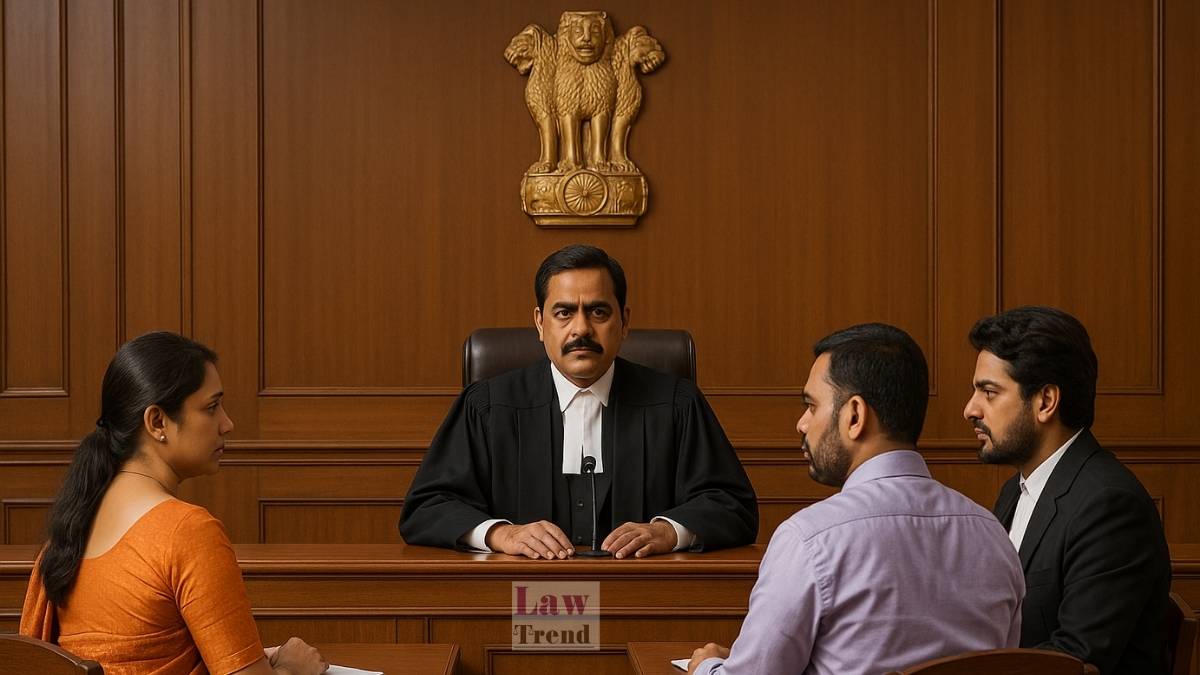

The Delhi High Court has held that the mere capacity of a wife to earn cannot be a ground to deny her maintenance in the absence of proof of actual income. The court further emphasized that the decision of a woman to give up her career to manage a household and raise children represents a form of labor that cannot be dismissed as “idleness.”

Justice Swarana Kanta Sharma, while deciding three interconnected revision petitions, modified orders passed under the Protection of Women from Domestic Violence Act (PWDV Act) and upheld an order passed under Section 125 of the Cr.P.C. The court awarded interim maintenance of ₹50,000 per month to the wife and ₹40,000 per month to the minor child.

Background of the Case

The parties were married in 2012 and have an adopted son. The husband, a Drilling Engineer with a government-owned oil corporation in Kuwait, resided with the wife in West Bengal and Kuwait until 2020. Following their return to India during the pandemic, the wife alleged that the husband deserted her and their son in August 2020 and returned alone to Kuwait.

The wife subsequently initiated proceedings under Section 125 of the Cr.P.C. and the PWDV Act. In the PWDV proceedings, the Metropolitan Magistrate denied maintenance to the wife, observing she was “able-bodied and well-educated” but “chosen not to seek employment.” This denial was later upheld by the Appellate Court on the grounds that she failed to file three years of bank statements. Conversely, the Family Court, in proceedings under Section 125 Cr.P.C., awarded interim maintenance to both the wife and the child.

Arguments of the Parties

On behalf of the Wife: Counsel argued that the denial of maintenance was based on a misinterpretation of financial records. They clarified that entries related to a beauty academy were payments made by the wife for a makeup artist course, not income received. It was further argued that the wife had no independent source of income and was entirely dependent on her parents and loans from relatives following the desertion.

READ ALSO  Accused Has No Right to Produce Any Material at the Stage of Framing of Charges: SC

On behalf of the Husband: The husband contended that the wife was well-qualified, a trained beautician, and capable of maintaining herself. He argued that maintenance is intended to prevent vagrancy, not to “punish” a person for past conduct. He further claimed that his net income should be assessed only after deducting voluntary liabilities, including substantial EMIs for properties in Kuwait and Noida.

Court’s Analysis and Observations

1. Capacity to Earn vs. Actual Earning

The court reiterated the settled legal principle that “there is a clear distinction between the capacity to earn and actual earning.” Justice Sharma observed:

“Merely because a wife is capable of earning cannot be a ground to deny maintenance in the absence of any proof of actual income.”

The court noted that the wife had not been employed throughout the marriage and that her pursuit of a professional course at a nascent stage did not translate to current financial independence.

READ ALSO  High Court Quashes Case Against Doctor Accused of Leaving Sponge in Patient’s Stomach

2. The Myth of the ‘Idle’ Wife

The court strongly criticized the characterization of a non-earning spouse as “idle.” It observed that managing a household and caring for children is a vital domestic contribution that enables the other spouse to work:

“The assumption that a non-earning spouse is ‘idle’ reflects a misunderstanding of domestic contribution… A homemaker does not ‘sit idle’; she performs labour that enables the earning spouse to function effectively.”

3. Practical Realities of Re-entry into Workforce

The judgment acknowledged the systemic difficulties women face when attempting to resume careers after a long marital break, citing technological changes and age-related barriers.

“A woman who pauses her career for several years cannot simply resume from where she left off. Skills may become outdated, professional networks weaken, and age-related barriers become real.”

4. Husband’s Financial Capacity and Voluntary Deductions

The court found that the husband earns a substantial income (approx. 5.29 lakhs per month). It rejected the husband’s plea to deduct voluntary home loan EMIs from his “free income” for maintenance calculations, citing the Division Bench ruling in Subhash v. Mamta @ Raksha:

“Voluntary financial commitments, including repayment of housing loans or personal loans… cannot be permitted to dilute or defeat the statutory obligation to maintain a dependent spouse and minor child.”

READ ALSO  Calcutta HC Rules Educational Qualification not Necessary for Election Candidate

The court also referenced Bindu Chaudhary v. Deepak Suga regarding cost of living adjustments for those earning abroad and Annurita Vohra v. Sandeep Vohra regarding the apportionment of income.

The Decision

The High Court set aside the orders of the Magistrate and the Appellate Court in the PWDV proceedings. To ensure uniformity and avoid overlapping, the court harmonized the reliefs:

  1. Interim Maintenance: The husband is directed to pay ₹50,000 per month to the wife and ₹40,000 per month to the minor child under both the PWDV Act and Section 125 Cr.P.C.
  2. Date of Payment: The amounts are payable from the date of filing of the respective petitions.
  3. Adjustment: In accordance with Rajnesh v. Neha, any amounts already paid in parallel proceedings shall be set off.
  4. Arrears: The husband is directed to clear all arrears within six months.

The court concluded by observing that mediation offers a more constructive path in matrimonial disputes than continued adversarial litigation.

Case Number: CRL.REV.P. 718/2024, CRL.REV.P. 926/2024, CRL.REV.P. (MAT.) 45/2025

Law Trend
Law Trendhttps://lawtrend.in/
Legal News Website Providing Latest Judgments of Supreme Court and High Court

Related Articles

Latest Articles

