

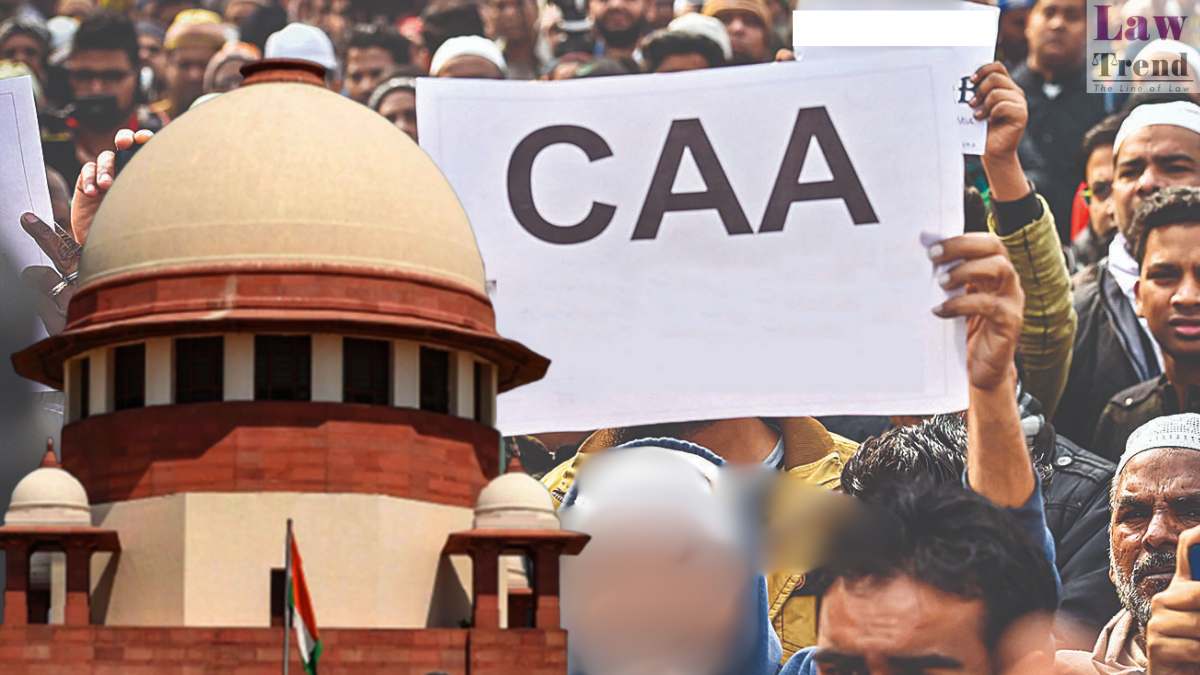
The Supreme Court of India has scheduled the final hearing for over 250 petitions challenging the constitutional validity of the Citizenship (Amendment) Act, 2019 (CAA) and the Citizenship (Amendment) Rules, 2024. A Bench headed by Chief Justice of India (CJI) Surya Kant on Thursday fixed the proceedings to commence on May 5, 2026.
The Citizenship (Amendment) Act, 2019, seeks to fast-track the grant of Indian citizenship to non-Muslim migrants—specifically Hindus, Sikhs, Buddhists, Jains, Parsis, and Christians—from Afghanistan, Bangladesh, and Pakistan who entered India before December 31, 2014. While the Act was passed in 2019, the Union Government notified the Rules to implement the law only in March 2024.
The petitioners, which include political parties such as the Indian Union Muslim League (IUML), individuals like Asaduddin Owaisi and Mahua Moitra, and various organisations from Assam and Tripura, argue that the legislation is discriminatory. They contend that by singling out and excluding Muslims, the law violates the principles of secularism and the right to equality enshrined in the Basic Structure of the Constitution.
During the proceedings, Senior Advocates Indira Jaising and Siddharth Luthra informed the Bench that written submissions had been filed and the matter was “ripe for final hearing.”
A significant point of discussion involved the specific concerns of the Northeastern states. Senior Advocate Indira Jaising suggested that a separate schedule should be fixed for hearing issues specifically related to Assam and Tripura, given the unique demographic and legal history of the region. While she initially objected to a complete separation due to “overlapping submissions” with the main case, the Court deliberated on how to streamline the process.
The Union Government, represented by Solicitor General Tushar Mehta, has previously challenged the locus standi of the petitioners to question the Centre’s sovereign power to grant citizenship.
The petitioners’ counsel, led by Senior Advocate Kapil Sibal in earlier mentions, had underscored the urgency of the matter. Mr. Sibal had previously submitted that “once the process of grant of citizenship starts under this Act, it cannot be reversed,” arguing that the government had waited nearly five years to notify the Rules after the Act’s inception.
The Bench, led by CJI Surya Kant, focused on the logistical roadmap for the final disposal of the case. Addressing the concerns regarding regional petitions, the CJI remarked that the Supreme Court could follow a structured approach: “first hear the general petitions against the CAA and then the issues concerning Assam and Tripura.”
The Court enquired whether a day each would suffice for both the petitioners and the respondents to conclude their arguments. The Bench noted that the voluminous nature of the petitions—exceeding 250—required a concentrated hearing schedule to ensure all facets of the challenge, including the “unholy nexus” with the National Register of Citizens (NRC) alleged by the petitioners, are addressed.
The Supreme Court ordered that the final hearing on the constitutional validity of the CAA and its Rules will begin on May 5, 2026.
The Court directed the following schedule:
- May 5 – May 7, 2026: Main arguments by the petitioners and respondents.
- May 12, 2026: Hearing for rejoinders.
The matter remains one of the most significant constitutional challenges pending before the apex court, involving questions of religious identity as a criterion for citizenship and the limits of legislative classification under Article 14 of the Constitution.


