

Execution of Mandatory Injunction Decree Barred by Limitation After Three Years: Supreme Court Dismisses SLP
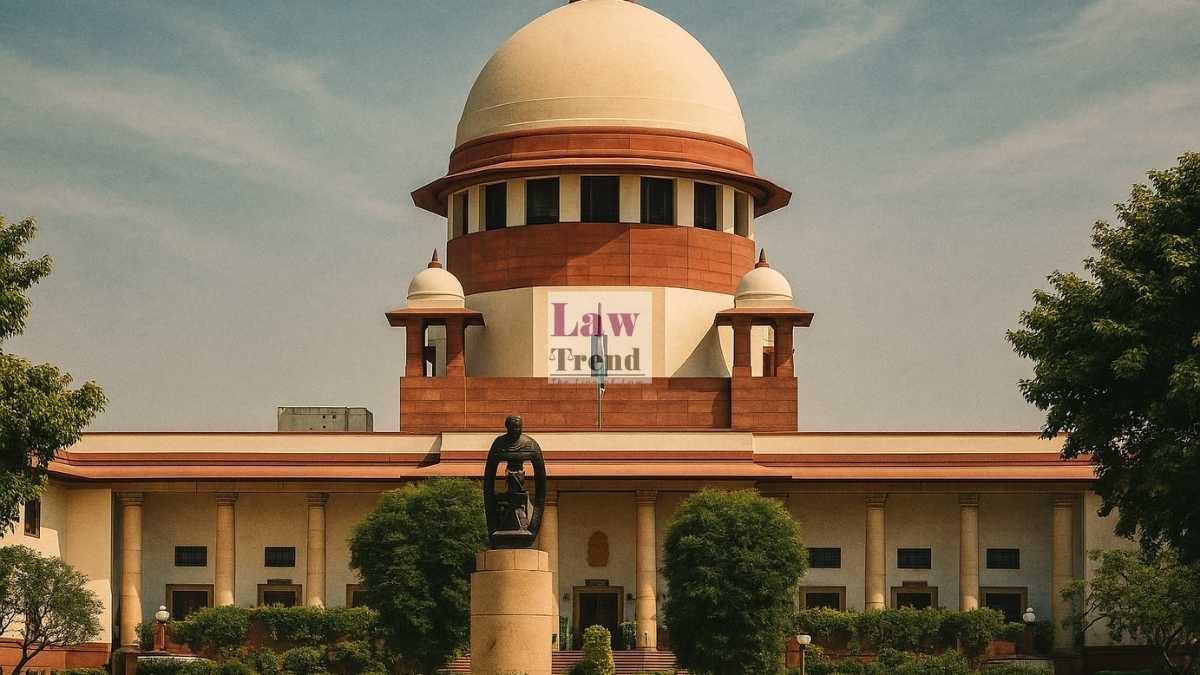

The Supreme Court of India, comprising a Bench of Justice Manoj Misra and Justice Manmohan, has dismissed a Special Leave Petition (SLP) challenging a High Court order that upheld the dismissal of an execution application for being barred by limitation. The Court affirmed that under Article 135 of the Schedule to the Limitation Act, 1963, the period for enforcing a decree of mandatory injunction is three years from the date of the decree if no specific performance date is fixed.

Background of the Case

The legal dispute originated from a suit filed by the petitioners, Babu Singh (deceased, represented by legal heirs) and another, against the Jalandhar Improvement Trust. The trial court had initially dismissed the suit. However, on appeal, the First Appellate Court, vide its judgment and decree dated January 6, 2005, reversed the findings and decreed the suit in favor of the appellants.

The First Appellate Court had held that:

“Considering all the aspects of the case from every angle, I find that the cancellation of the allotment of the plot NO. 30 and some portion of plot NO. 31 made by the respondents as per letter dated 29.07.93 Ex. D1 is illegal, wrong and unconstitutional which is not binding upon the plaintiffs.”

The court further granted a mandatory injunction directing the respondents to comply with an order dated February 18, 1988 (Order No. JIT-5702). Additionally, a discretionary relief of injunction was granted to restrain the respondents from demolishing the building or interfering with possession until compensation for the construction was assessed and paid.

READ ALSO  Company Law Board Lacked Jurisdiction to Condone Delay Under Limitation Act; Supreme Court Sets Aside Calcutta HC Order

Execution Proceedings and Limitation

On August 12, 2010—more than five years after the decree—the petitioners filed an Execution Application seeking the implementation of the mandatory injunction part of the decree.

The Execution Court dismissed this application on January 8, 2014, citing it as barred by limitation. This order was subsequently challenged before the High Court of Punjab & Haryana at Chandigarh in a revision petition (CR No. 2514/2014). The High Court dismissed the revision on September 20, 2022, leading to the current Special Leave Petition before the Supreme Court.

READ ALSO  बुलेट ट्रेन परियोजना विवाद: सुप्रीम कोर्ट ने मुंबई में प्लॉट के अधिग्रहण के खिलाफ फर्म की याचिका पर विचार करने से इंकार कर दिया

Court’s Analysis

The Supreme Court examined the application of Article 135 of the Schedule to the Limitation Act, 1963. This specific article provides the limitation period for the enforcement of a decree granting a mandatory injunction.

The Bench noted:

“The limitation period provided therein is three years commencing from the date of the decree or where a date is fixed for performance, such date.”

In the present case, the Bench observed that the decree passed by the First Appellate Court on January 6, 2005, did not specify a particular date for performance. Consequently, the three-year limitation period commenced from the date of the decree itself.

Decision

The Supreme Court found no grounds to interfere with the High Court’s order, noting that the execution efforts were specifically directed at the mandatory injunction.

The Court held:

READ ALSO  Matrimonial Discord Does Not Permit Forcible Entry and Assault; Punjab and Haryana HC Dismisses Plea to Quash FIR

“As the decree passed by the First Appellate Court did not specify any date for performance, the limitation period would commence from the date of the decree, as was held by the Execution Court. In such circumstances, we find no justification to interfere with the impugned order inasmuch as the Execution Application was limited to enforcement of mandatory injunction part of the decree.”

Accordingly, the Special Leave Petition was dismissed, and all pending applications were disposed of.

Case Details:

  • Case Name: Babu Singh (D) Thr. LRS & Anr. vs Jalandhar Improvement Trust & Anr.
  • Case Number: SLP (C) No. 4284/2023

Law Trend
Law Trendhttps://lawtrend.in/
Legal News Website Providing Latest Judgments of Supreme Court and High Court

Related Articles

Latest Articles

