

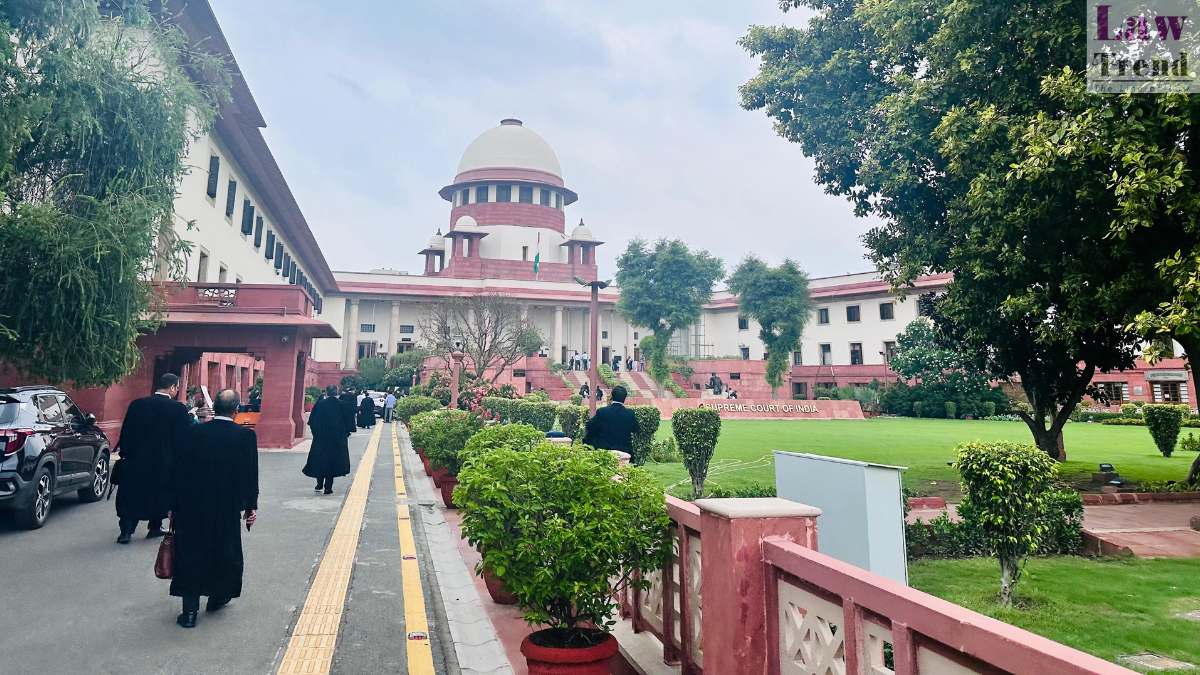
The Supreme Court on Friday stressed the need for comprehensive reforms in district-level cricket associations across the country, observing that such bodies must operate professionally and transparently, and in alignment with the larger interest of the sport.
A bench of Justices P S Narasimha and Alok Aradhe made the observations while hearing a petition filed by the Tiruchirappalli District Cricket Association, which had challenged a Madras High Court order on voting and membership rights.
The bench said it was not only “open” but also “necessary” for state cricket associations to introduce reforms to bring professionalism and transparency to their district counterparts.
“We must clarify that it is open, rather necessary, for the state associations to initiate reforms to ensure that the district associations operate as professional, transparent and in the best interests of the sport,” the court said.
Such reforms, the bench added, may include transparency in the selection of players and execution of contracts.
It further emphasised that district associations should “volunteer to adopt reformative measures” such as good governance, refined management, transparency and exclusion of conflicts of interest.
Noting that issues concerning the membership and composition of the Tiruchirappalli District Cricket Association were still pending before the High Court and the statutory authority, the bench said:
“We are of the opinion that such questions should be resolved as expeditiously as possible.”
Beyond the technicalities of the cricket body dispute, the Supreme Court used the occasion to articulate a broader constitutional vision of sports. It said sporting activities fostered cohesion, cooperation and fraternity across India’s diverse population.
“National, international, regional or even mohalla sports in India serve as the karmabhumi where cohesion and collective purpose take a tangible form,” the court observed.
“On the field, teamwork compels individuals to set aside personal distinctions and work together, cultivating habits of cooperation, solidarity and mutual respect.”
The court underlined the importance of inclusivity in sports, stating that opportunities must be available to all—irrespective of caste, religion, sex or economic background—so that the “unifying power of sports is amplified”.
“This inclusiveness ensures that sports become not a privilege of the few but a medium through which fraternity is strengthened across the society.”
Recognising the societal importance of sporting infrastructure, the bench observed:
“It is high time it is recognised that sporting facilities and opportunities are material resources of the community, and their organisers are the institutions of the national life.”
Calling sporting bodies “places of public resort”, the court said such institutions must be accessible not just for participation but also for administration.
The bench urged the State to ensure that the organisation of sports is characterised by “institutional efficiency, integrity, professionalism and expertise”.
In a significant observation, the court warned against the concentration of sporting opportunities and revenues in the hands of the “urban economic elite” and stressed equitable distribution:
“It is also necessary to ensure that sporting facilities and opportunities are not concentrated in the hands of the urban economic elite and that the revenues from sporting events, intellectual property and media rights are so distributed to subserve and encourage accessible and affordable sports in our country.”




