

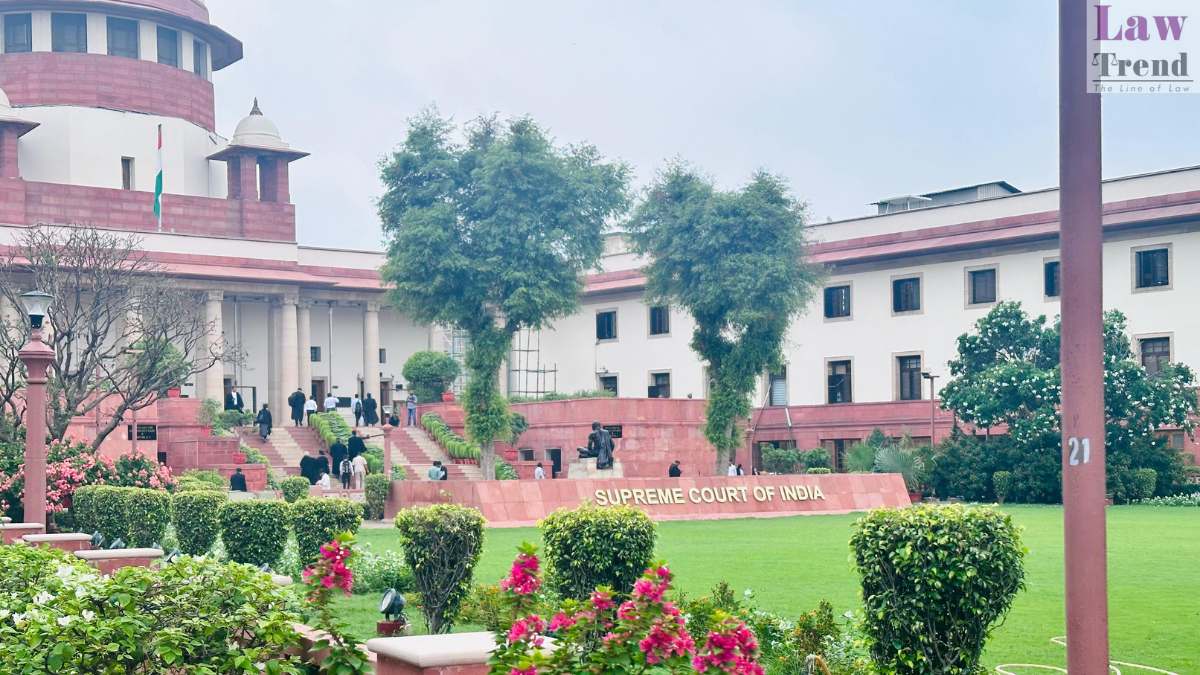
The Supreme Court on Thursday directed the Tamil Nadu government to submit a revised proposal to the Union Public Service Commission (UPSC) within one week for the appointment of the Director General of Police (DGP). A bench comprising Chief Justice Surya Kant and Justices Joymalya Bagchi and Vipul M Pancholi further directed the UPSC to make its recommendation within two weeks of receiving the proposal and stated that the appointment must be made immediately thereafter.
The court referred to its earlier order dated February 5, passed in a separate matter concerning the appointment of the Telangana DGP, where it had taken serious note of delays by multiple states in forwarding DGP proposals. The bench reiterated that the directions issued in that order must be followed by all states and the UPSC, with a minor modification for Tamil Nadu in light of its unique circumstances.
In the Telangana matter, the Supreme Court had authorised the UPSC to initiate communication with defaulting states to ensure timely submission of proposals. It also permitted the UPSC to move an application before the Court if states failed to comply with the timelines.
During the hearing, the apex court was informed that the acting DGP of Tamil Nadu is one of the candidates under consideration for regular appointment and thus cannot serve as a member of the selection committee. Noting this, the bench clarified that Tamil Nadu is entitled to nominate two members from the state to the selection panel and allowed the government to appoint an officer who is of a rank equal to or higher than the DGP.
The bench reiterated the binding nature of the Supreme Court’s directions in the Prakash Singh v. Union of India case, which laid down guidelines to reform police appointments. These include:
- Selection of the DGP from among the three senior-most IPS officers empanelled by the UPSC.
- A fixed tenure of two years for the DGP.
The court also reiterated the concerns raised by the UPSC regarding inordinate delays by several states in following these directions, stressing the need for compliance to uphold the integrity and independence of police administration.
The matter will now proceed based on the timelines fixed by the Court for both the Tamil Nadu government and the UPSC.




