

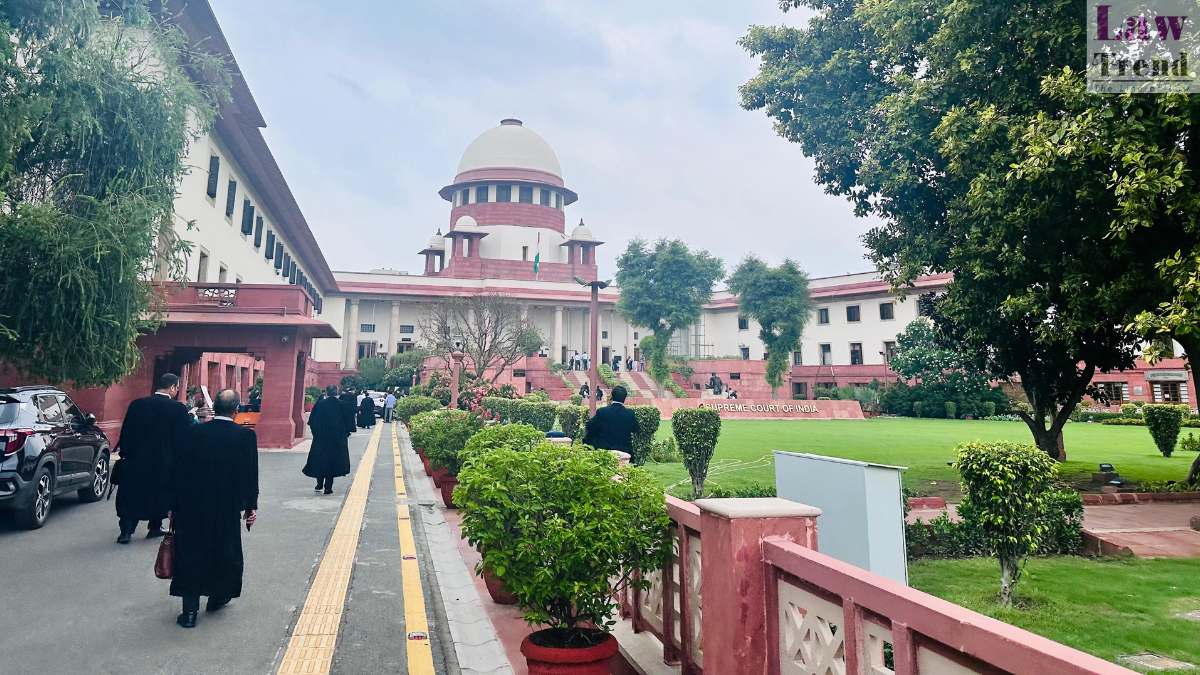
The Supreme Court on Wednesday directed the National Investigation Agency (NIA) to submit a sealed cover report before the Calcutta High Court justifying its invocation of the Unlawful Activities (Prevention) Act, 1967 (UAPA) in connection with recent incidents of violence in West Bengal’s Murshidabad district.
A bench led by Chief Justice of India Surya Kant and Justice Joymalya Bagchi passed the direction while disposing of an appeal filed by the West Bengal government challenging the Centre’s decision to hand over the probe to the NIA.
The top court clarified that the state government is at liberty to approach the Calcutta High Court to raise its objections to the Centre’s move and the legality of the NIA’s investigation. The court noted that the high court would examine both the NIA’s sealed report and the objections raised by the state.
The matter arises from an order passed by a division bench of the Calcutta High Court on January 20, which took serious note of recurring violence in Murshidabad. That bench, led by Chief Justice Sujoy Paul, had directed the state government to ensure peace and law and order in the region, and said it could seek central paramilitary forces if needed.
The high court had also left it open to the Union government to examine reports from the state and determine whether a probe by a central agency like the NIA was warranted.
Pursuant to this, the Ministry of Home Affairs, on January 28, ordered the NIA to take over the investigation.
The disturbances in Murshidabad were sparked by unrest among migrant workers. On January 16, protestors blocked National Highway 12 for nearly six hours following the reported death of a migrant worker from Beldanga who had been working in Jharkhand. The next day, further protests erupted over the alleged heckling of another Murshidabad-based migrant worker in Bihar, leading to road and railway blockades.
Two Public Interest Litigations were subsequently filed before the Calcutta High Court, urging the deployment of central forces in Beldanga and flagging serious concerns over law and order and targeted attacks on migrant workers.
With the Supreme Court’s latest directive, the focus now shifts back to the Calcutta High Court, which will consider the NIA’s justification for invoking UAPA in the case and assess the legality of the Centre’s decision to involve the central agency.




