

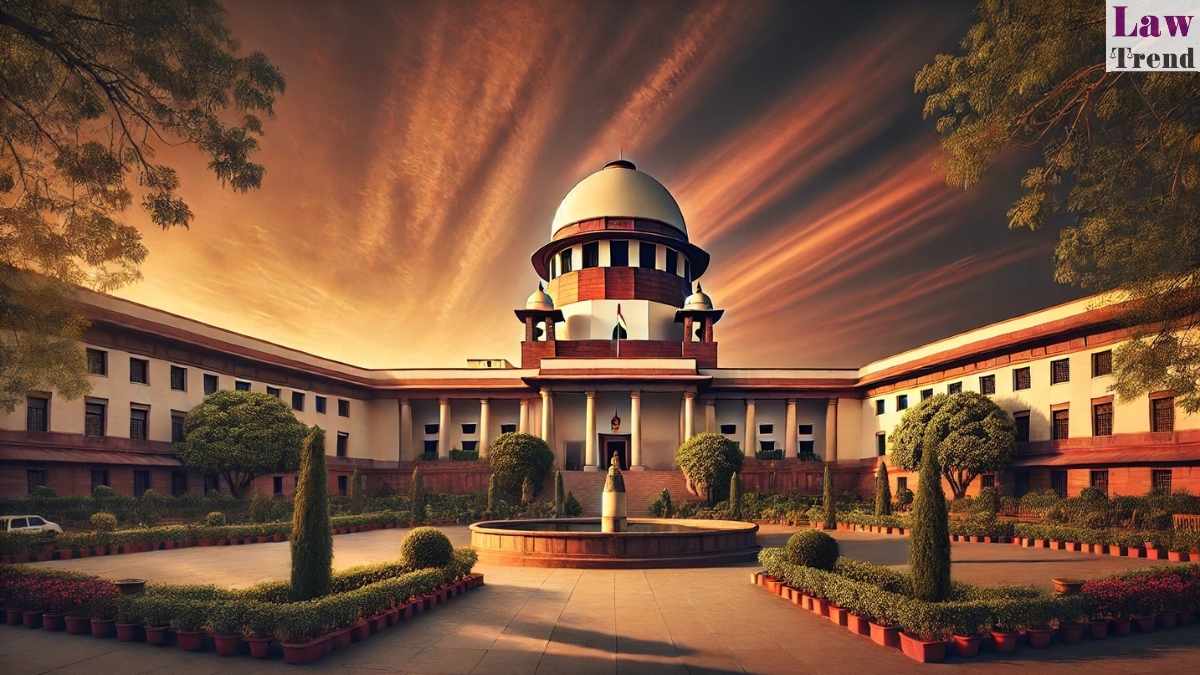
The Supreme Court on Tuesday voiced concern over the practical challenges of search and seizure in the digital age while hearing a PIL challenging Section 132 of the Income Tax Act. Observing that prior notice could enable destruction of digital evidence, the Court indicated that such statutory powers are not unregulated.
A public interest litigation filed by Vishwaprasad Alva came up before the Supreme Court seeking a re-examination of the scope and manner of exercise of powers under Section 132 of the Income Tax Act, 1961. This provision empowers tax authorities to conduct search and seizure operations if they have “reason to believe” that a person possesses undisclosed assets, income, or documents.
The petitioner alleged that the provision could be misused, leading to arbitrary searches that could harm not only the alleged tax evader but also third parties associated with them.
A Bench comprising Chief Justice of India Surya Kant and Justices Joymalya Bagchi and N V Anjaria heard submissions by senior advocate Sanjay Hegde on behalf of the petitioner.
Justice Bagchi underlined a key practical issue regarding the demand for prior notice before initiating a search. Highlighting the evolving nature of digital evidence, he remarked:
“If notice is given for search and seizure, there is a potential for destroying the evidence. The best way to snub out such an investigation against the digital record is to destroy the device itself.”
The Court appeared conscious of the balancing act required between protecting rights and ensuring effective investigations.
Senior Advocate Sanjay Hegde contended that the current framework of Section 132 gives sweeping powers to the Income Tax Department. He pointed out that this authority extends not only to the target assessee but also impacts associates, lawyers, and even their staff, raising serious concerns about overreach.
“Suppose you go after the lawyer, then you go after the clerk’s phone… it is not only the evading assessee who is at risk. Anybody in contact is at risk, and the power is kept with the Joint Commissioner,” Hegde submitted.
Chief Justice Surya Kant responded by stating that the powers under Section 132 were neither uncontrolled nor unwieldy:
“This is not an uncontrolled or unwieldy power. Your concerns will go,” the CJI said, indicating the Bench’s initial view that adequate statutory safeguards exist.
The Court deferred further hearing for two weeks, allowing more time for consideration of the issues raised.




