

Can’t Deny Cooperative Society Membership to Lawful Tenants Merely on Delayed Contribution: Supreme Court

The Supreme Court has set aside a judgment of the Bombay High Court that had quashed the membership of long-standing occupants in a cooperative housing society due to a delay in paying the initial contribution.

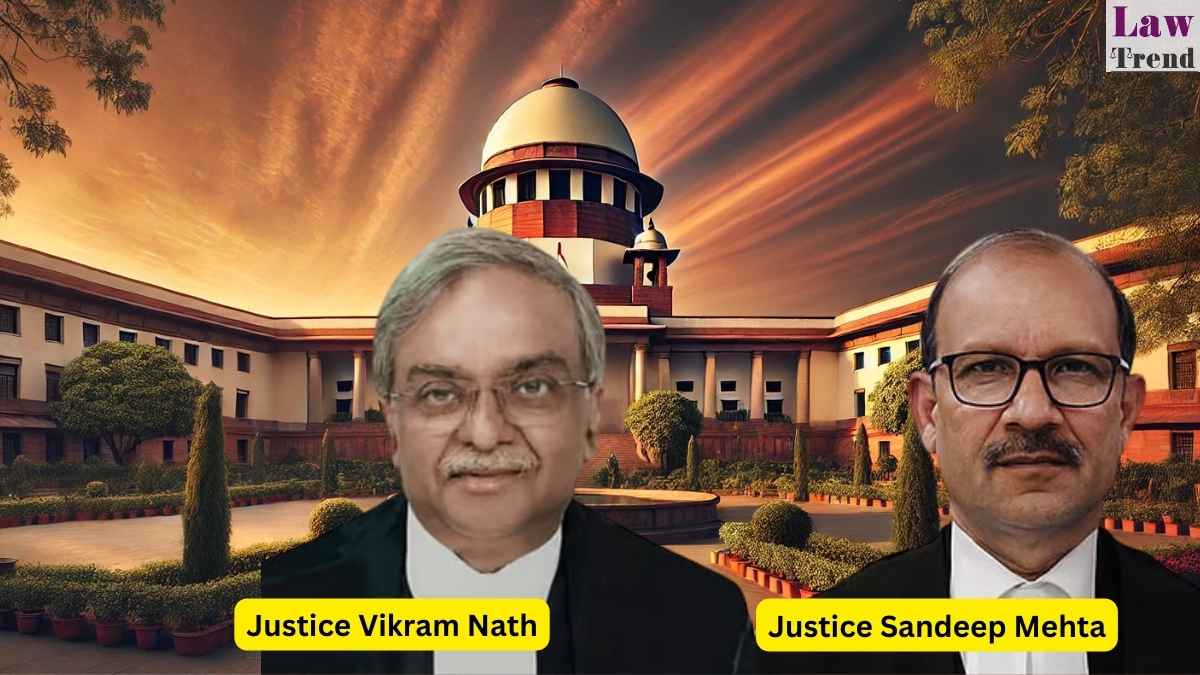
The Bench of Justice Vikram Nath and Justice Sandeep Mehta, in the case of Shashin Patel and Anr. v. Uday Dalal and Ors. (2026 INSC 125), held that denying membership to lawful occupants who have been in possession of the flat for decades would create a “serious anomaly.” The Court restored the order of the Divisional Joint Registrar, recognizing the appellants as members of the Malboro House Co-operative Housing Society Limited.

Background of the Dispute

The case pertains to Flat No. 7 in ‘Malboro House’ at Peddar Road, Mumbai. The building was originally owned by M/s. Kamani Brothers Pvt. Ltd., and the occupants of its seven flats were tenants. When the company went into liquidation, the tenants resolved to form a cooperative society to acquire the building by settling the company’s dues.

The Official Liquidator executed a conveyance deed in favour of the Society in 1995. While six tenants contributed towards the settlement, Shri Narendra Patel (the predecessor-in-interest of the appellants) did not pay his share of Rs. 5,00,000 at the time. The appellants claimed that Patel had sought details regarding the quantification of the amount, which were not provided.

Decades later, following allegations of mismanagement, an Administrator was appointed for the Society in 2025. The legal heirs of Narendra Patel, Shashin Patel and Bhavini Patel, applied for membership and tendered the amount with interest. When the Authorised Officer expressed inability to decide on the policy matter, the appellants approached the Deputy Registrar and subsequently the Divisional Joint Registrar.

READ ALSO  In Writ Appeal the Finding of the Enquiry Officer Cannot Be Interfered With Unless the Same Is Found to Be Perverse or Contrary: Chhattisgarh HC

On April 23, 2025, the Divisional Joint Registrar allowed the revision application, directing the Society to admit the appellants as members, citing a 2005 AGM resolution that had agreed to admit Narendra Patel upon payment.

However, three other members of the Society challenged this order before the Bombay High Court. The High Court, by its order dated November 19, 2025, set aside the Joint Registrar’s order, leading the appellants to approach the Supreme Court.

Arguments Before the Court

For the Appellants: The counsel for the appellants argued that their predecessor, Shri Narendra Patel, was always ready to pay the contribution subject to receiving calculation details. They highlighted that the Society, in its Annual General Meeting (AGM) on August 11, 2005, had explicitly resolved to admit Patel as a member upon receipt of payment. They contended that since this resolution was never revoked, the delay in payment should not defeat their rights, especially as they had now deposited the amount with 9% interest.

For the Respondents: Senior Advocate Neeraj Kishan Kaul, appearing for the contesting respondents (original writ petitioners), argued that Narendra Patel had “consciously avoided depositing the contribution amount.” He submitted that the other members were forced to bear the financial burden to save the building from auction. Mr. Kaul contended that the appellants’ belated payment was a speculative move driven by the exponential rise in property prices and that the Joint Registrar lacked jurisdiction to grant membership directly.

READ ALSO  Supreme Court Explains Test of Obscenity Under Sec 294(b) IPC

For the Society: Senior Advocate Dhruv Mehta, appearing for the Society (through the Administrator), supported the appellants. He submitted that since the amount had been deposited, there was no illegality in admitting them as members. He suggested that the Society could claim higher interest for the delay, but membership should not be denied.

Supreme Court’s Observations and Analysis

The Supreme Court observed that the possession of Flat No. 7 by Narendra Patel and his heirs was undisputed and that no eviction proceedings had ever been initiated against them.

Justice Sandeep Mehta, writing for the Bench, observed:

“The determinative issue would be whether the appellants… could be denied the benefit of seeking membership of the Society while continuing to remain in occupation of the premises.”

The Court noted that denying membership would result in a situation where the appellants would continue to occupy the flat without being members, creating a “subsisting tussle and friction” with other residents.

The Bench placed significant reliance on the Society’s own records:

  1. Offer Letter (1995): The Society had offered membership to Narendra Patel subject to payment.
  2. AGM Resolution (2005): The General Body had resolved to admit him upon payment.
  3. Ratification (2025): Crucially, the Court noted that in a subsequent AGM held on September 30, 2025, the Society had reaffirmed the 2005 decision, accepted the appellants’ membership, and approved the subsequent transfer of the flat to M/s. Capital Mind Advisory Services Pvt. Ltd. (the appellant in the connected appeal).
READ ALSO  Court is Not Empowered to Act as a Post Office or Mouth Piece of State, Says Allahabad HC

The Court rejected the High Court’s reasoning that the Joint Registrar acted in excess of jurisdiction. It clarified that the appellants had correctly followed the statutory hierarchy—approaching the Authorised Officer, then the Deputy Registrar, and finally the Divisional Joint Registrar.

Decision

The Supreme Court allowed the appeals and set aside the impugned portion of the Bombay High Court’s judgment.

The Court held:

“In this backdrop, the only equitable solution would be to recognise the entitlement of Shashin Patel and Bhavini Patel as members of the Society. Once such entitlement is recognised, the subsequent transfer of Flat No.7… must necessarily stand recognised in law.”

However, to balance the equities regarding the delayed payment, the Court granted liberty to the aggrieved members:

“We, however, provide that the aggrieved members of the Society, if so advised, would be at liberty to move an application before the appropriate authority/body for the determination of a suitable additional amount payable by the appellants by way of enhanced interest… having regard to the significant delay in making payment.”

The Court concluded that the conveyance deed executed in favour of the subsequent purchaser, M/s. Capital Mind Advisory Services Private Limited, is valid.

Case Details:

  • Case Title: Shashin Patel and Anr. v. Uday Dalal and Ors.
  • Case No.: Civil Appeal No. of 2026 (Arising out of SLP (Civil) No. 36106 of 2025)
  • Coram: Justice Vikram Nath and Justice Sandeep Mehta

Law Trend
Law Trendhttps://lawtrend.in/
Legal News Website Providing Latest Judgments of Supreme Court and High Court

Related Articles

Latest Articles

