

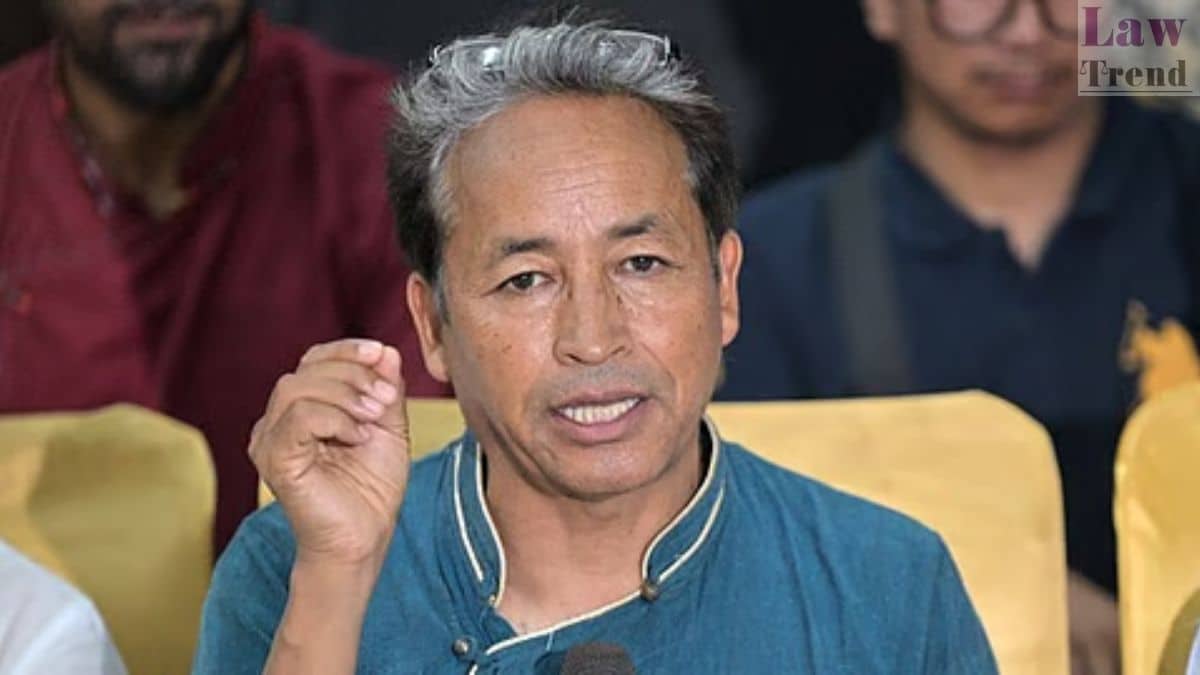
The Supreme Court on Wednesday asked the Centre whether it could consider re-evaluating the detention of renowned climate activist and innovator Sonam Wangchuk, taking note of his deteriorating health condition while being held under the National Security Act (NSA).
A bench comprising Justices Aravind Kumar and P B Varale made the oral suggestion during the hearing of a petition filed by Wangchuk’s wife, Gitanjali J Angmo, challenging his detention. Wangchuk, currently lodged in Jodhpur Central Jail, has been under detention since September 26, 2025, following violent protests in Leh.
“Apart from submissions, counter submissions and law points, just give a thought to it, as an officer of the Court,” the bench told Additional Solicitor General K M Nataraj. “Considering the health condition of the detainee… The report which we saw earlier, it shows that his health is not that good. There are certain age-related, may be otherwise. Is there a possibility for the government to rethink, or even relook?”
Nataraj assured the bench that he would place the suggestion before the concerned authorities.
During the hearing, ASG Nataraj argued that Wangchuk played a key role in instigating the Leh protests that led to four deaths and left 161 injured. He submitted that even without directly participating in the violence, Wangchuk’s “provocative speech” and “propensity to influence” were sufficient to warrant preventive detention under the NSA.
The order of detention was approved on October 3, 2025, the ASG said, and added that there was no legal challenge to the approval itself.
On previous days, Solicitor General Tushar Mehta defended the government’s action, stating that Wangchuk had tried to mobilise “Gen Z” for protests similar to those seen in Nepal and Bangladesh and had even invoked the “Arab Spring” in his speeches.
Mehta claimed that the Centre and the Ladakh administration had followed all procedural safeguards under the NSA, which allows detention of individuals for up to 12 months to prevent them from acting in a manner “prejudicial to the defence of India.”
Appearing for Wangchuk’s wife, senior advocate Kapil Sibal contended that the detention was illegal and based on misleading “borrowed material” and selective video clips. The plea emphasized that Wangchuk has a decades-long history of service in education, innovation, and environmental activism and that his advocacy has always been peaceful.
The petition noted that Wangchuk had publicly condemned the September 24 violence in Leh through his social media platforms, stating it was the “saddest day of his life” and warning that violence would undo Ladakh’s peaceful “tapasya” of the past five years.
Angmo’s plea called it “wholly preposterous” to link Wangchuk to the violence and asserted that the government’s action was an arbitrary curtailment of his fundamental rights to free speech and peaceful protest.
The arguments remained inconclusive and will resume on Thursday. The top court’s remarks on the activist’s health and its gentle nudge to the government come amid growing concerns over Wangchuk’s continued incarceration.




