

Insurer Liable for Pillion Rider’s Death Even if Owner-Husband Died in Same Accident: Madhya Pradesh High Court
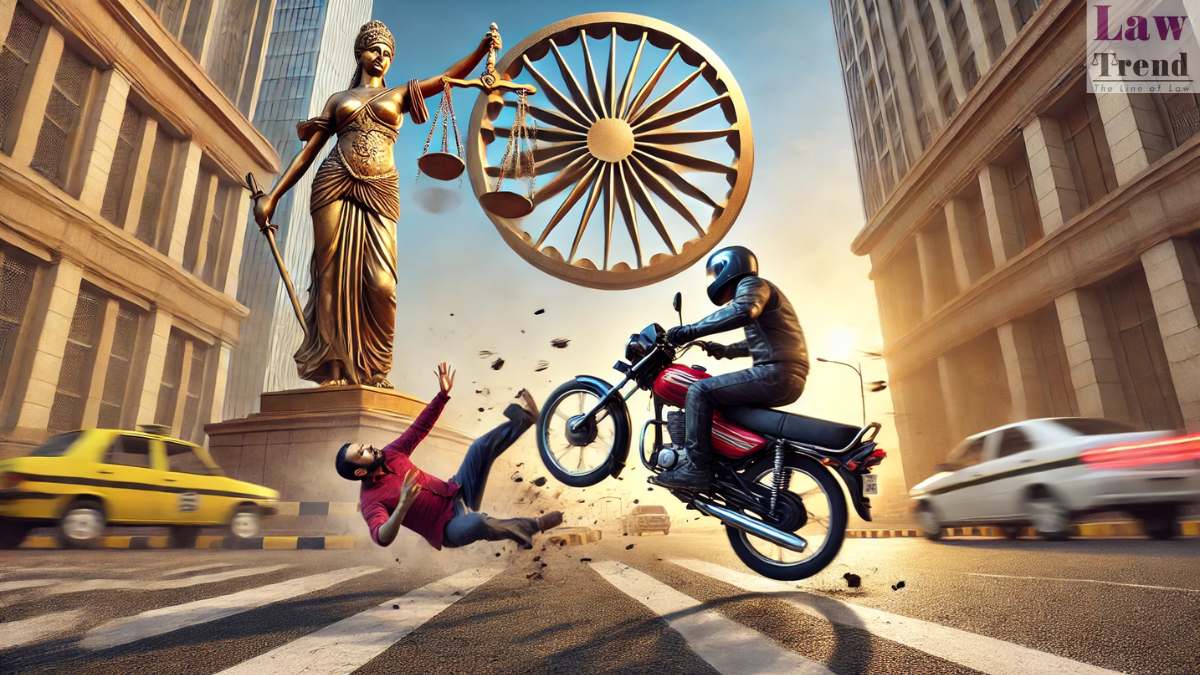

The Madhya Pradesh High Court has held that a claim petition filed by the children for the death of their mother (pillion rider) is maintainable against the insurance company, even if the father (owner/rider) also died in the same accident and was not impleaded as a party. The Court ruled that the wife, having died before the husband in the sequence of events, remained a “third party” and did not step into the shoes of the owner.

Justice Pavan Kumar Dwivedi allowed the appeal in Ramdayal Carpenter and Others vs. Iffco Tokyo General Insurance Co. Ltd., setting aside the Claims Tribunal’s dismissal of the compensation claim.

The significant question of law before the Court was whether a claim filed solely against the insurance company for the death of the owner’s wife is maintainable when both the owner and his wife died in the accident, and the owner was not impleaded as a respondent.

The Claims Tribunal had previously dismissed the claim, reasoning that upon the husband’s death, the wife became his legal representative and owner of the vehicle. Since she also died, the children became the owners. Consequently, the Tribunal held the wife was not a “third party,” absolving the insurance company of liability.

The High Court overturned this, emphasizing the specific timing of the deaths and the provisions of Section 155 of the Motor Vehicles Act, 1988 (MVA).

Background of the Case

The accident occurred on March 4, 2019. The deceased, Ratanbai, was riding pillion on a motorcycle (MP 42 MF 2391) driven by her husband, Shivnarayan, who was also the registered owner of the vehicle. Due to rash and negligent driving, the motorcycle became unbalanced, causing Ratanbai to fall.

The judgment noted the factual sequence: “She sustained grievous injuries and was tried to be taken to hospital however, she died on the way. The rider/owner of the vehicle Shivnarayan also sustained grievous injuries… But he succumbed to the injuries and died during treatment.”

Thus, the wife died first, while the owner was still alive. The appellants (son and daughter) filed a claim under Section 166 of the MVA for their mother’s death. They did not file a claim for their father’s death and impleaded only the insurance company.

Although the Tribunal quantified the compensation at Rs. 10,79,672/-, it refused to grant the award, citing the claimants’ status as legal representatives of the owner.

READ ALSO  Mother Preferred Over Father For Custody of Girl Child About to Reach Age of Puberty: Bombay HC

Arguments

Shri Abhishek Gilke, counsel for the appellants, argued that merely being related to the insured does not disqualify a person from being a third party. He contended that Ratanbai died while Shivnarayan was still alive; therefore, she was a third party at the time of her death and could not be treated as his legal representative. The counsel cited various judgments, including The New India Insurance Company Ltd. vs. Nallasivam and United India Insurance Co. Ltd. vs. Kulwant Kaur, to support the plea that the claim is maintainable against the insurer even without the owner.

Shri Sudarshan Pandit and Shri Rajesh Pandit, appearing for the Insurance Company, opposed the appeal. They argued that upon the owner’s death, his legal representatives stepped into his shoes. Relying on the Supreme Court’s decision in Ningamma & Anr. vs. United India Insurance Co. Ltd., they submitted that the claimants effectively became the owners and could not claim compensation against themselves. They further argued that the deliberate non-impleadment of the owner meant the insurer had no one to indemnify.

READ ALSO  Remarriage Without Divorce Will Not Disentitle A Woman Custody of Child: Allahabad HC

Court’s Analysis

Justice Dwivedi rejected the Tribunal’s reasoning and the insurer’s objections. The Court examined Section 50 of the MVA, noting that ownership transfer is not automatic but requires a procedural application.

More crucially, the Court relied on Section 155 of the MVA, which deals with the effect of death on certain causes of action. The provision states that the death of the insured “shall not be a bar to the survival of any cause of action arising out of such event against his estate or against the insurer.”

The Court observed: “The insurer in a peculiar case like the present cannot escape from its liability to pay compensation. In such unfortunate circumstances where the owner and his wife died and there remain children… This would not mean that the insurer has no legal liability to pay compensation for death of even the wife of owner.”

The Court distinguished the facts from the Ningamma case, noting that in Ningamma, the deceased was the borrower of the vehicle who stepped into the owner’s shoes. In the present case, the claim was under Section 166 for a pillion rider who was a third party.

READ ALSO  Allahabad High Court Sets Aside Selection of Drug Inspector

On the specific issue of the sequence of death, the Court held: “As such, even on fact, Ratanbai cannot be treated as legal representative of the deceased Shivnarayan as she died before the death of Shivnarayan. Thus, at the time of her death she was a third party as Shivnarayan was alive.”

The Court reiterated the settled law that “except ‘Insured’ and ‘Insurer’ all are third party.”

Decision

The High Court allowed the appeal and modified the impugned award. The Court directed Iffco Tokyo General Insurance Co. Ltd. to pay the compensation of Rs. 10,79,672/- as quantified by the Tribunal, along with interest.

The Court concluded: “The death of the owner occurred after the accident and after the death of the wife, thus on both counts the provisions of Section 155 of the Motor Vehicles Act will apply in full force and the cause of action survives against insurer.”

Case Details:

Case Title: Ramdayal Carpenter and Others vs. Iffco Tokyo General Insurance Co. Ltd.

Case No.: Misc. Appeal No. 293 of 2023

Bench: Justice Pavan Kumar Dwivedi 

Law Trend
Law Trendhttps://lawtrend.in/
Legal News Website Providing Latest Judgments of Supreme Court and High Court

Related Articles

Latest Articles

