

Failure of Respondent to Cross-Examine Cannot Solely Establish Domestic Violence; Karnataka HC Sets Aside Maintenance Order Against Father
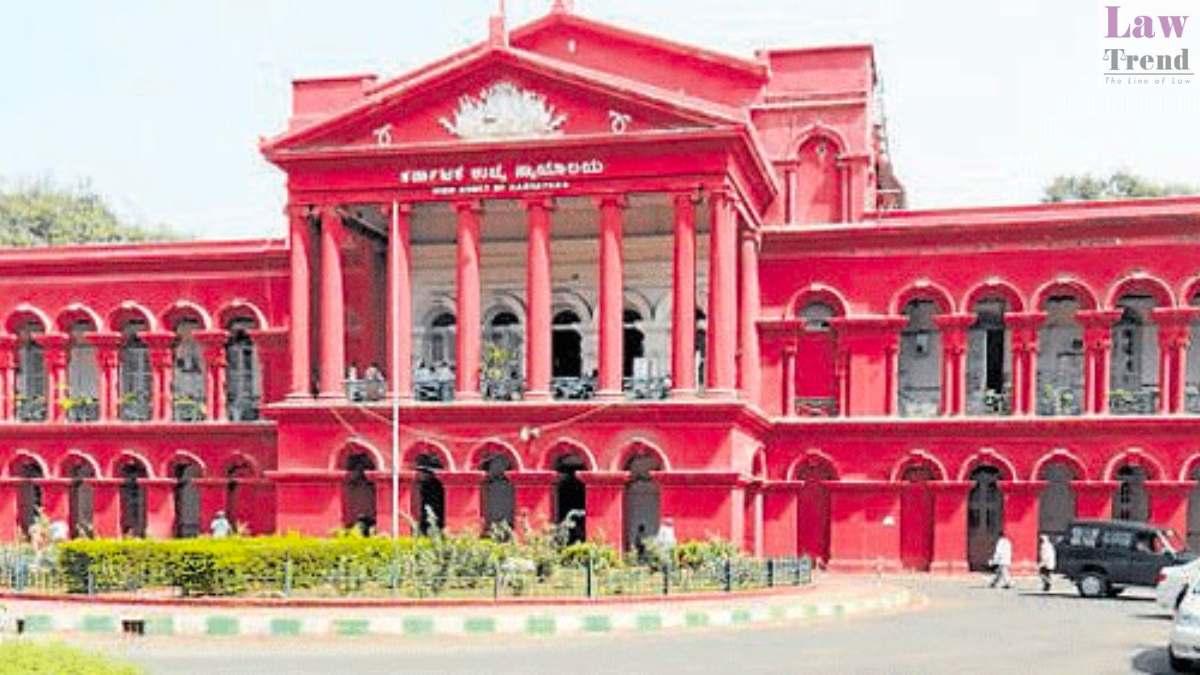

The High Court of Karnataka has set aside orders passed by the Trial Court and the Appellate Court that had directed a father to pay maintenance and compensation to his daughter under the Protection of Women from Domestic Violence Act, 2005 (DV Act).

The single-judge bench of Justice Ravi V. Hosmani ruled that the failure of a respondent to appear for cross-examination cannot, by itself, be a ground to hold that incidents of domestic violence are established, clarifying that the DV Act does not cast the onus on the respondent to disprove allegations.

Case Background

The revision petition arose from a petition filed under Section 12 of the DV Act by the respondent, Ms. Roshini, and her brother (then minors) through their maternal grandmother, Smt. Ramadevi. The petition alleged that their father, Sri Bhaskar Reddy, had subjected the daughter to sexual abuse and had murdered their mother, Smt. P. Geetha, in October 2012.

According to the petition, the mother died on October 27, 2012. The grandmother alleged that the father killed his wife and staged it as a fall in the bathroom. It was further alleged that the father had sexually abused the daughter.

The Metropolitan Magistrate Traffic Court-I, Bengaluru, allowed the petition in part on July 19, 2023. The Magistrate directed Bhaskar Reddy to pay Rs. 15,000 monthly maintenance to his daughter till her marriage, Rs. 10 lakh as compensation, and to return the ‘Stridhan’. This order was confirmed by the LXXIII Additional City Civil and Sessions Judge on February 28, 2025. Bhaskar Reddy approached the High Court challenging these concurrent findings.

READ ALSO  Annual Performance Appraisal Report can’t be Downgraded by DPC, Rules Supreme Court

Arguments of the Parties

The petitioner, represented by Advocate Sri S. Balakrishnan, argued that the allegations were a “counterblast” initiated by his mother-in-law, Ramadevi, after she took custody of the children following his wife’s accidental death. He submitted that Ramadevi had filed multiple complaints, including one for murder (Section 302 IPC) and another under the POCSO Act, solely due to a dispute over jewelry.

The petitioner contended that:

  1. The police had filed a ‘B’ Report (closure report) in the murder complaint.
  2. He was acquitted in the POCSO case regarding sexual abuse allegations by a judgment dated January 28, 2020.
  3. The medical examination of the daughter revealed injuries sustained while she was in the custody of her grandmother.
  4. The daughter, being a minor at the time of filing, did not fall within the definition of “aggrieved person” under Section 2(a) of the DV Act.

Conversely, the respondent, represented by Advocate Sri Harish H.V., argued that the lower courts rightly drew an adverse inference against the father because he failed to offer himself for cross-examination. Relying on the Supreme Court judgments in Prabha Tyagi v. Kamlesh Devi and Abhilasha v. Parkash, the counsel argued that a daughter is entitled to relief and that maintenance can be awarded even after attaining majority. It was further submitted that the grandmother was justified in acting as a guardian for the minor children.

Court’s Analysis

Legal Maintainability: Justice Hosmani first addressed the legal technicalities regarding the maintainability of the petition. Citing the Supreme Court’s decision in Prabha Tyagi, the Court rejected the petitioner’s contention that a daughter cannot be an “aggrieved person.” The Court also relied on the Andhra Pradesh High Court decision in Menti Trinadha Venkata Ramana v. Menti Lakshmi, noting that the claim for maintenance under the DV Act would survive even after the daughter attains the age of majority.

READ ALSO  Withdrawal of the Suit Wherein Forged Documents Were Submitted Would Not Automatically Result in the Quashing of the Criminal Proceedings: Karnataka HC

Merits of Domestic Violence Allegations: However, on the merits of the domestic violence allegations, the High Court found the lower courts’ findings to be “perverse.”

The Court examined the evidence on record, noting that the respondent (daughter) had admitted in her deposition in the POCSO case (Ex. R13) that “till the death of her mother… her life in Bengaluru was happy and pleasant.” The Court also observed that the grandmother, PW-1, admitted that she had not filed any complaint against Bhaskar Reddy prior to her daughter’s death and that the complaints alleging rape were filed only after the petitioner obtained bail in the first case.

The Court placed significant weight on the fact that the petitioner had been acquitted in the POCSO case and that a ‘B’ Report was filed in the murder case. The Court observed:

“These materials would cast allegations of domestic violence in serious doubt… Apart from above, pleadings about sexual abuse suffer from glaring absence of particulars such as date and place of sexual abuse.”

Burden of Proof and Cross-Examination: Addressing the core issue of the burden of proof and the petitioner’s failure to cross-examine, Justice Hosmani observed:

“And lastly, there is no provision in DV Act casting onus on respondent to disprove allegations of domestic violence. Therefore, failure of respondent to appear for cross-examination by itself cannot be a ground to hold incidents of domestic violence established.”

The Court held that the lower courts erred in holding incidents of domestic violence as established merely based on the respondent’s failure to appear for cross-examination, especially when the material on record, including the acquittal in the POCSO case and the admissions of the witnesses, contradicted the allegations.

Decision

The High Court concluded that the judgments of the DV Court and the Appellate Court were contrary to the material on record and without basis.

READ ALSO  Seriousness or Enormity of the Charge Does Not License the Employer to Jump to Conclusions: Allahabad HC Quashes Dismissal

Consequently, the Court allowed Criminal Revision Petition No. 528 of 2025, setting aside the judgment dated 19.07.2023 passed by the Metropolitan Magistrate Traffic Court-I and the confirmation order dated 28.02.2025 passed by the Sessions Court.

Case Details:

Case Title: Sri Bhaskar Reddy vs. Ms. Roshini

Case No.: Criminal Revision Petition No. 528 of 2025

Coram: Justice Ravi V. Hosmani 

Law Trend
Law Trendhttps://lawtrend.in/
Legal News Website Providing Latest Judgments of Supreme Court and High Court

Related Articles

Latest Articles

