

High Court Cannot Interfere in Panchayat Elections under Article 226 when Statutory Remedy exists; SC Sets Aside Uttarakhand HC Order

The Supreme Court has held that the High Courts must not interfere in the election process of Panchayats by exercising jurisdiction under Article 226 of the Constitution when there is an express constitutional bar under Article 243-O and an efficacious alternative statutory remedy available.

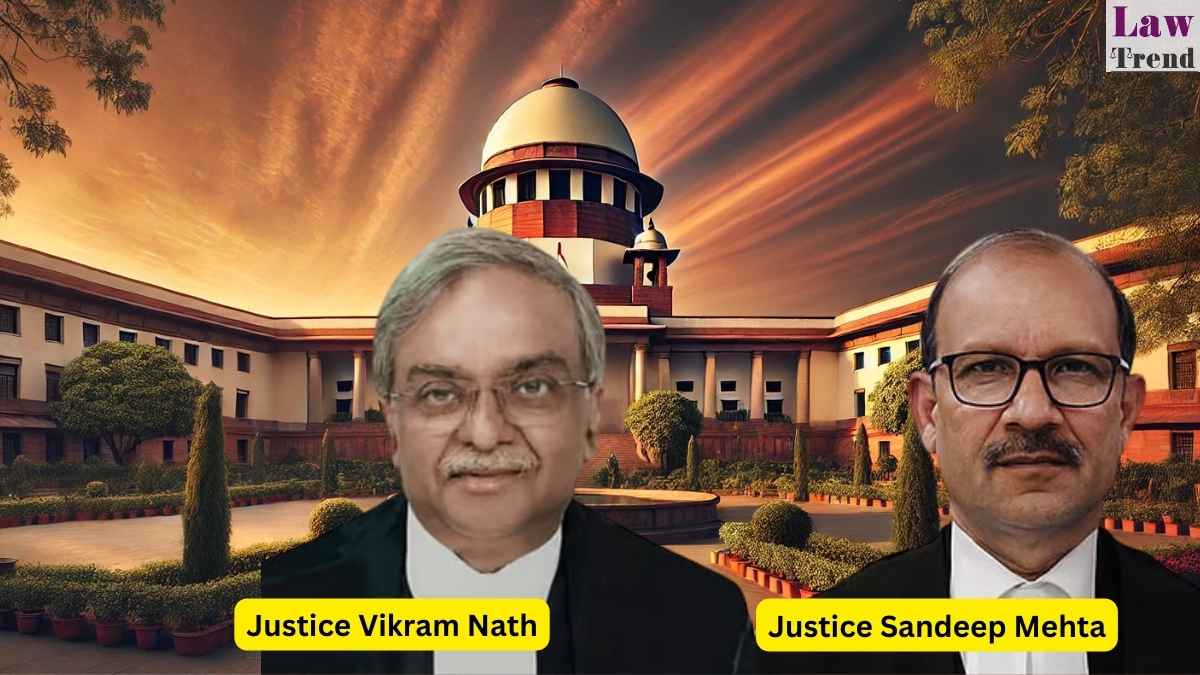
A Bench comprising Justice Vikram Nath and Justice Sandeep Mehta allowed the appeal filed by Sandeep Singh Bora, setting aside the interim order passed by the Division Bench of the Uttarakhand High Court which had stayed the rejection of a candidate’s nomination and directed the allotment of a symbol.

The core issue before the Apex Court was whether the High Court could invoke its writ jurisdiction to interfere in the Panchayat election process despite the bar under Article 243-O of the Constitution and the availability of an election petition remedy under the Uttarakhand Panchayati Raj Act, 2016.

The Supreme Court ruled in the negative, observing that “where a specific statutory remedy is available by way of an election petition, the High Court must exercise great circumspection and restraint in invoking its jurisdiction under Article 226 of the Constitution.”

Background of the Case

The dispute arose during the Panchayat elections in District Pithoragarh, Uttarakhand. The State Election Commission issued a revised notification on June 28, 2026, resuming elections. The Respondent No. 1, Narendra Singh Deopa, filed his nomination for the office of Zila Panchayat Member from Constituency No. 11, Bharhgaon.

READ ALSO  कानूनी अधिकार के बिना किसी को कैद की सजा नहीं भुगतनी चाहिए: सुप्रीम कोर्ट

The Appellant, Sandeep Singh Bora, raised an objection alleging that Deopa failed to make requisite disclosures. Consequently, the Returning Officer cancelled Deopa’s candidature vide an order dated July 9, 2025.

Deopa approached the High Court via a Writ Petition (MS) No. 2083 of 2025. The learned Single Judge dismissed the petition on July 11, 2025, citing the bar under Article 243-O and noting that the election process had already commenced. On the same day, Sandeep Singh Bora was declared elected unopposed as the remaining candidates were disqualified.

Aggrieved, Deopa filed an intra-court appeal (Special Appeal No. 192 of 2025) without impleading Bora. The Division Bench of the High Court, vide an interim order dated July 18, 2025, stayed the Single Judge’s judgment and directed the Returning Officer to allot a symbol to Deopa and permit him to participate in the election.

Sandeep Singh Bora challenged this interim order before the Supreme Court.

High Court’s Reasoning

The Division Bench of the High Court had justified its interference on two grounds:

  1. The bar under Article 243-O was inapplicable as the challenge was confined to the “illegal rejection of nomination,” for which no efficacious alternative remedy was available.
  2. The alleged non-disclosure of an acquittal in a prior criminal case did not fall within the disqualifications specified under Section 90 of the Uttarakhand Panchayati Raj Act, 2016.

Supreme Court’s Analysis

The Supreme Court rejected the reasoning of the High Court Division Bench, terming it a transgression of jurisdiction.

READ ALSO  Writ Petition Not Maintainable for Quashing Cognizance Order Where Roster Assigns Such Jurisdiction to Single Judge: Allahabad High Court

Constitutional Bar under Article 243-O: The Court referred to Article 243-O(b) of the Constitution, which mandates that “no election to any Panchayat shall be called in question except by an election petition presented to such authority and in such manner as is provided for by or under any law made by the Legislature of a State.”

The Bench observed:

“Article 243-O(b), thus, places a bar on the exercise of jurisdiction by Courts under the Constitution in matters relating to elections to Panchayats, where a law has been enacted by the Legislature of a State providing for such elections.”

Statutory Remedy under Panchayati Raj Act: The Court highlighted Section 131H of the Uttarakhand Panchayati Raj Act, 2016, which specifically provides that an election can be called in question by an application to the prescribed authority on grounds including “improper acceptance or rejection of any nomination.”

The Court noted:

“It would thus not be permissible for respondent No. 1 to seek enforcement of compliance with the provisions of the Panchayati Raj Act by the authorities conducting the election, while at the same time electing to bypass the statutorily prescribed remedy available under the said enactment.”

Reliance on Precedents: The Bench relied on Harnek Singh v. Charanjit Singh (2005) and Laxmibai v. Collector (2020) (citing N.P. Ponnuswami), reiterating that in cases of rejection of nomination, the sole remedy is an election petition presented after the election concludes.

Errors by the High Court: The Apex Court held that the High Court committed manifest errors by:

  1. Acting against the constitutional embargo of Article 243-O.
  2. issuing directions contrary to a process that had attained finality (the appellant was already elected unopposed).
  3. Staying the Single Judge’s order without affording a hearing to the appellant, who was directly affected.
READ ALSO  SC Allows Delhi Govt to Withdraw AAP-Era Cases Against Centre, LG

Decision

The Supreme Court allowed the appeal, setting aside the interim order dated July 18, 2025, passed by the High Court, and dismissed the writ appeal.

Justice Vikram Nath, writing for the Bench, concluded:

“The High Court must, therefore, eschew the grant of liberal interim reliefs in favour of individuals and instead remain mindful of the overarching public interest in ensuring the smooth and uninterrupted conduct of elections across the State.”

The Court clarified that the election process cannot be “lightly interdicted or stalled at the behest of an individual grievance.”

Case Details

  • Case Title: Sandeep Singh Bora v. Narendra Singh Deopa & Ors.
  • Case No: Civil Appeal No. …. of 2026 (Arising out of SLP (C) No. 20241 of 2025)
  • Coram: Justice Vikram Nath and Justice Sandeep Mehta

Law Trend
Law Trendhttps://lawtrend.in/
Legal News Website Providing Latest Judgments of Supreme Court and High Court

Related Articles

Latest Articles

