

IBC | Joint Insolvency Plea Maintainable Against Intrinsically Linked Corporate Debtors: Supreme Court
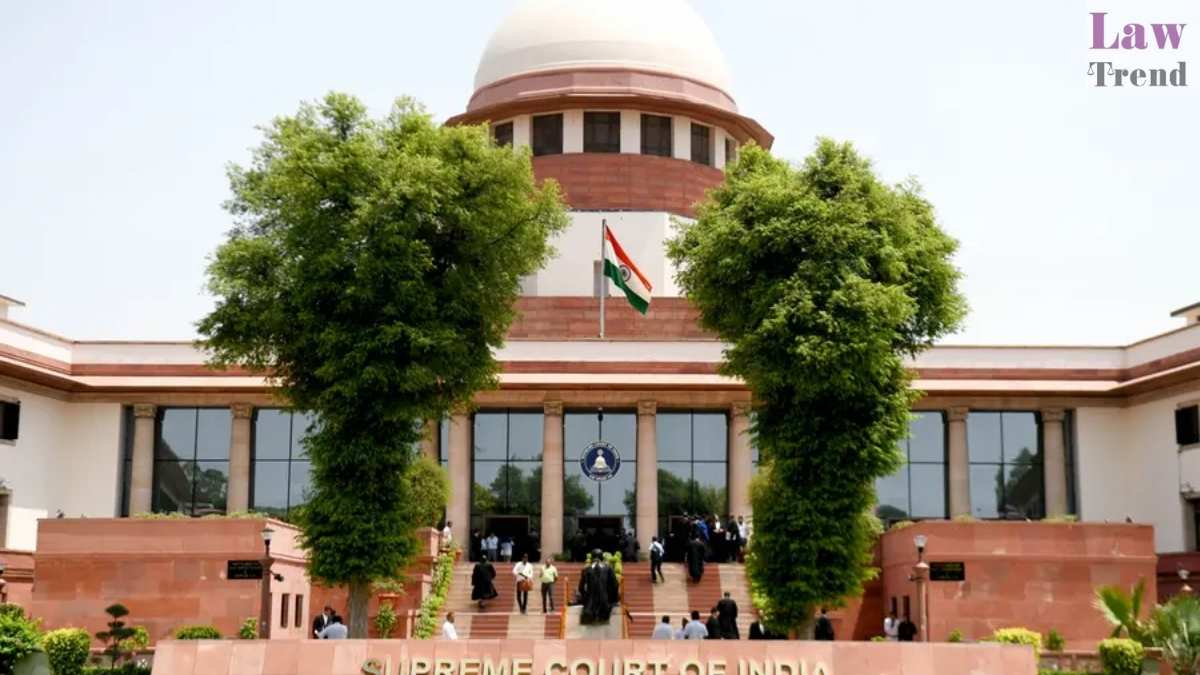

The Supreme Court has ruled that a joint petition for the Corporate Insolvency Resolution Process (CIRP) under Section 7 of the Insolvency and Bankruptcy Code (IBC) is maintainable against separate corporate entities if they are “intrinsically linked” to a single project. The Court upheld the admission of insolvency proceedings against M/s. Grand Venezia Commercial Towers Private Limited and M/s. Bhasin Infotech and Infrastructure Private Limited, dismissing the plea that a single petition could not be filed against two distinct corporate debtors.

The Bench, comprising Justice Sanjay Kumar and Justice K. Vinod Chandran, held that where two companies are jointly answerable to allottees and their operations are intertwined, a consolidated insolvency process is beneficial to maximize asset realization. The Court also clarified that the threshold limit of 100 allottees is to be reckoned at the time of filing the petition, not at the admission stage.

Background of the Dispute

The case arose from a petition filed by 141 financial creditors (allottees) before the National Company Law Tribunal (NCLT), New Delhi. They had booked office spaces in the ‘Grand Venezia Commercial Tower,’ a composite project developed by Bhasin Infotech on land leased from the Uttar Pradesh State Industrial Development Authority (UPSIDA).

The allottees alleged that despite the scheduled delivery date of May 2013, the units were not ready for occupation. They contended that the developer had failed to obtain a final completion certificate, stopped paying assured returns since January 2014, and had not executed the mandatory tripartite sublease deeds with UPSIDA.

READ ALSO  Proviso to Rule 55A of the Tamil Nadu Registration Rules is Unconstitutional, Rules Madras HC

On December 4, 2023, the NCLT admitted the joint petition. The National Company Law Appellate Tribunal (NCLAT) subsequently upheld this order on October 29, 2025. The erstwhile directors of the companies approached the Supreme Court, challenging the maintainability of the joint petition and asserting that the project was complete.

Arguments: Single Petition for Two Entities & Threshold Limit

The appellants contended that the insolvency application was legally flawed as it clubbed two separate legal entities—Bhasin Infotech (the developer) and Grand Venezia (the marketing agency)—into one petition. They argued that if the allottees were segregated by company, the number would fall below the statutory threshold of 100 required under Section 7(1) of the IBC.

Furthermore, the appellants claimed the petition was an abuse of process because the list of petitioners was amended between the initial filing date (July 7, 2021) and the formal registration of the petition. They also relied on “possession letters” issued to allottees and a part-completion certificate from 2015 to argue that no default existed as the project was complete.

Supreme Court’s Analysis

1. Maintainability of Joint Insolvency Plea: The Court firmly rejected the argument that the two companies were independent. It noted that while the land was allotted to Bhasin Infotech, it entered into an agreement in 2009 granting Grand Venezia “exclusive marketing rights.” The Court found the entities to be “intrinsically linked” based on several factors:

  • Common Directors: Both companies shared common directors, including the appellant Satinder Singh Bhasin.
  • Interchangeable Correspondence: Demand notices, possession letters, and payment receipts were issued interchangeably by both companies to the allottees.
  • Questionable Corporate Status: Grand Venezia was incorporated barely a month before securing exclusive marketing rights and claimed to be a “reputed marketer,” which the Court found implausible.
READ ALSO  Will Appeal be Filed Under CrPC/BNSS or SC/ST Act, If Accused Was Tried for Offence Under IPC and SC-ST Act Both but Convicted Under IPC Only? Allahabad HC Refers Issue to Larger Bench

The Bench observed:

“There is, thus, no possibility at this stage for either company to say that they are not jointly liable to the allottees of the project. The NCLT and the NCLAT were, therefore, justified in concluding that the corporate debtors were intrinsically linked and that it would be in their interest to have a joint insolvency process so as to maximise asset realisation.”

The Court endorsed the NCLAT’s view in Edelweiss Asset Reconstruction Company Limited v. Sachet Infrastructure Private Limited, affirming that consolidated proceedings for related corporate debtors aid in keeping the entities as going concerns.

2. Threshold Requirement: Citing Manish Kumar v. Union of India (2021), the Court reiterated that the validity of the threshold (minimum 100 allottees) is determined on the date of filing. The Court noted that allottees of 103 units had effectively filed the petition. Regarding the amendment of petitioner names before registration, the Court referred to Rule 28 of the NCLT Rules, 2016, holding that a petition is only “registered” after defects are cured, and changes made prior to registration do not amount to an abuse of process.

READ ALSO  Supreme Court Issues Notice on Delhi CM Atishi, Kejriwal’s Plea in Defamation Case

3. ‘Notional Possession’ vs. Actual Completion: The Court dismissed the defense that the project was complete. It relied on an independent Observer’s Report dated May 15, 2025, which described the building as having “bare-shell structures with raw concrete,” missing basic amenities like doors and lighting, and having no construction from the 9th to the 15th floors.

The Court held that “possession letters” issued by the developer were of “no legal import” because the mandatory tripartite sublease deeds with UPSIDA had not been executed, a condition precedent for valid possession.

Decision

The Supreme Court dismissed all appeals, confirming the orders of the NCLT and NCLAT. The Court also rejected a last-minute offer by appellant Satinder Singh Bhasin to deposit ₹15.62 crores to settle claims, terming the basis of the offer “without merit” given the factual findings of incompletion.

Case Details:

  • Case Title: Satinder Singh Bhasin v. Col. Gautam Mullick & Ors.
  • Case Number: Civil Appeal No. 13628 of 2025 (with connected appeals)
  • Coram: Justice Sanjay Kumar and Justice K. Vinod Chandran

Law Trend
Law Trendhttps://lawtrend.in/
Legal News Website Providing Latest Judgments of Supreme Court and High Court

Related Articles

Latest Articles

