

Sanction Under Section 196 CrPC Not Required for Registration of FIR or Investigation of Offence Under Section 295A IPC: Karnataka HC
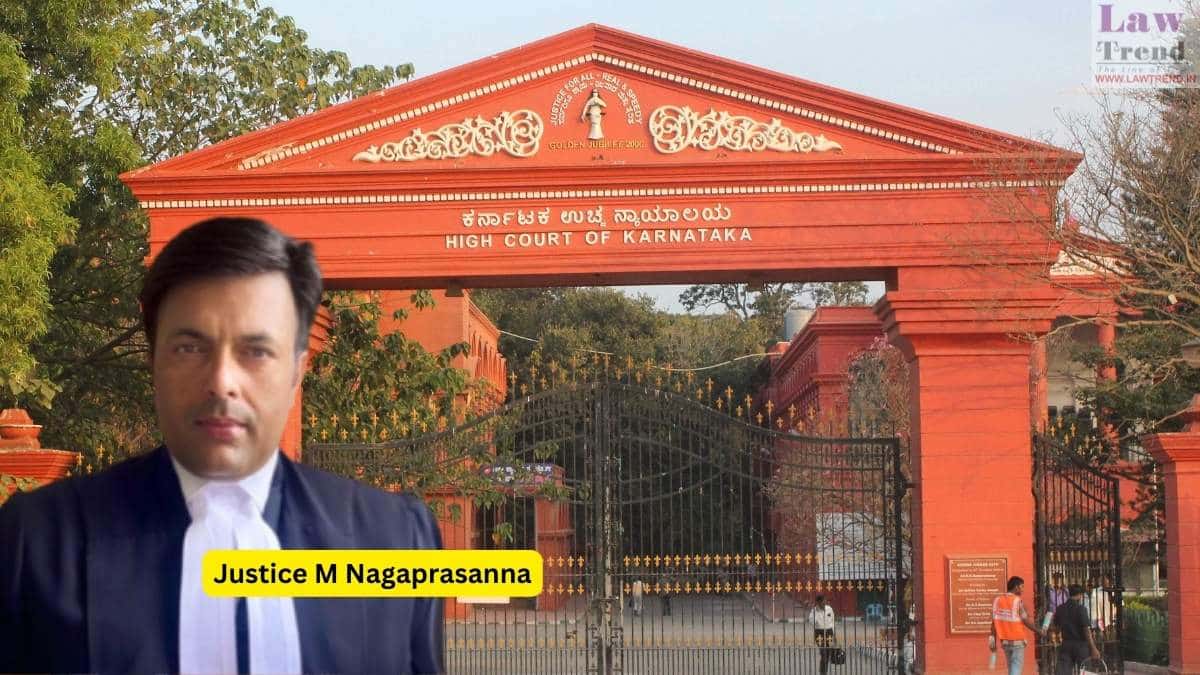

The Karnataka High Court has ruled that previous sanction from the government under Section 196 of the Code of Criminal Procedure (Cr.P.C.) is not a prerequisite for the registration of a First Information Report (FIR) or for conducting an investigation into offences punishable under Section 295A of the Indian Penal Code (IPC).

The Bench of Justice M. Nagaprasanna clarified that the statutory bar under Section 196 Cr.P.C. operates only at the stage of “taking cognizance” by the Court and does not fetter the powers of the police to register a crime and investigate the same.

The Court dismissed a petition filed by an administrator of a WhatsApp group where obscene images of Hindu deities were allegedly circulated, holding that the “offence under Section 295A of the IPC is met to every word of its ingredient albeit, prima facie.”

Background of the Case

The case stems from a complaint lodged by one K. Jayaraj Salian (Respondent No. 2), who alleged that on January 23, 2021, he received a link to a WhatsApp group titled “Bajarangi Go Kallaru” from an unknown source. Upon joining, he found that the group, which had six administrators and nearly 250 participants, was being used to circulate “obscene and deeply offensive images” depicting Hindu deities and certain political figures.

Based on the complaint, the CEN (Cyber, Economics, Narcotics) Police, Mangaluru, registered Crime No. 4 of 2021 for offences punishable under Section 295A of the IPC (deliberate and malicious acts intended to outrage religious feelings) and Section 67 of the Information Technology Act, 2000.

The petitioner, Sri Sirajuddin, who was one of the administrators, was arrested and his mobile device was seized. He was later released on bail. He approached the High Court seeking to quash the FIR, arguing primarily on the procedural requirement of sanction and lack of specific allegations.

READ ALSO  Rule of Evidence to Prove Charges in Criminal Trial Are Inapplicable For Deciding Application U/s 166 MV Act: Supreme Court

Arguments of the Parties

The counsel for the petitioner, Sri T. Ramesh, contended that the Magistrate could not take cognizance of the offence under Section 295A IPC without previous sanction under Section 196(1) Cr.P.C. from the Competent Authority. He argued that the Investigating Officer was negligent in not directing intermediaries to preserve electronic evidence. Furthermore, he alleged bias, stating that the creator of the group was not arrested while the petitioner was “singled out.”

Per contra, Sri B.N. Jagadeesha, Additional State Public Prosecutor, argued that sanction is required only at the time of filing the charge sheet and taking cognizance, not for registering an FIR. He submitted that the offence was clearly made out as explicit photographs of Hindu Gods and Goddesses were posted to maliciously insult religious feelings.

Court’s Observations and Analysis

1. On the Requirement of Sanction under Section 196 Cr.P.C.

The Court examined Section 196 of the Cr.P.C., which mandates that “No Court shall take cognizance” of certain offences, including Section 295A IPC, except with the previous sanction of the Central or State Government.

Justice Nagaprasanna observed:

“The statutory embargo is explicit and unambiguous. The bar under Section 196 Cr.P.C. operates only at the stage when the Court proposes to take cognizance of the offence and does not fetter the police to register a FIR or conduct investigation. Therefore, there is no warrant in law to obtain sanction even for registration of crime and investigation of the offence.”

READ ALSO  Accused Not Cross Examining Pre Charge Prosecution Witnesses Will Not Relieve Complainant From Adducing Post Charge Evidence: P&H HC

The Court relied on the Supreme Court judgment in Parvez Parwaz v. State of Uttar Pradesh (2022) and a Co-ordinate Bench decision in Vishwanath v. State of Karnataka (2020), which held that the requirement of sanction arises only after the investigation is completed and materials are placed before the Sanctioning Authority.

The Court held:

“To insist upon sanction even before investigation, would be to place a cart before the horse and defeat the very object of conduct of investigation.”

2. On Prima Facie Offence under Section 295A IPC

Regarding the merits of the allegations, the Court perused the investigation material produced by the State. The Court noted that the content included depictions of Hindu deities in an “extraordinarily obscene, demeaning and profane manner,” which were such that their reproduction in a judicial order would be inappropriate.

The Court observed:

“Suffice it to observe that the material on its face has the tendency to outrage religious feelings and disturb communal harmony. Whether the petitioner had requisite mens rea, the extent of his role and the liability of other administrators are all matters that falls squarely within the domain of investigation.”

Citing the Supreme Court’s decision in Ramji Lal Modi v. State of Uttar Pradesh, the Court reiterated that Section 295A punishes aggravated forms of insult to religion perpetrated with deliberate and malicious intention.

READ ALSO  Karnataka High Court Directs Centre to Amend BNSS, Mandating Female Doctors for Rape Victims' Medical Exams

Addressing the petitioner’s plea to interdict the probe, Justice Nagaprasanna stated:

“Premature interdiction by this Court would amount to stifling a lawful enquiry into allegations of serious import… What could be the outcome of the investigation is yet to be known. Therefore, this Court cannot now interdict the investigation of an offence of such nature.”

Conclusion

The High Court dismissed the petition, rejecting the contention that the proceedings were vitiated due to a lack of prior sanction at the FIR stage.

However, the Court expressed concern regarding the investigation’s scope, noting that the Investigating Officer appeared to have “blissfully ignored to proceed uniformly against all administrators of the group.” The Court directed that if the investigation reveals the active involvement of any other members in permitting the circulation of such pictures, “they must be brought to book.”

The Court ordered the Investigating Officer to conclude the investigation expeditiously, as the crime dates back to 2021.

Case Details:

  • Case Title: Sri Sirajuddin vs. The State of Karnataka & Anr.
  • Case No: Criminal Petition No. 3258 of 2024
  • Coram: Justice M. Nagaprasanna
  • Counsel for Petitioner: Sri T. Ramesh
  • Counsel for Respondents: Sri B.N. Jagadeesha, Addl. SPP (for State); Sri Rakshith Kumar (for Respondent No. 2)

Law Trend
Law Trendhttps://lawtrend.in/
Legal News Website Providing Latest Judgments of Supreme Court and High Court

Related Articles

Latest Articles

