

Bar Associations Cannot Constitute ICC Under POSH Act to Probe Complaints Against Members: Kerala HC Sets Aside Report Against Senior Lawyer
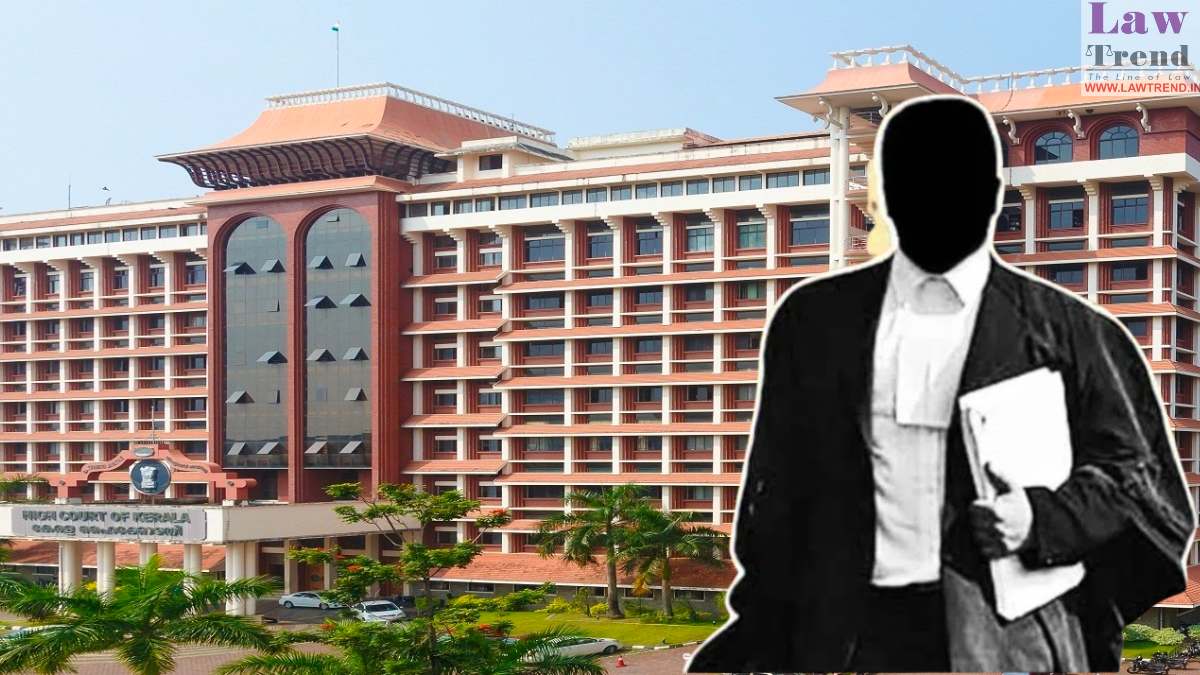

The Kerala High Court has ruled that a Bar Association does not qualify as an “employer” under the Sexual Harassment of Women at Workplace (Prevention, Prohibition and Redressal) Act, 2013 (POSH Act) and therefore lacks the jurisdiction to constitute an Internal Complaints Committee (ICC) to inquire into allegations of sexual harassment between its members.

Justice P.M. Manoj, presiding over the matter, set aside the ICC report submitted against a senior lawyer, holding that the constitution of such a committee by the Bar Association was legally unsustainable under Section 4 of the POSH Act.

Background of the Case

The petitioner, E. Shanavas Khan (76), a member of the Kollam Bar Association, approached the High Court challenging the report submitted by the ICC constituted by the Association and his subsequent suspension. The proceedings arose from a complaint filed by a 24-year-old junior advocate (the 3rd respondent), alleging misconduct by the petitioner.

The complainant alleged that the incident occurred on June 14, 2024, at the petitioner’s residence when she visited to discuss the notarisation of a document. Apart from the complaint to the Bar Association, a First Information Report (FIR) was also registered by the Police alleging offences under Sections 354 and 354A of the Indian Penal Code (IPC).

Based on the complaint, the Kollam Bar Association constituted an ICC, which conducted an enquiry and submitted a report (Ext.P8). Consequently, the petitioner was suspended from the Association. The petitioner contended that the ICC proceedings were without jurisdiction as the Bar Association was not his employer.

READ ALSO  जन्मतिथि में सुधार के लिए आवेदन पर रजिस्ट्रार को जांच करना आवश्यक: हाईकोर्ट

Arguments Raised

The petitioner argued that the objective of the POSH Act is to protect women employees at the workplace. He submitted that his private residence does not constitute a “workplace” under Section 2(o) of the Act in relation to the Association. It was further argued that “neither the petitioner nor the respondent is an employee of the Kollam Bar Association, and therefore, no employer-employee relationship exists.” The petitioner likened the Association to a club, citing the Supreme Court’s decision in National Union of Commercial Employees v. MR Meher, where it was held that a lawyer’s office is not an “industry.”

The Kollam Bar Association (1st Respondent) and the ICC (2nd Respondent) defended their actions, arguing that the Association is a company incorporated under the Travancore Companies Regulation. They relied on the Supreme Court’s directions in Aureliano Fernandes v. State of Goa, which mandated statutory bodies of professionals to constitute ICCs.

The 3rd respondent (complainant) raised a preliminary objection regarding the maintainability of the writ petition, arguing that the Bar Association is not a “State” under Article 12 of the Constitution. Reliance was placed on the decision in Secretary Alipur Bar Association v. Subir Sengupta, to argue that a Bar Association is not amenable to writ jurisdiction.

Court’s Analysis

On Maintainability of Writ Petition

READ ALSO  Filing of Draft Sale Deed Not Mandatory Under Order 21 Rule 34 CPC: Andhra Pradesh High Court

The Court rejected the contention that a writ petition is not maintainable against a Bar Association. Justice Manoj observed that while the Bar Council of Kerala is the statutory body responsible for advocates, Bar Associations are recognized under Section 13 of the Kerala Advocates Welfare Fund Act, 1980.

Referring to previous rulings in Abdul Azeez v. Alappuzha Bar Association and Jose Kuttiyani v. High Court Advocates Association, the Court held that it has the jurisdiction to entertain the writ petition, stating, “The core question in this case is the alleged illegal formation of the ICC… Hence, this Court has every jurisdiction to entertain the writ petition.”

On the Constitution of ICC by Bar Association

The Court analyzed Sections 2(g) and 4 of the POSH Act. Section 4 mandates that “every employer of a workplace” shall constitute an ICC. The Court examined whether the Bar Association qualifies as an employer.

The Court observed:

“The authority constituting the employer is essentially the person discharging the contractual obligation with respect to his or her employees. As far as an advocate is concerned, the petitioner’s role does not qualify under any of the authorities mentioned in the said provisions.”

The Court definitively held that the Bar Association cannot be treated as an “employer” under the Act regarding its members. The judgment stated:

“The Bar Association cannot be treated as an ’employer’ under the aforementioned terms. Hence, the formation of the ICC does not qualify under the mandate of Section 4 of the POSH Act. Therefore, the constitution of the ICC by the first respondent is itself against the objective and specific requirements of Section 4 of the POSH Act.”

Decision

The High Court held that the report submitted by the ICC had “no legal basis to stand upon” because the constitution of the committee itself was flawed.

Accordingly, the Court set aside the ICC report (Ext.P8).

READ ALSO  Non-Disclosure of Facts or Suppression of Facts in Tender Form Leads to “fraudulent practice”: Orissa HC

The Court clarified that it did not address the merits of the factual allegations regarding sexual harassment or the suspension order on factual grounds, leaving those issues open. The Writ Petition was disposed of with the finding that the Bar Association lacked the statutory power under the POSH Act to constitute the ICC for this purpose.

Case Details:

  • Case Title: E. Shanavas Khan v. The Kollam Bar Association and Others
  • Case Number: WP (C) No. 39539 of 2024
  • Bench: Justice P.M. Manoj

Law Trend
Law Trendhttps://lawtrend.in/
Legal News Website Providing Latest Judgments of Supreme Court and High Court

Related Articles

Latest Articles

