

PIL Cannot Be Used for Selective or Targeted Challenges; Demolition Orders Justified Only in Cases of Blatant and Substantive Illegality: Supreme Court

In a significant judgment curbing the misuse of Public Interest Litigation (PIL) to settle personal scores, the Supreme Court of India has ruled that PILs cannot be permitted to become a vehicle for “selective or targeted challenges.” The Court further laid down that the “draconian consequence” of demolition is justified only in cases of “blatant and substantive illegalities,” and not for procedural lapses that are curable.

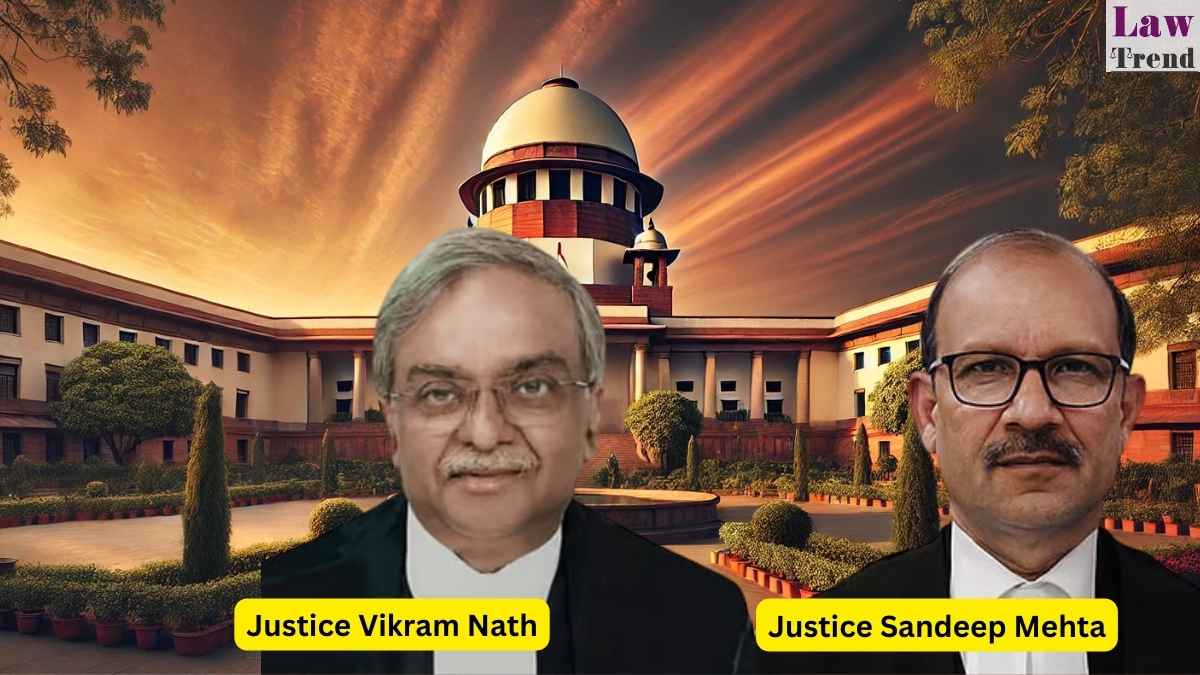
A Bench comprising Justice Vikram Nath and Justice Sandeep Mehta made these observations while setting aside a 2013 judgment of the Calcutta High Court. The High Court had directed the demolition of a residential building constructed by M/s Aarsuday Projects & Infrastructure (P) Ltd in Santiniketan, West Bengal. The Supreme Court expunged the adverse remarks against government officials and imposed costs of Rs. 1,00,000 on the original PIL petitioners for suppressing the fact that they owned properties in the same vicinity.

Background of the Dispute

The appeal challenged a Division Bench judgment of the Calcutta High Court dated August 21 & 22, 2013, in Writ Petition No. 8341(W) of 2012. The dispute involved a 0.39-acre plot in Mouza Ballavpur, District Birbhum, near Visva-Bharati University.

The developer, Aarsuday Projects, purchased the land in 2009 and constructed a residential building after obtaining approvals. However, a PIL was filed alleging that the construction was illegal because:

  1. The land was “Khoai” (a unique geological formation), which required preservation under the Supreme Court’s earlier mandate in Sushanta Tagore v. Union of India (2005).
  2. The building permission was granted by the Gram Panchayat instead of the Panchayat Samiti.
READ ALSO  Period of 90/60 days for computing default bail starts from the date of remand and not from unlawful custody

The High Court accepted these contentions, declared the construction unauthorized, ordered its demolition, directed the developer to pay Rs. 10 lakhs as compensation, and ordered proceedings against officers of the Sriniketan Santiniketan Development Authority (SSDA).

Arguments Before the Supreme Court

The Appellant (Aarsuday Projects), represented by Senior Counsel Mr. Siddharth Bhatnagar, contended that the High Court proceeded on “conjectures and surmises.” It was argued that the land was privately owned and recorded as “danga” (barren land), not “Khoai,” and was earmarked for residential use in the Land Use and Development Control Plan, 2002. The appellant submitted that the building plan was duly vetted by the Zilla Parishad and approved by the Gram Panchayat, following the standard practice of that time.

The Respondents (Original Writ Petitioners), represented by Senior Counsel Mr. Jaideep Gupta, argued that the construction violated the environmental mandate to preserve the “Khoai” landscape. They defended the High Court’s finding that the permission was void as it was not issued by the competent statutory authority (Panchayat Samiti).

The SSDA, represented by Senior Counsel Mr. Abhrotosh Majumdar, submitted that it had acted within its statutory limits by granting a “No Objection Certificate” for land conversion based on the existing Development Plan.

Supreme Court’s Analysis and Observations

The Supreme Court allowed the appeals, finding serious errors in the High Court’s approach regarding both the facts and the law.

1. On Demolition and Procedural Lapses

The Court addressed the High Court’s finding that the permission granted by the Gram Panchayat was invalid because the authority lay with the Panchayat Samiti. The Bench held that even if there was a lack of jurisdiction, it was, at best, a “procedural irregularity” since the plan was vetted by the higher body (Zilla Parishad).

The Court observed: “Such a procedural lapse… could not render the construction per se illegal, nor could it justify the issuance of a direction for demolition, which is an extremely draconian consequence reserved for cases of blatant and substantive illegalities.”

The Bench emphasized that interference with private property rights under Article 300A must rest on a “clear statutory foundation.”

2. On “Khoai” Land and Evidence

The Court rejected the High Court’s conclusion that the land was “Khoai.” It noted that “Khoai” is not a recognized revenue category and the land was recorded as “danga.” The Court scrutinized the reports of the District Magistrate and the West Bengal Pollution Control Board (WBPCB), finding they lacked scientific basis.

READ ALSO  Victim’s Testimony Central in Rape Trial; FIR Allegations Cannot Sustain Conviction Without Cogent Proof When Prosecutrix Turns Hostile: Supreme Court

The Bench noted: “The observations regarding utilization of natural undulating topography are not supported by any technical survey, demarcation, or documentary evidence identifying the subject plot as ‘khoai’. In the absence of such material evidence, the report could not furnish a reliable basis for concluding that the disputed construction… was on ‘khoai’ land.”

3. On Misuse of PILs (Selective Challenges)

The Supreme Court strongly criticized the bona fides of the PIL petitioners. Upon examining the site plan, the Court found that several petitioners themselves owned houses in the same tract of land, directly opposite or adjacent to the disputed building.

READ ALSO  Allahabad High Court: Failure to Confront Accused with Incriminating Material Violates Section 313 CrPC

The Court held: “The omission to question the validity of these constructions before the writ court, despite them being located within the same parcel of land, raises a serious doubt as to the bona fides of the writ petitioners… Public interest litigation cannot be permitted to become a vehicle for selective or targeted challenges, nor can it be invoked to resolve contested factual issues which are not capable of determination on affidavits alone.”

Decision

The Supreme Court set aside the impugned judgment of the Calcutta High Court in its entirety.

  1. Civil Appeal No. 2920 of 2018: Allowed. The demolition order was quashed.
  2. Civil Appeal No. 2921 of 2018: Allowed. All adverse remarks and directions against the SSDA and its officers were expunged.
  3. Costs: The Court imposed costs of Rs. 1,00,000 on the original writ petitioners (Respondent Nos. 1-7) for lacking bona fides and suppressing material facts.

The Court concluded: “In the absence of clear, specific, and contemporaneous scientific evidence establishing that the subject plot was of ‘khoai’ nature, the invocation of public interest jurisdiction to assail the construction… cannot be sustained, particularly where similarly situated constructions within the same tract of land were left unchallenged.”

Case Details:

  • Case Title: M/s Aarsuday Projects & Infrastructure (P) Ltd v. Jogen Chowdhury & Ors.
  • Civil Appeal No.: 2920 of 2018 (and connected matters)
  • Coram: Justice Vikram Nath and Justice Sandeep Mehta

Law Trend
Law Trendhttps://lawtrend.in/
Legal News Website Providing Latest Judgments of Supreme Court and High Court

Related Articles

Latest Articles

