

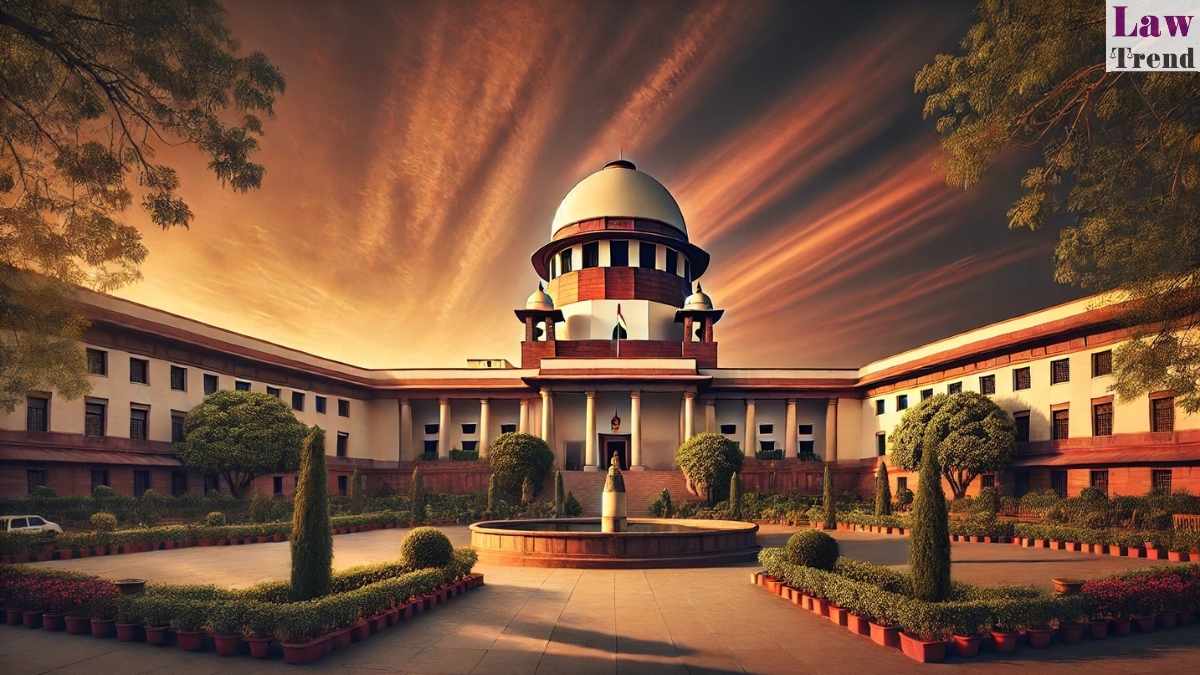
The Supreme Court on Thursday declined to entertain a PIL seeking a statutory framework for minimum wages and welfare for domestic workers, stating that the judiciary cannot mandate the legislature to enact such laws. While acknowledging the exploitation faced by domestic helps, the court said reforms must come through legislative and executive actions, not judicial decrees.
A Bench of Chief Justice Surya Kant and Justice Joymalya Bagchi dismissed a public interest litigation filed by Penn Thozhilalargal Sangam, a domestic workers’ union, seeking a binding legal framework ensuring minimum wages for household workers. The petitioners also sought recognition of the denial of minimum wages as a constitutional violation under Articles 14, 15, and 16.
Refusing to entertain the plea, the court said:
“No enforceable decree or order can be passed unless the legislature is asked to enact a suitable law. Such a direction, we are afraid, ought not to be issued by this court.”
The court, however, left the door open for policy advocacy and urged petitioners to continue engaging with state and central governments on the issue.
In a strongly worded oral observation, Chief Justice Surya Kant questioned the role of trade unions in India’s industrial progress, stating:
“How many industrial units in the country have been closed thanks to trade unions? Let us know the realities. All traditional industries in the country, all because of these ‘jhanda’ unions have been closed. They don’t want to work.”
While acknowledging the exploitation in unorganised sectors, the CJI remarked that empowering individuals through awareness and skill development would be a more sustainable solution than excessive reliance on collective bargaining through trade unions.
He also cautioned that setting mandatory minimum wages through law could backfire:
“Once minimum wages are fixed, people may refuse to hire. Every household will be dragged into litigation… Unions will ensure that every home becomes a battlefield.”
Justice Bagchi, concurring with the overall reasoning, pointed out that domestic workers are not entirely without protection.
“It is not as if there is no safety net. The Unorganised Workers’ Social Security Act does take care of several aspects,” he said, while acknowledging the petitioner’s concerns were “well taken.”
Senior Advocate Raju Ramachandran, representing the petitioners, argued that domestic workers—mostly women—remain among the most vulnerable, without adequate legal safeguards. He pointed out that countries like Singapore have statutory protections, including mandatory leave and service conditions, for domestic help.
He also cited a January 2025 Supreme Court ruling that had flagged the repeated but unsuccessful legislative attempts to frame a comprehensive law for domestic workers.
Ramachandran stressed that while some states have prescribed minimum wages for household work, the absence of a national framework has led to inconsistent protection across jurisdictions.
The court made it clear that despite the legitimate concerns raised, the judiciary cannot encroach into the policy-making sphere by issuing directions that essentially require drafting or amending laws.
“All your prayers are legislative in nature. No effective decree can be passed unless the legislature is asked to enact a suitable law, which we are afraid this court cannot do,” the CJI told the petitioner.
The PIL was disposed of with liberty to the petitioners to continue representing their concerns to relevant authorities. The Bench expressed hope that governments would evolve a suitable mechanism to aid domestic workers and curb exploitation.




