

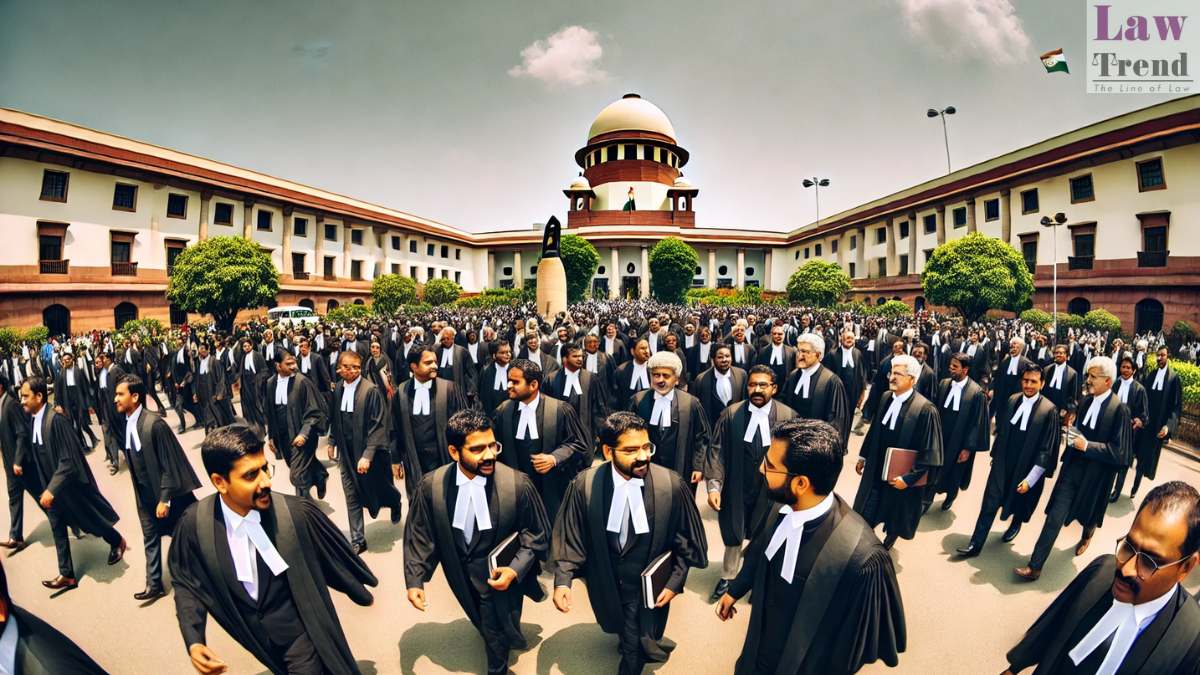
The Supreme Court on Tuesday dismissed a Public Interest Litigation (PIL) seeking reservation for Scheduled Caste (SC) and Scheduled Tribe (ST) lawyers in State Bar Councils, saying the plea was belated and filed after the election process had already begun.
A bench led by Chief Justice of India Surya Kant, along with Justices R Mahadevan and Joymalya Bagchi, expressed strong reservations over the timing and intent of the PIL. The Court noted that while representation for women lawyers had been allowed through a carefully developed judicial process, the present petition appeared rushed and opportunistic.
“You are everywhere — in the judiciary, among lawyers, in Parliament… The Bar Council has been there since 1961, and you did nothing. Just because the Supreme Court did something for women, you come now! You just want it on a platter,” CJI Surya Kant remarked during the hearing.
The bench clarified that the Supreme Court’s previous directions mandating women’s inclusion in State Bar Councils did not amount to a constitutional reservation. “We have not provided reservation for women; it is only representation,” the CJI clarified, underscoring that the earlier orders addressed a historic under-representation and were the product of sustained litigation over two years.
The bench refused to interfere with the ongoing election process, observing that the petitioners had failed to approach the appropriate authorities before knocking on the Court’s doors. “You can approach us for the next election,” the CJI said, granting liberty to the petitioners to make a representation to the Bar Council of India and other competent authorities based on the earlier orders on women’s representation.
“Take the representation of our earlier order and show the authorities. I’m sure they will take it up, considering the number of members there now,” the Court noted, expressing hope that the matter would receive due consideration.
In December 2025, the Supreme Court had declared 30% representation for women in State Bar Councils as “non-negotiable” and directed that any shortfall must be filled through co-option. The apex court had also encouraged measures to facilitate greater participation of specially-abled lawyers, prompting the Bar Council of India to reduce nomination fees for them.
While the Court acknowledged the issue raised by the petitioners as important, it firmly stated that the timing and lack of procedural groundwork rendered the present petition non-maintainable. The petitioners were granted the liberty to pursue appropriate statutory remedies before considering any future legal action.




