

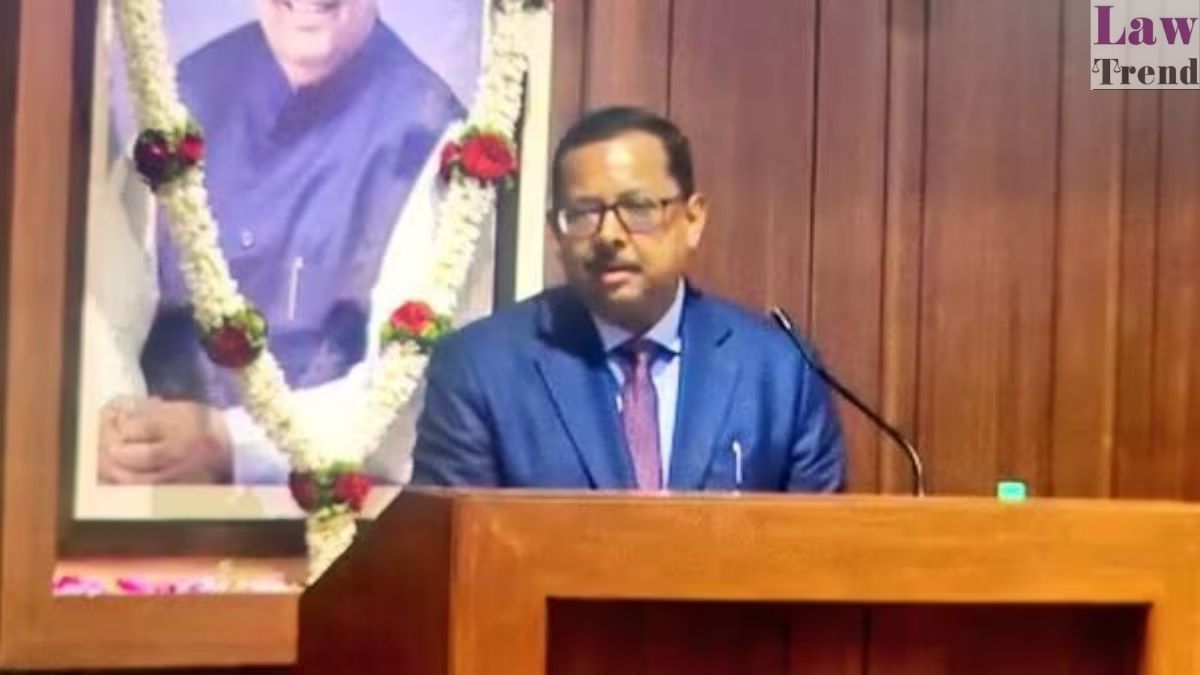
Supreme Court judge Justice Ujjal Bhuyan on Sunday strongly asserted that the apex court’s core purpose is to protect personal liberty and human rights, not to endorse executive actions that curtail these freedoms. He also called for institutional unity, impartial law enforcement, and an internal audit of judicial independence.
In a candid and sharp reflection on the judiciary’s role in preserving democratic values, Supreme Court judge Justice Ujjal Bhuyan said the court was never meant to justify executive actions that infringe upon individual liberties or violate human rights. His comments came during a panel discussion organised by the Supreme Court Advocates-on-Record Association in Goa.
“The very existence of the Supreme Court is for upholding personal liberty and human rights. The Supreme Court is not established to justify executive actions denying liberty and violation of human rights,” Justice Bhuyan said.
Calling for coherence in the judiciary’s interpretation of fundamental legal principles, he stressed that while judicial opinions may differ, divergence cannot extend to the bedrock of constitutional rights.
“There can be divergence of views, but not on fundamentals of law. The perception may vary but when we apply principles of laws, there can’t be multiplicity of views in the Supreme Court,” he noted.
He further stated that unity in judicial interpretation would promote consistency across courts and help build international confidence in India’s legal system, especially when dealing with extradition of white-collar criminals.
Justice Bhuyan also took a critical view of selective prosecution by investigative agencies, particularly when political allegiance shifts. “Investigating agencies should enhance their credibility and not be selective in targeting criminals when they change political sides,” he said, urging more equitable law enforcement.
He also raised a crucial question about the efficacy of the Prevention of Corruption Act, calling for a “social audit” to evaluate whether the statute has genuinely served its anti-corruption mandate.
A day earlier, while speaking in Pune, Justice Bhuyan delivered another strong message — that the independence of the judiciary is “non-negotiable”. Taking a veiled dig at executive overreach, he remarked that the central government should have no role in the transfer or posting of judges.
In a rare instance of public disapproval, he expressed disappointment over the Supreme Court collegium’s acceptance of a government recommendation to transfer a high court judge.
“The biggest threat to the independence of the judiciary is from within,” he said, hinting at internal compromises that undermine judicial autonomy.
Justice Bhuyan’s remarks come at a time of heightened public scrutiny over judicial appointments, executive interference, and politicised investigations. His statements add to a growing call from within the judiciary for greater institutional integrity and assertiveness in the face of executive encroachments.
His forthrightness also reflects an ongoing debate about the need for transparency, consistency, and accountability both in judicial functioning and enforcement of laws.




