

Compensatory Allowances Must Be Included in ‘Ordinary Rate of Wages’ for Overtime Calculation Under Factories Act: Supreme Court
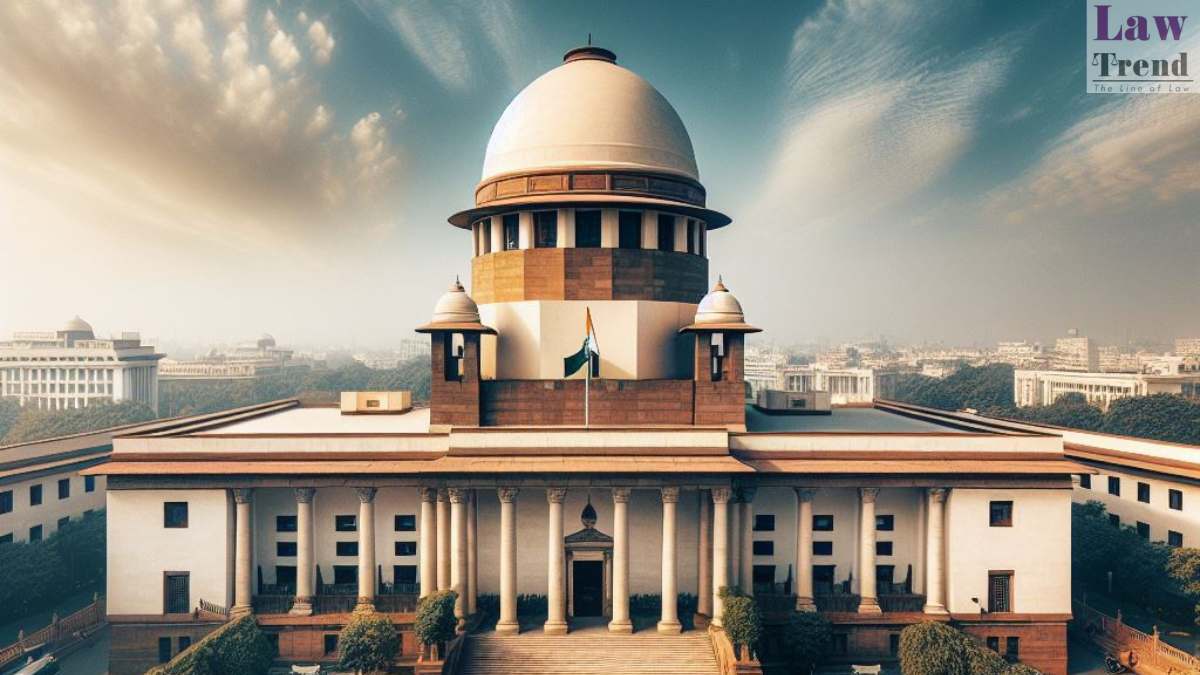
The Supreme Court of India has held that compensatory allowances, including House Rent Allowance (HRA) and Transport Allowance (TA), must be included in the “ordinary rate of wages” for the purpose of calculating overtime wages under Section 59(2) of the Factories Act, 1948.

A Division Bench comprising Justice Rajesh Bindal and Justice Manmohan dismissed the appeals filed by the Union of India, upholding the judgment of the Madras High Court which had ruled in favor of the employees. The Court clarified that executive instructions or Office Memorandums issued by various Central Ministries cannot restrict the statutory definition provided by Parliament.

Background of the Case

The appeals challenged the order of the Division Bench of the Madras High Court dated November 30, 2011. The High Court had set aside an earlier order passed by the Central Administrative Tribunal (CAT), Madras Bench, dated December 24, 2010.

The core legal issue was whether compensatory allowances—specifically House Rent Allowance (HRA), Transport Allowance (TA), Clothing and Washing Allowance (CWA), and Small Family Allowance (SFA)—fall within the definition of “ordinary rate of wages” under Section 59(2) of the Factories Act, 1948, for the calculation of overtime wages.

The Union of India relied on a series of communications and Office Memorandums (OMs) issued over several decades to justify the exclusion of these allowances:

  • A 1959 letter from the Ministry of Defence stating overtime is payable only on basic pay and dearness allowance.
  • A 2002 Office Memorandum from the Ministry of Finance excluding HRA, TA, and CWA from the calculation.
  • Subsequent OMs from the Ministry of Labour and Employment (2007, 2009) and Ministry of Defence (2008, 2009) reiterating that allowances of compensatory nature should be excluded.
READ ALSO  Supreme Court Reserves Verdict on Notification of Saranda Wildlife Sanctuary, Sasangdaburu Conservation Reserve in Jharkhand

The employees’ unions challenged this interpretation, leading to the litigation.

Arguments of the Parties

The Appellants (Union of India) argued that the exclusions were necessary to prevent disparity in wage calculations. Learned counsel for the appellants submitted that different employees might receive different allowances (e.g., some using factory buses versus those receiving Transport Allowance, or those provided government accommodation versus those receiving HRA). They contended that including these variable allowances would create inequality. The appellants relied on previous Supreme Court judgments, including Bridge and Roofs Co. Ltd. v. Union of India and Union of India v. Suresh C. Baskey, to support their interpretation.

The Respondents (Heavy Vehicles Factory Employees’ Union) contended that the language of Section 59(2) is plain and unambiguous. They argued that the term “ordinary rate of wages” includes basic wages plus “such allowances” the worker is entitled to, irrespective of the nature of the allowance. They submitted that Central Ministries lack the power to issue clarifications that contradict the Act. To highlight the inconsistency in government policy, they pointed to a 2011 letter from the Ministry of Railways, which explicitly instructed that HRA and TA should be taken into account for calculating overtime wages.

Court’s Analysis

The Supreme Court rejected the contentions of the Union of India, focusing on the statutory text and the division of powers under the Factories Act.

Interpretation of Section 59(2): The Court examined Section 59(2) of the Act, which defines “ordinary rate of wages” as “basic wages plus such allowances… as the worker is for the time being entitled to,” with the specific exclusion of only “bonus and wages for overtime work.”

Lack of Executive Power to Amend Statute: The Bench observed that under Chapter VI (‘Working Hours of Adults’) and Chapter XI (‘Supplemental’) of the Factories Act, the power to make rules or issue exempting orders is vested primarily with the State Government. The Court noted that there is no power vested with different Central Ministries to issue clarifications regarding Section 59(2).

READ ALSO  CJI Chandrachud Expresses Frustration Over Repeated Requests for Early Hearings

Justice Rajesh Bindal, writing for the Bench, observed:

“Meaning thereby, as far as Chapter VI is concerned, there is no power vested with different Ministries of the Government of India to issue any clarification with reference to Section 59(2) of the 1948 Act, especially with respect to what is to be included or excluded for the purpose of calculation of ‘ordinary rate of wages’, in order to determine the wages payable for overtime to an employee.”

Inconsistency in Government Stance The Court took strong note of the fact that the Ministry of Railways interpreted the same provision differently, including HRA and TA in overtime calculations, while the Ministry of Defence excluded them. The Court stated:

“Different Ministries of the Government of India cannot assign different meaning to a provision in the Act of Parliament, which otherwise is clearly evident from the plain reading of Section 59 (2) of the 1948 Act.”

Distinguishing Precedents The Court distinguished the judgments relied upon by the Union of India:

  • Bridge and Roofs Co. Ltd. was distinguished as it dealt with ‘production bonus’ under the EPF Act, not compensatory allowances under the Factories Act.
  • Suresh C. Baskey was found inapplicable as it dealt with the notional addition of HRA for employees occupying government accommodation, which is distinct from the exclusion of actual allowances paid.
READ ALSO  बिकरु कांड में खुशी दुबे की जमानत याचिका पर यूपी सरकार को सुप्रीम नोटिस जारी

The Court affirmed the principles laid down in Gujarat Mazdoor Sabha v. State of Gujarat (2020), reiterating that the Factories Act is a beneficial legislation intended to protect workmen against exploitation and that interpretations restricting benefits must be avoided.

Overruling Contrary View The Supreme Court explicitly overruled a contrary judgment of the Kerala High Court in V.E. Jossie v. The Flag Officers Commanding in Chief Headquarters (2011), declaring that it “does not lay down the correct law.”

Decision

The Supreme Court held that the sudden exclusion of allowances via the Office Memorandum dated June 26, 2009, lacked legal authority and was “contrary to the literal mandate of Section 59 of the 1948 Act.”

The Court affirmed the view of the Madras High Court that since the statute provides only two specific exclusions (bonus and overtime wages), the Executive cannot read additional exclusions into the Act through Office Memorandums.

The appeals filed by the Union of India were dismissed.

Case Details:

  • Case Title: Union of India & Others v. Heavy Vehicles Factory Employees’ Union and Another
  • Case Number: Civil Appeal Nos. 5185-5192 of 2016
  • Coram: Justice Rajesh Bindal and Justice Manmohan

Law Trend
Law Trendhttps://lawtrend.in/
Legal News Website Providing Latest Judgments of Supreme Court and High Court

Related Articles

Latest Articles
