

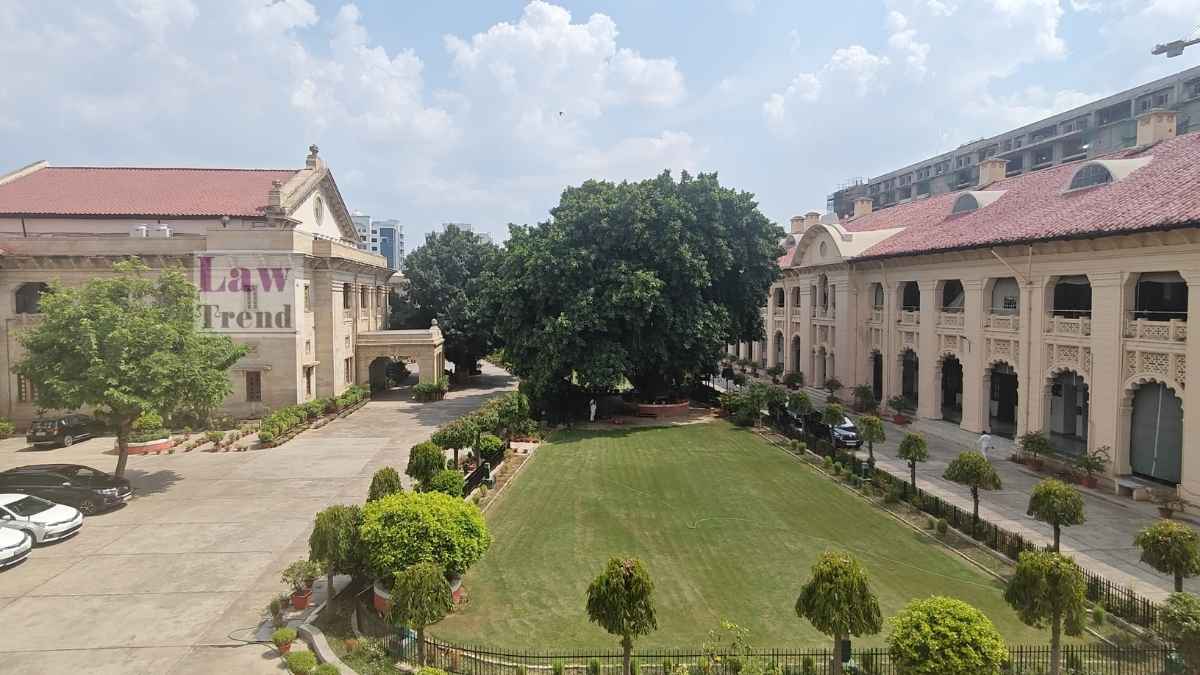
The Lucknow bench of the Allahabad High Court has refused to grant anticipatory bail to a man accused of helping settle illegal Bangladeshi and Rohingya immigrants across India, observing that such actions jeopardise the “security, safety, peace and harmony” of the country.
A division bench comprising Justice Rajesh Singh Chauhan and Justice P.K. Srivastava dismissed the appeal filed by one Abdul Ghaffar, who had challenged a November 2025 order of a special NIA court rejecting his plea for pre-arrest bail.
The court also permitted the National Investigation Agency (NIA) to arrest Ghaffar if required and strongly criticised the “callous and careless” approach of the investigating agency in not apprehending him earlier.
In its detailed order dated January 9, the bench expressed serious displeasure with the probe agency for failing to take effective steps despite the FIR being registered on October 11, 2023 at the ATS police station, Gomti Nagar, Lucknow.
The judges further directed that a copy of the order be forwarded to the Chief Secretary, Additional Chief Secretary (Home), Principal Secretary, Secretary to the Chief Minister, and the Director General of Police, to ensure appropriate action.
The court stressed that the alleged activities affect national security and thus must be dealt with urgently and thoroughly.
Ghaffar is one of ten accused in the case. He is alleged to have facilitated the settlement of illegal Bangladeshi and Rohingya immigrants by receiving funds through hawala channels and other unlawful means. These funds were reportedly used to construct houses and huts for such individuals in various parts of the country.
Government counsel SN Tilhari, appearing for the State, opposed the bail plea, asserting that surveillance and investigation had yielded substantial material evidence against the appellant. He said Ghaffar and others were involved in a racket of receiving foreign funds through multiple bank accounts and supporting “intruders and unauthorised persons”, some of whom were allegedly engaged in anti-national activities.
Ghaffar’s counsel argued that despite the passage of time since the FIR, the probe agency had not arrested him, indicating the absence of “concrete evidence.” However, the court rejected this line of defence and maintained that the nature of allegations required custodial interrogation.
The bench directed Ghaffar to submit all material and documents in his possession to the investigating officers within a week and refused to interfere with the special NIA court’s decision.




