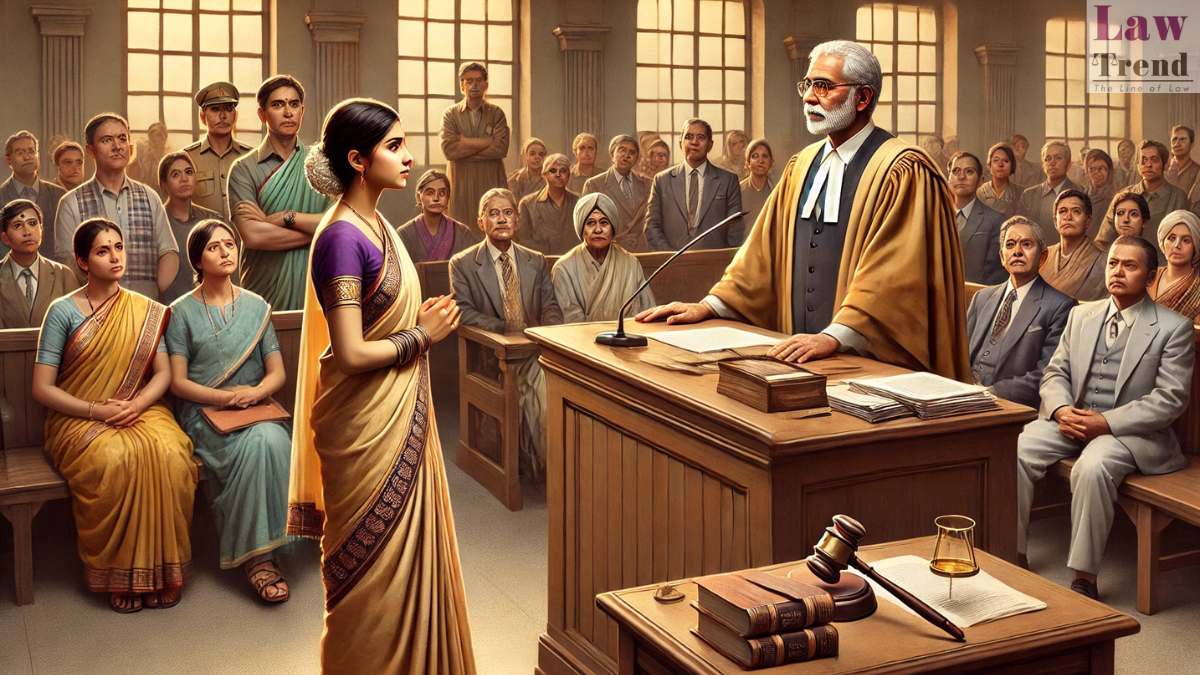
The Calcutta High Court has ruled that a divorced daughter is entitled to family pension even if the decree of divorce is passed after the death of the pensioner, provided the matrimonial proceedings were initiated during the lifetime of the pensioner. The Division Bench, comprising Acting Chief Justice Sujoy Paul and Justice Partha Sarathi Sen, dismissed a writ petition filed by the Union of India, upholding the order of the Central Administrative Tribunal (CAT), Kolkata Bench.
The central legal question before the Court was whether a daughter whose divorce decree was granted after her parents’ death could claim family pension. The Court interpreted the Department of Pension & Pensioners’ Welfare Office Memorandum (OM) dated July 19, 2017, which permits family pension if divorce proceedings were filed during the pensioner’s lifetime. The Bench held that since the matrimonial dispute—initiated by the husband—was pending during the father’s lifetime, and dependency was established due to desertion, the daughter was eligible. The Court distinguished this case from its earlier decision in Union of India vs. Jayanti Chatterjee, where no such proceedings or dependency existed during the pensioner’s life.
Background of the Case
The respondent, Mita Saha Karmakar, is the daughter of a South Eastern Railway employee who retired on December 31, 1983, and died on April 19, 2013. Her mother predeceased the pensioner on November 5, 2011.
The respondent was married on August 12, 1991. The factual matrix regarding her matrimonial status was as follows:
- In 1997, during the pensioner’s lifetime, the respondent’s husband filed a suit for dissolution of marriage (Matrimonial Suit No. 36 of 1997).
- This suit was stayed because the husband failed to pay maintenance.
- In 2014, after the death of both parents, the respondent filed a fresh suit for divorce on the ground of desertion.
- A decree of divorce was granted on September 1, 2016.
The railway authorities rejected her claim for family pension by a reasoned order dated June 25, 2022, arguing that the divorce suit leading to the decree was filed after the parents’ death. The Tribunal set aside this rejection on October 9, 2024, leading the Union of India to appeal to the High Court.
Arguments of the Parties
Petitioners (Union of India): Senior Advocate Mr. D.N. Ray, representing the Union of India, contended that the Tribunal erred in its decision. He argued that the divorce decree was obtained on September 1, 2016, which was “much after the death of her father as well as of her mother.”
Mr. Ray relied heavily on the Calcutta High Court’s recent judgment in Union of India and others versus Jayanti Chatterjee (WP.CT 320 of 2024). He asserted that the facts were identical to Jayanti Chatterjee and that the respondent “failed to establish that on the day of death of her father, that is the pensioner she was anyway dependent upon him.”
Respondent (Original Applicant): Mr. Asim Kr. Niyogi, counsel for the respondent, submitted that the respondent had been driven out of her matrimonial home and had taken shelter with her father on or before 1997. He emphasized that a divorce suit filed by the husband was pending during the father’s lifetime.
Counsel pointed out that the 2016 divorce decree was granted on the ground of desertion, with the trial court recording the husband’s admission that he had deserted the respondent since December 15, 1995. This, he argued, proved her dependency on her father during his lifetime.
Court’s Analysis
The Bench examined Clause 6 of the DO.P.T. OM dated July 19, 2017, which states:
“that, it has been decided to grant of family pension to the divorced Daughter in such cases where the divorce proceeding had been filed in a competent court during lifetime of the Pensioner/Employee or his/her spouse, but divorce took place after their death…”
Interpretation of the OM: Justice Partha Sarathi Sen, authoring the judgment, noted that the authorities had interpreted the OM in a “narrow periphery.” The Court observed that the authority failed to consider that the husband had filed a suit for dissolution of marriage during the father’s lifetime, which remained stayed only due to non-payment of maintenance.
On Dependency: The Court affirmed the Tribunal’s finding that the respondent was dependent on her father at the time of his death. The Bench stated:
“We are also satisfied that the original applicant before the said tribunal as well as before us is also successful in establishing that at the time of death of her father (pensioner) she was very much dependent upon him on account of desertion of her husband as has been established before a competent court of law…”
Distinction from Jayanti Chatterjee: The Court specifically distinguished the present case from Jayanti Chatterjee, observing:
“In the considered view of us the facts and circumstances as involved in the case of Jayanti Chatterjee (Supra) are distinguishable… in the case of Jayanti Chatterjee (Supra), we have noticed that the original applicant of the said case had miserably failed to substantiate that on the day of death of her father(pensioner), she was dependent upon her father and that any divorce proceeding was initiated either by her or against her during the lifetime of her father.”
Decision
The High Court dismissed the writ petition filed by the Union of India, finding no “glaring illegality and/or perversity” in the Tribunal’s order. The Court upheld the view that the respondent’s claim fell within the purview of the OM dated July 19, 2017, as matrimonial proceedings were pending during the pensioner’s lifetime and dependency was established.
Case Details
Case Title: The Union of India & Ors. Vs Mita Saha Karmakar
Case Number: WP.CT 36 OF 2025 Coram: Acting Chief Justice Sujoy Paul and Justice Partha Sarathi Sen
Counsel for Petitioners: Mr. D.N. Ray, Sr. Adv., Ms. Moumita Mondal, Adv.
Counsel for Respondent: Mr. Asim Kr. Niyogi, Adv., Mr. Vaskar Pal, Adv.