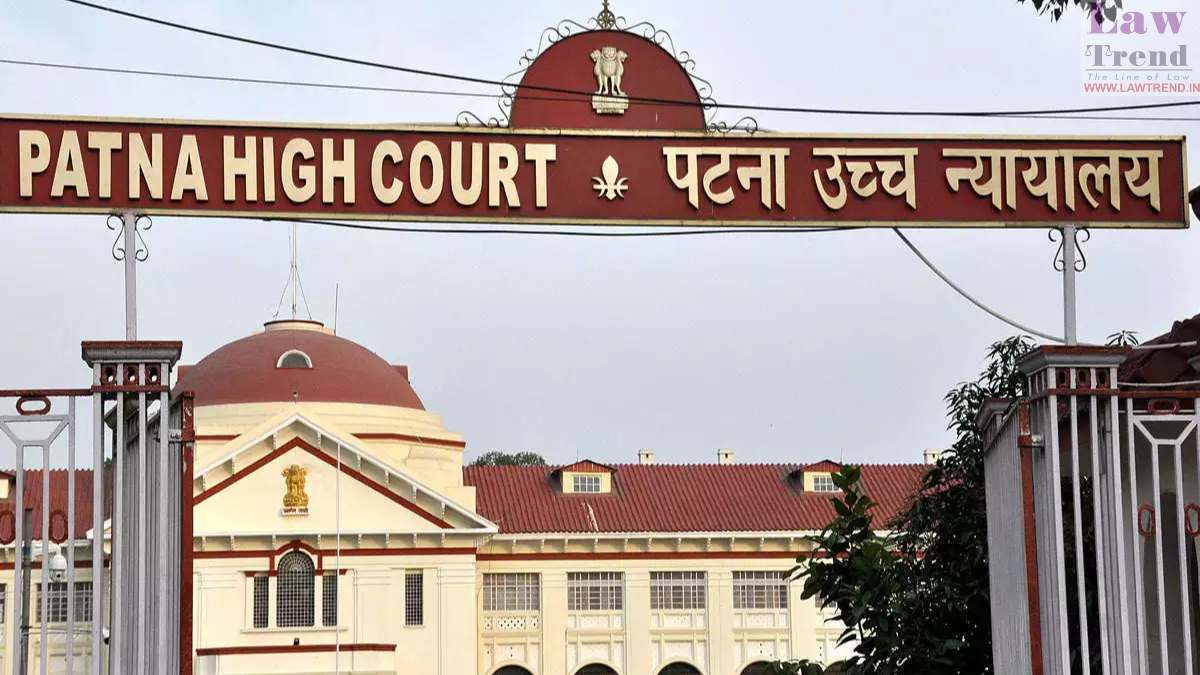
The Patna High Court has directed Patna University to regularize the services of several employees who had been working for decades on Class III and Class IV posts, ruling that their appointments, though procedurally flawed due to lack of advertisement, were “irregular” and not “illegal.”
Justice Alok Kumar Sinha allowed the writ petitions filed by Madhwi Jha and others, holding that the petitioners are entitled to regularization with effect from the date of filing of the writ petition, i.e., 17.04.2015. The Court set aside the termination orders and the Chancellor’s directive annulling their appointments, observing that the University cannot exploit the services of employees for decades and then discard them on technical grounds.
Background of the Case
The petitioners were appointed to various Class III and Class IV posts at Magadh Mahila College, a constituent unit of Patna University, between 1983 and 2001. These appointments were made by the Principal of the College with the approval of the Vice-Chancellor. The petitioners claimed they had been working continuously against sanctioned posts.
In 2003, the Chancellor of the Universities of Bihar issued an order (Memo No. 3435/GS(1) dated 19.08.2003) annulling the appointments of the petitioners and others on the ground that they were made without prior sanction of the State Government and without following the proper advertisement procedure. Consequently, the University issued termination notices.
The petitioners approached the High Court in earlier rounds of litigation. Despite a recommendation by the University’s “Senate Committee for Absorption” to regularize them, the University did not grant relief. Finally, in September 2015, their services were terminated, prompting the present writ petition (Civil Writ Jurisdiction Case No. 18289 of 2015).
Arguments of the Parties
For the Petitioners: The counsel for the petitioners argued that their appointments were made by a competent authority (the Vice-Chancellor/Principal) against vacant sanctioned posts. They submitted that they had worked continuously for more than 10 years, and thus, their case fell within the exception carved out by the Supreme Court in Secretary, State of Karnataka vs. Umadevi (3).
They contended that the distinction between “illegal” and “irregular” appointments is crucial. Since the authorities had the competence to appoint, the lack of advertisement or other procedural lapses rendered the appointments merely irregular, not illegal.
For the Respondents (University and Chancellor): The counsel for the University and the Chancellor opposed the petition, arguing that the initial appointments were void ab initio. They submitted that the posts were not sanctioned by the State Government at the time of appointment, and no public advertisement was issued, violating Articles 14 and 16 of the Constitution. They relied on the Chancellor’s 2003 order, asserting that the Vice-Chancellor had no jurisdiction to make such appointments without prior government sanction.
Court’s Analysis and Observations
The Court analyzed the nature of the appointments to determine if they were “illegal” or “irregular.” Referring to the Constitution Bench judgment in Umadevi and the Full Bench judgment of the Patna High Court in Ram Sevak Yadav vs. The State of Bihar, the Court observed:
“The distinction between an ‘illegal’ and an ‘irregular’ appointment is well settled. An appointment is ‘illegal’ if the appointer lacks the authority to make the appointment or if the appointment is against a non-existent post. On the other hand, if the appointer has the authority and the post exists, but the procedure… has not been strictly adhered to, the appointment is ‘irregular’.”
The Court noted that the Vice-Chancellor and the Principal were competent authorities under the Patna University Act. Therefore, the failure to advertise the posts rendered the appointments irregular but not illegal.
The Court scrutinized the Chancellor’s order dated 19.08.2003, which had annulled the appointments. The Court held that the Chancellor failed to distinguish between individual cases and applied a blanket annulment.
“The Chancellor’s order… appears to have proceeded on a general assumption that all appointments made without prior advertisement and government sanction are illegal… ignoring the fact that the Vice-Chancellor had the competence to make appointments against sanctioned posts… subject to procedural compliance.”
Applying the ratio of State of Bihar & Ors. vs. Kirti Narayan Prasad, the Court held that since the petitioners had worked for more than 10 years without the intervention of any court order during that period, they were entitled to the benefit of regularization as a one-time measure.
Decision
The High Court allowed the writ petitions and quashed the termination orders. However, regarding the date of regularization, the Court balanced the equities. Instead of granting retrospective benefits from the date of initial appointment, which would cause an undue financial burden on the University, the Court directed regularization from the date the petitioners approached the Court.
The Court ordered:
“Accordingly, the petitioners shall be absorbed/regularized against the respective sanctioned posts on which they were working immediately prior to their termination. Such absorption/regularization shall take effect from 17-04-2015, with entitlement to all consequential monetary and other benefits available to a regular employee.”
The University has been directed to issue consequential orders within a specified timeframe.
Case Details:
- Case Title: Madhwi Jha and Ors Vs. The Patna University and Ors
- Case No.: Civil Writ Jurisdiction Case No. 18289 of 2015
- Judge: Justice Alok Kumar Sinha