

Allahabad HC: Overruling of Precedent Does Not Nullify Final Inter-Partes Orders; State Officials Face Contempt Charges for Willful Disobedience
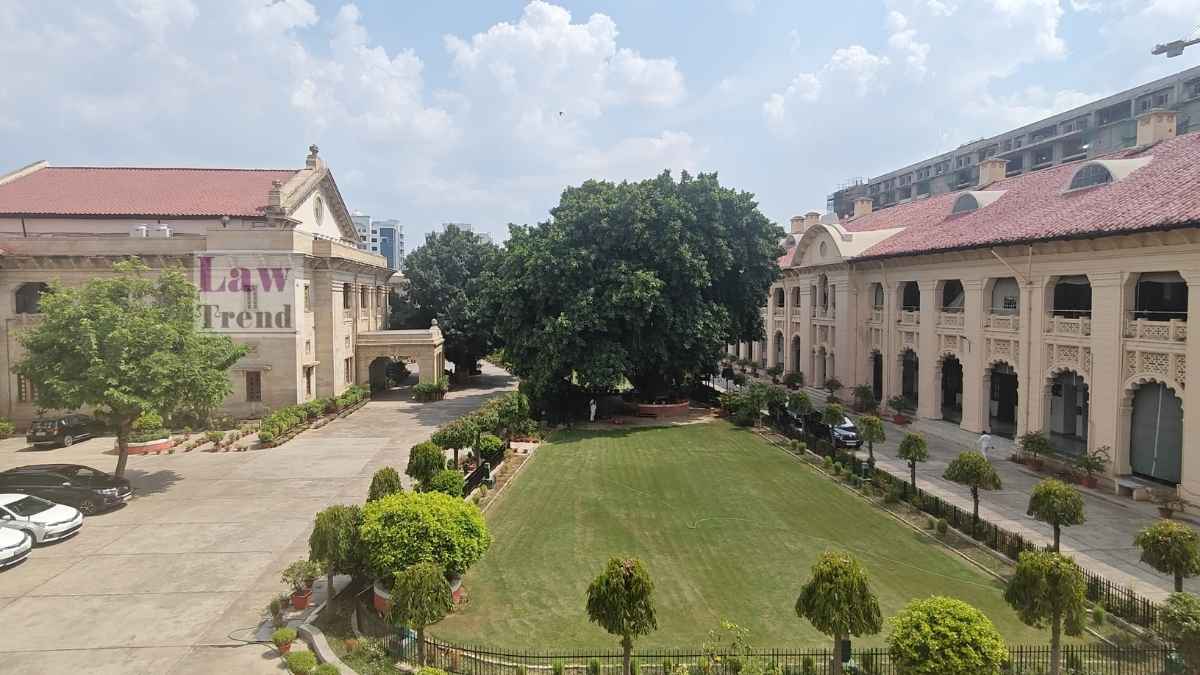

The Allahabad High Court has held that the subsequent overruling of a judicial precedent by the Supreme Court does not nullify a final judgment between parties that was based on the earlier precedent. Justice Salil Kumar Rai ruled that the State authorities are bound to comply with a 2016 High Court order declaring land acquisition proceedings lapsed, despite the Supreme Court later overruling the Pune Municipal Corporation judgment on which the 2016 order was based. The Court warned top Uttar Pradesh officials, including the Chief Secretary, of framing charges if the order is not complied with within a month.

Case Background

The contempt application was filed by Vinay Kumar Singh alleging non-compliance with the High Court’s order dated July 27, 2016, passed in Writ-C No. 62677 of 2015. The petitioner claimed to be a co-sharer and Bhumidhar with transferable rights in Plot Nos. 240, 242M, 243, and 245 in village Bhairopur, District Allahabad. Notifications for acquisition under the Land Acquisition Act, 1894 were issued in 1977. The petitioner contended that compensation was never paid, and physical possession remained with him.

Relying on the Supreme Court’s decision in Pune Municipal Corporation v. Harakchand Misirimal Solanki (2014), the High Court in 2016 allowed the writ petition, holding that the acquisition proceedings had lapsed under Section 24(2) of the Right to Fair Compensation and Transparency in Land Acquisition, Rehabilitation and Resettlement Act, 2013, as the compensation was only deposited in a “revenue deposit” and not in the Court.

The State challenged this order in the Supreme Court via Special Leave Petition (C) No. 7116 of 2017, which was dismissed on September 12, 2017. Despite the dismissal of the SLP, the land was not released, leading to the filing of the present contempt application.

READ ALSO  Tendency Among People to Convert Civil Disputes into a Criminal Case: MP HC

Arguments of the Parties

The State respondents, represented by the Additional Advocate General, argued that the Supreme Court’s Constitution Bench judgment in Indore Development Authority v. Manoharlal (2020) had overruled Pune Municipal Corporation. They contended that Manoharlal clarified that non-deposit of compensation in court does not result in the lapse of acquisition proceedings.

The respondents argued that even though the 2016 order was not expressly mentioned, it “stands overruled by necessary implication” and its foundation was removed. They claimed that under Article 141 and 144 of the Constitution, they were obliged to follow the law laid down in Manoharlal, creating “judicial ambiguity” that prevented compliance. They cited subsequent judgments, including Government of N.C.T. of Delhi v. BSK Realtors LLP (2024) and Delhi Development Authority v. Tejpal (2024), to support their defense that there was no willful disobedience.

The petitioner’s counsel argued that the dismissal of the State’s SLP in 2017 gave finality to the 2016 order. It was submitted that Manoharlal only took away the precedential value of Pune Municipal Corporation but did not reopen disputes already settled between parties. The petitioner contended that the State’s refusal amounted to willful disobedience and that the respondents had “knowingly and willfully disobeyed the orders of this Court.”

READ ALSO  Delhi HC Stresses Upon Compliance of RPwD Act in Future Medical Admissions

Court’s Analysis

Justice Salil Kumar Rai rejected the State’s defense, terming the plea of judicial ambiguity as “artificial” and a “sophistry.” The Court relied on the Supreme Court’s recent rulings in Delhi Development Authority v. Tejpal (2024) and Government of N.C.T. of Delhi v. K.L. Rathi Steels Limited (2024).

The Court observed:

“When a case is overruled, it is only its binding nature as a precedent that is taken away but the lis between the parties is still deemed to have been settled by the overruled case. Further, an order or decree of a Court, even if wrong, is binding on the parties until it is set aside by an appellate court or through other remedies provided in law.”

The Court emphasized that the Manoharlal judgment did not retrospectively reopen concluded proceedings where the lis (dispute) had attained finality. Since the SLP against the 2016 order was dismissed and no review was filed, the lis between the petitioner and the State had attained finality.

Addressing the State’s reliance on Articles 141 and 144, the Court noted:

“Accepting the fallacy pleaded by the opposite parties would amount to reviewing and recalling and thereby nullifying not only the order passed by this Court but also the order dated 12.9.2017 passed by the Supreme Court dismissing the Special Leave Petition… A contempt Court has no jurisdiction to nullify an order of the writ Court.”

The Court also criticized the State officials for citing inter-departmental disputes between the Irrigation and Urban Development departments as a reason for delay, stating that “distribution of work between the different departments of the State Government cannot be used as a pretext to not implement the order of this Court.”

READ ALSO  इलाहाबाद हाई कोर्ट का यूपी पुलिस को आदेश स्मार्टफ़ोन के उपयोग कर अपराध स्थल की ले फ़ोटो

Decision

The High Court held that the failure of the State respondents to comply with the order dated July 27, 2016, amounted to “willful disobedience.” The Court observed:

“Evidently, the non-compliance by the opposite parties of the order passed by this Court is not bona-fide. The non-compliance is intentional, conscious, calculated and a deliberate act with full knowledge of the consequences.”

However, considering the circumstances, the Court refrained from immediately charging the opposite parties and granted one final opportunity for compliance. The Chief Secretary, Government of Uttar Pradesh, along with the Additional Chief Secretaries of the Irrigation and Urban Development Departments and the District Magistrate, Prayagraj, were granted one month’s further time to comply with the order.

The Court directed that on the next date, the officers must either file a compliance affidavit showing full compliance or be personally present in Court for framing of charges.

Case Details:

  • Case Title: Vinay Kumar Singh Vs. Suresh Chandra Princ.secy.irrigation Deptt.and 4 Ors.
  • Case Number: Contempt Application (Civil) No. 2555 of 2017
  • Bench: Justice Salil Kumar Rai

Law Trend
Law Trendhttps://lawtrend.in/
Legal News Website Providing Latest Judgments of Supreme Court and High Court

Related Articles

Latest Articles

