

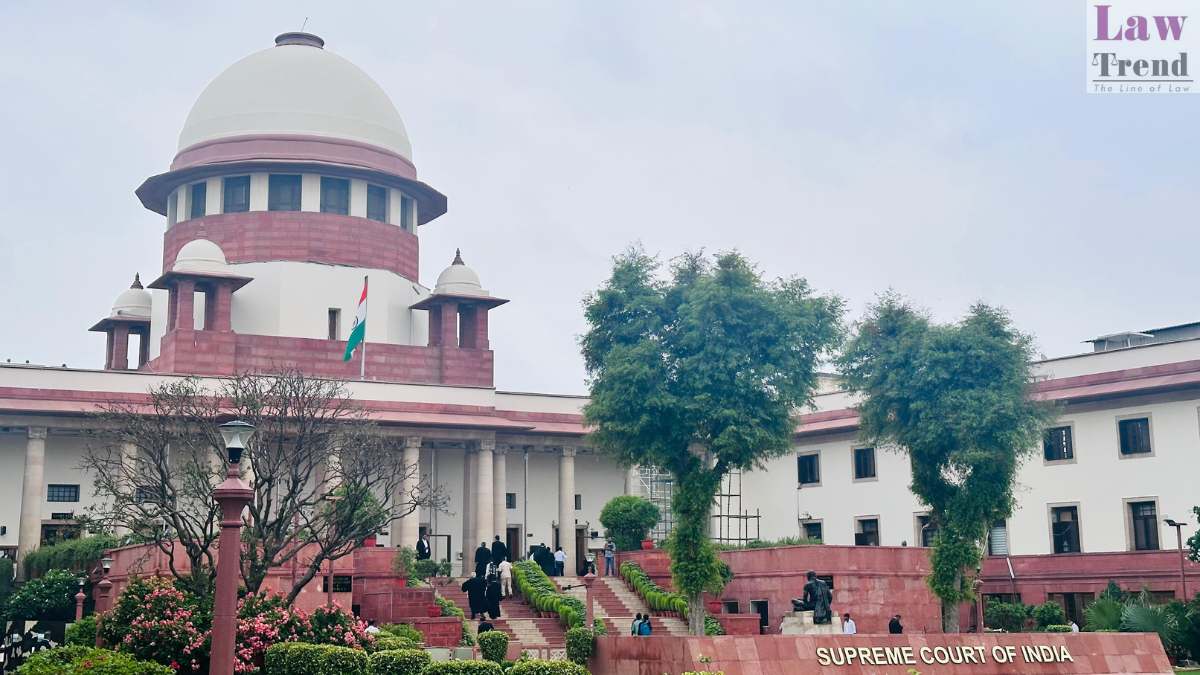
Taking a serious view of the severe air pollution levels gripping Delhi-NCR, the Supreme Court on Wednesday issued a series of directions aimed at decongesting the capital’s borders. Describing the pollution crisis as an “annual feature,” the Court asked the National Highways Authority of India (NHAI) and the Municipal Corporation of Delhi (MCD) to consider either temporarily closing or relocating nine toll plazas situated at the entry points of the national capital.
A bench headed by Chief Justice Surya Kant emphasised the need for “pragmatic and practical solutions” to tackle the recurring menace, observing that while preventive protocols exist, their enforcement on the ground has been consistently weak.
Focus on Traffic Decongestion
Highlighting that vehicular emissions from idling traffic at borders contribute significantly to the city’s poor air quality, the bench directed the MCD to take a decision within one week regarding the temporary closure of these toll plazas. The Court noted that such a measure could facilitate smoother traffic flow and reduce the accumulation of pollutants caused by massive congestion at entry points.
“Let us think of pragmatic and practical solutions of the menace,” Chief Justice Surya Kant remarked, stressing that the authorities must move beyond merely framing protocols to ensuring their effective implementation.
Relief for Construction Workers
Addressing the economic impact of pollution control measures, the Supreme Court directed the Delhi government to urgently verify construction workers who have been rendered idle due to the ban on construction activities. The Court ordered that financial assistance be transferred directly to their bank accounts to mitigate their hardship.
Additional Solicitor General Aishwarya Bhati, representing the Delhi government, informed the bench that out of nearly 2.5 lakh registered construction workers, approximately 7,000 have been verified so far. She assured the Court that the funds would be transferred directly to the beneficiaries.
However, the bench issued a stern caution against administrative leakages. “It should not be that money transferred to workers’ accounts disappears or travels to another account,” the Court observed. It further suggested that the government consider providing alternative employment to those unable to earn due to the pollution-related restrictions.
School Closures and Long-Term Strategy
The Court declined to interfere with the Delhi government’s decision to close schools for students from nursery to Class 5. The bench held that no further tinkering with the order was required, noting that the winter break was already approaching.
Looking beyond immediate measures, the Supreme Court directed the Commission for Air Quality Management (CAQM) to revisit and strengthen its long-term strategies. The bench asked the CAQM and NCR state governments to examine critical issues such as urban mobility, traffic management, and incentives for farmers to prevent stubble burning. The Court stressed that piecemeal approaches would not resolve the crisis.
The matter, stemming from a PIL filed by environmentalist M.C. Mehta, has been listed for further directions on January 6. The Court reiterated that this plea must be heard at least twice a month throughout the year to ensure continuous monitoring.




