

Dowry Prohibition Act Applies to Demands Made ‘At, Before, or After’ Marriage; SC Distinguishes ‘Mehr’ from Dowry and Issues Nationwide Directions
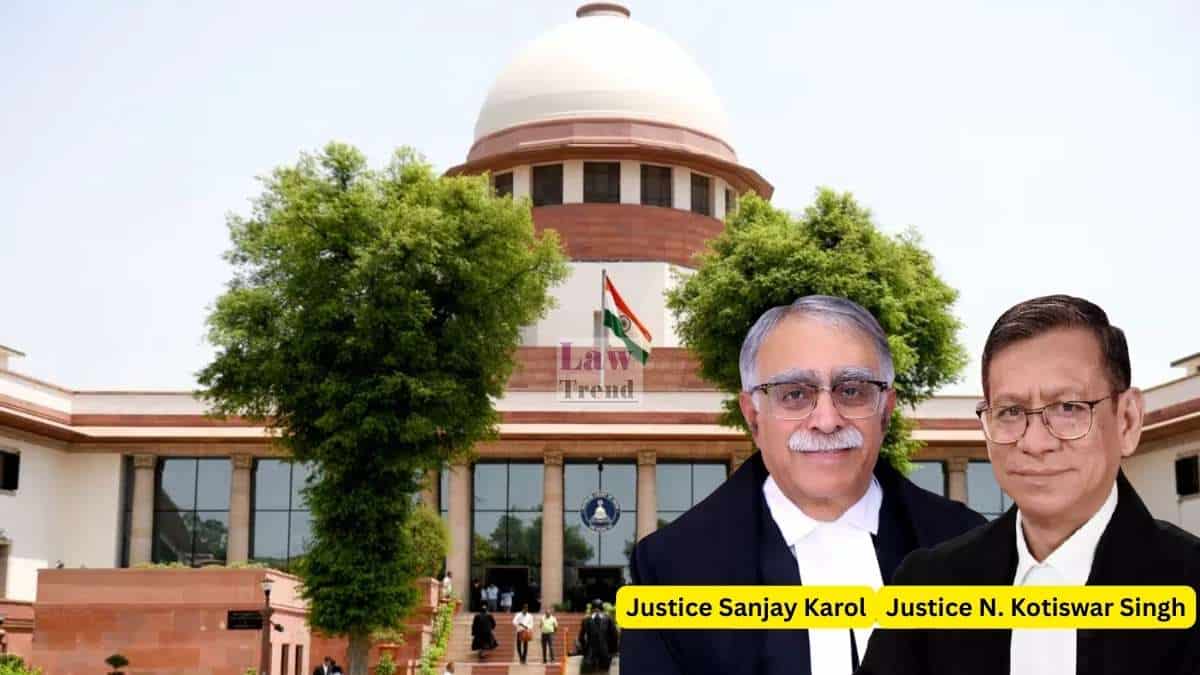

The Supreme Court has ruled that the definition of dowry under the Dowry Prohibition Act, 1961, is not limited to demands made at the time of marriage but extends to property or valuable security given or agreed to be given “at, before, or any time after the marriage.” The Court also clarified that the Islamic concept of Mehr is distinct from dowry and the two cannot be equated.

The judgment was delivered by a Bench comprising Justice Sanjay Karol and Justice Nongmeikapam Kotiswar Singh in the case of State of U.P. v. Ajmal Beg etc. while setting aside an acquittal order passed by the Allahabad High Court. The Apex Court restored the conviction of a husband and his mother in a dowry death case but spared the 94-year-old mother-in-law from incarceration on humanitarian grounds.

Legal Principle: Timing of Demand

One of the primary grounds on which the Allahabad High Court had acquitted the accused was the observation that since there was no demand for dowry prior to the marriage, it was difficult to accept that demands were made subsequently. The Supreme Court termed this reasoning “fallacious.”

Referring to Section 2 of the Dowry Prohibition Act, 1961, the Bench observed:

“It is clear… that any property or valuable security given by either party to a marriage to the other… on the day of marriage, before or at any time after marriage, shall be considered to be dowry.”

The Court held that the demand for a colour television, motorcycle, and cash made by the accused constituted dowry, regardless of whether such demands existed at the inception of the marriage.

READ ALSO  केंद्र ने सुप्रीम कोर्ट में कहा: महिला सैन्य अधिकारियों को स्थायी कमीशन देने में कोई भेदभाव नहीं

Distinction Between ‘Mehr’ and Dowry

In a significant observation titled “Dowry: A Cross-Cultural Evil,” the Supreme Court noted that while dowry was historically associated with the Hindu caste system, it has diffused into other communities. However, the Court drew a sharp distinction between the Islamic practice of Mehr and the social evil of dowry.

The Court explained:

“In Islam, dowry, stricto senso, is prohibited. What is prescribed is, in fact, the reverse. ‘Mehr’ is a compulsory gift that the groom is required to give to the bride at the time of marriage… The purpose of mehr is both symbolic and practical: it signifies respect for the woman and ensures her financial security in the marriage.”

The Bench expressed concern that in many Muslim marriages, Mehr is often stipulated only in nominal terms, while substantial dowry transfers flow from the bride’s family to the groom, “hollowing out the protective function of mehr.”

Factual Matrix of the Case

The case involved the death of Nasrin, a young woman aged about 20, who died of burn injuries a little over a year after her marriage to the respondent, Ajmal Beg. The prosecution established that Ajmal and his family repeatedly demanded a colour TV, a motorcycle, and Rs. 15,000/-.

READ ALSO  Supreme Court Rules Promises of Financial Aid in Election Manifestos Not Corrupt Conduct

On June 5, 2001, a day after the accused reiterated these demands and threatened the deceased, she was found burnt to death. The Trial Court convicted the husband and mother-in-law under Sections 304-B (Dowry Death) and 498-A (Cruelty) of the IPC. The High Court acquitted them, reasoning that the accused were “poor fellows” who could not afford to maintain such items even if they received them, and citing a lack of demand before marriage.

Reversing the High Court’s findings, the Supreme Court noted:

“Suffice it to say that this reason does not appeal to reason.”

Conviction and Sentencing

The Supreme Court restored the conviction of both the husband, Ajmal Beg, and his mother, Jamila Beg.

  • Ajmal Beg: Directed to surrender within four weeks to serve his life imprisonment sentence.
  • Jamila Beg: Noting that she is currently 94 years old, the Court invoked humanitarian considerations.
    “While weighing and assessing sentencing particularly in case of convicts of advanced age… the Court must take into consideration humanitarian considerations which dictate that imposing imprisonment may be inhumane… we refrain from incarcerating her.”

Nationwide Directions Issued

Observing that legislative measures alone have not stamped out the “deep-seated malady” of dowry, the Court issued the following directions to the Union and State Governments, High Courts, and administrative authorities:

  1. Educational Reform: Governments must consider changes to educational curricula to reinforce that parties to a marriage are equal and to educate youngsters on the necessity to eschew dowry.
  2. Dowry Prohibition Officers: States must ensure Dowry Prohibition Officers are appointed under Section 8B of the Act. Their contact details (name, phone number, email) must be disseminated by local authorities.
  3. Training for Officials: Police officials and judicial officers dealing with such cases must undergo periodic training to appreciate the social and psychological implications, ensuring sensitivity towards genuine cases.
  4. Expeditious Disposal: High Courts are requested to take stock of pending cases under Sections 304-B and 498-A IPC to ensure expeditious disposal.
  5. Grassroots Awareness: District Administrations and District Legal Services Authorities should conduct regular workshops and awareness programs involving civil society to reach people outside the formal education fold.
READ ALSO  सुप्रीम कोर्ट ने 78 वर्षीय महिला पर 5 लाख रुपये का जुर्माना बरकरार रखा- जानिए पूरा मामला

Case Details

Case Title: State of U.P. v. Ajmal Beg etc.

Case No: Criminal Appeal Nos. 132-133 of 2017

Citation: 2025 INSC 1435

Coram: Justice Sanjay Karol and Justice Nongmeikapam Kotiswar Singh 

Law Trend
Law Trendhttps://lawtrend.in/
Legal News Website Providing Latest Judgments of Supreme Court and High Court

Related Articles

Latest Articles

