

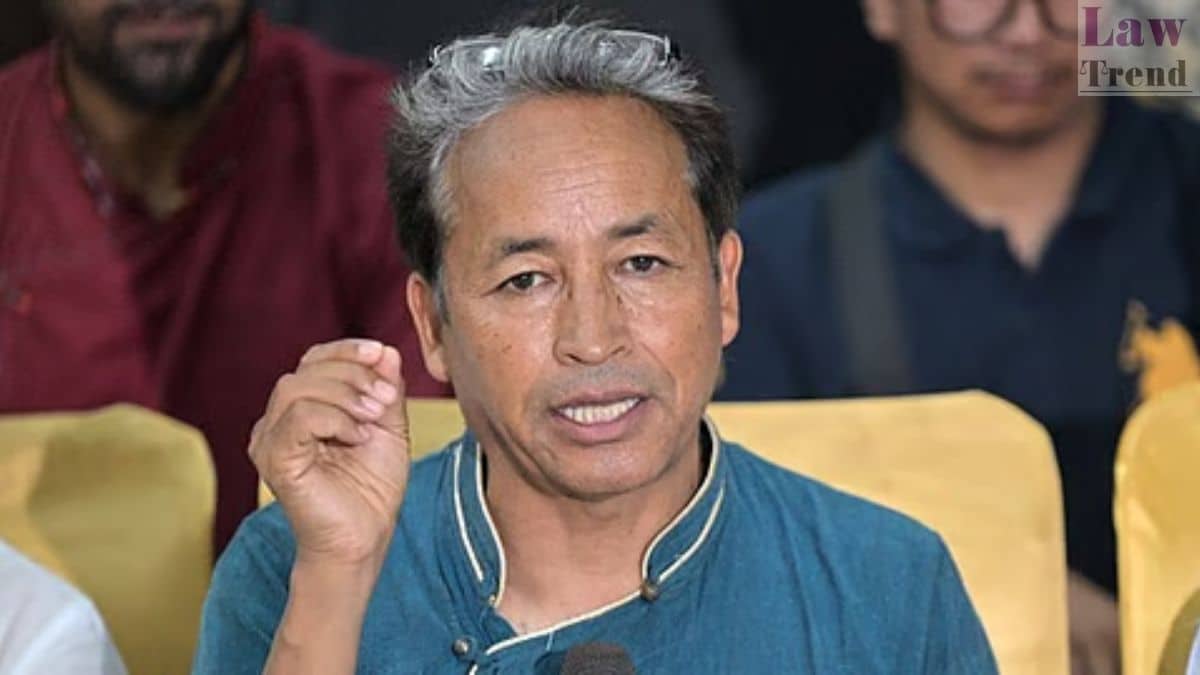
The Union government on Monday opposed before the Supreme Court a request that climate activist Sonam Wangchuk be allowed to appear through video conferencing from Jodhpur jail in the case challenging his detention under the National Security Act (NSA).
The bench of Justices Aravind Kumar and N V Anjaria was hearing a petition filed by Gitanjali J Angmo, Wangchuk’s wife, alleging that his detention was illegal, arbitrary, and in violation of fundamental rights.
Senior advocate Kapil Sibal, appearing for Angmo, requested that Wangchuk be permitted to address the court virtually. Solicitor General Tushar Mehta opposed the plea, stating the government would then be obliged to extend similar treatment to “all convicts across the country.” Following the brief exchange, the bench adjourned the matter for further hearing on December 15.
The top court had earlier deferred proceedings on November 24 after the Centre and the Ladakh administration sought time to respond to Angmo’s rejoinder. The court had initially sought responses to her amended petition on October 29.
Angmo’s amended plea challenges Wangchuk’s September 26 detention under the NSA, contending it is based on “stale FIRs, vague imputations, and speculative assertions” and lacks proximity to the alleged grounds. It claims the detention order is “devoid of any legal or factual justification” and represents a “gross abuse of authority” that undermines constitutional liberties and due process.
Calling the allegations against Wangchuk “preposterous,” the petition notes his decades-long recognition for contributions to grassroots education, innovation, and environmental conservation. It asserts that the violence in Leh on September 24—where four persons died and 90 were injured during protests demanding statehood and Sixth Schedule status for Ladakh—cannot be attributed to his actions or statements.
The Centre has accused Wangchuk of inciting protests that turned violent. The petition counters this by highlighting his public condemnation of the unrest, stating he had warned that violence would derail Ladakh’s peaceful struggle.
The National Security Act empowers the Centre and states to order preventive detention to stop individuals from acting in a manner “prejudicial to the defence of India.” The maximum period of detention is 12 months, though authorities may revoke it earlier.
The Supreme Court will resume hearing the challenge to Wangchuk’s detention on December 15.




